IV Infusion
10 products available — Accessories for intravenous therapy, IV bottle seals and venipuncture tourniquets.
Buying guide — IV Infusion
Intravenous therapy needs supplies that guarantee total asepsis at every vascular access point. A reusable tourniquet or a low-quality bottle seal can become a vector for nosocomial infection with serious consequences. High-volume infusion centres — those treating 20 or more patients a day — see fast returns from switching to single-use disposables: less rework, fewer incidents and cleaner infection audits. We hold permanent stock and ship across Central America, South America and the US.
What to verify before buying
- Latex-free and DEHP-free — required in many public tenders and paediatric protocols
- Chemical compatibility — verify resistance to the specific solutions you administer
- Hermetic seal — critical for bottle seals in IV admixtures and chemotherapy
- Lot traceability — eases hospital infection-control audits
The IV line supplies, point by point
A safe IV line is a chain: every link must guarantee asepsis and compatibility. The infusion catalogue covers all vascular access points:
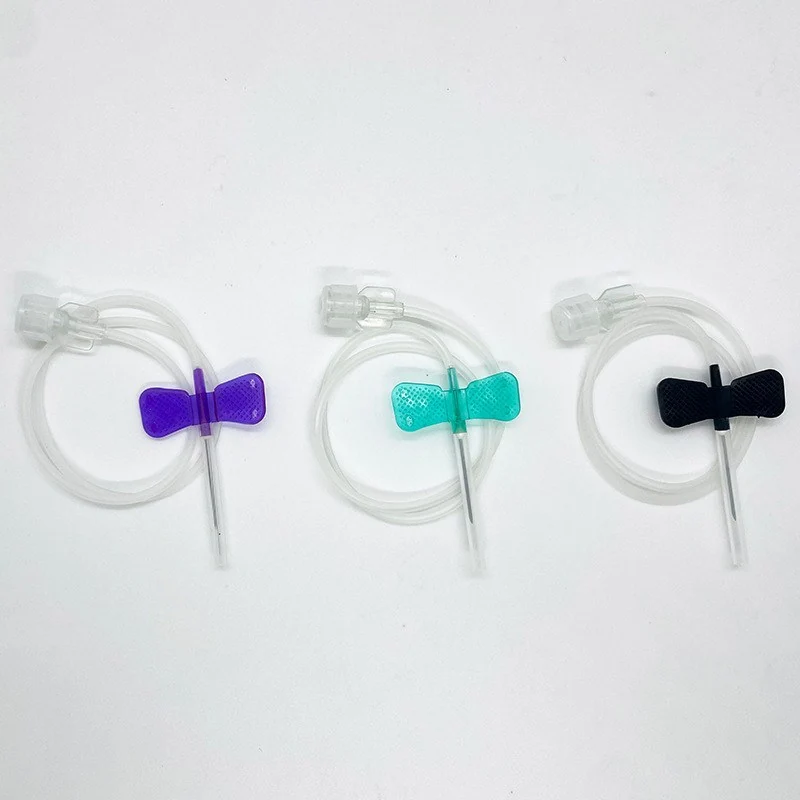
- Access and puncture: the disposable tourniquet for venipuncture and the butterfly / scalp needle for difficult veins, paediatrics and blood draws.
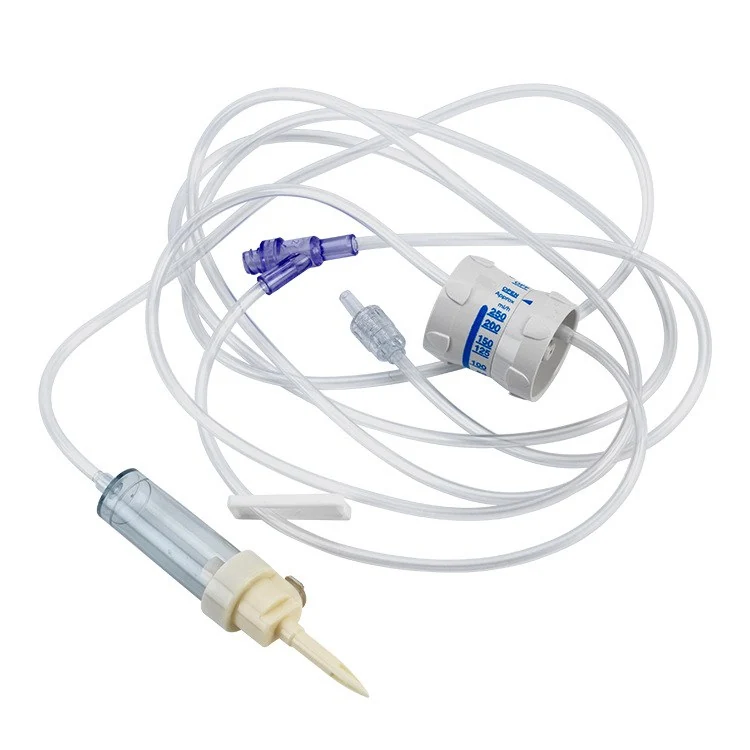
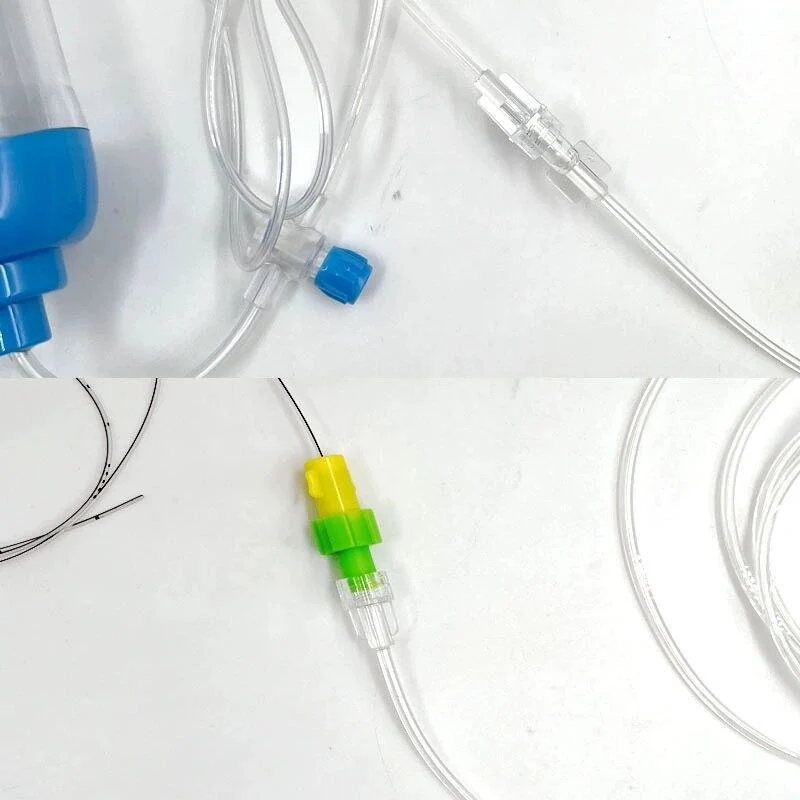
- Administration: the precision microdrip infusion set and the IV extension line.
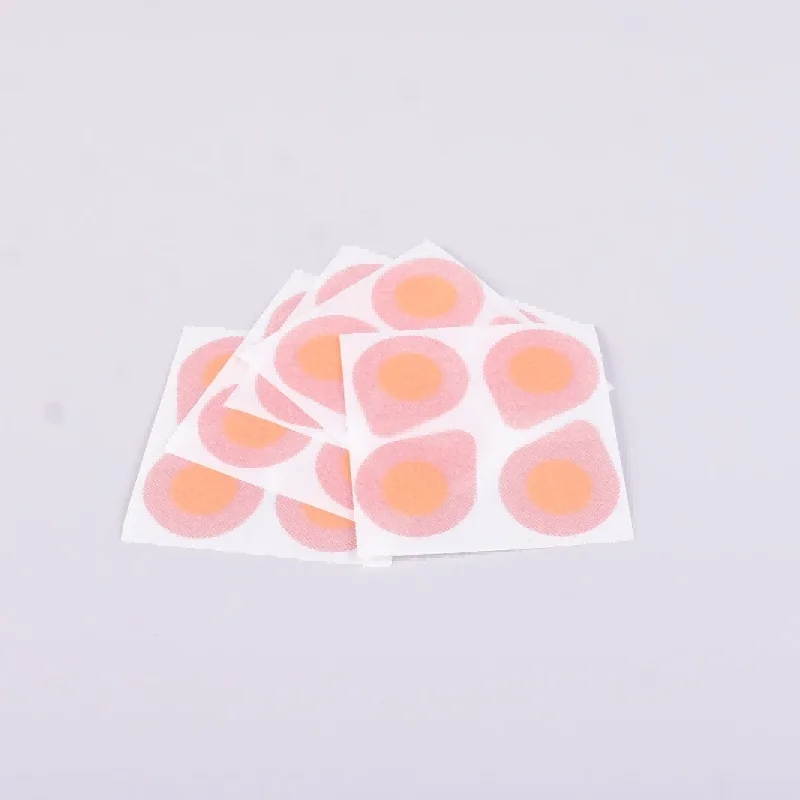
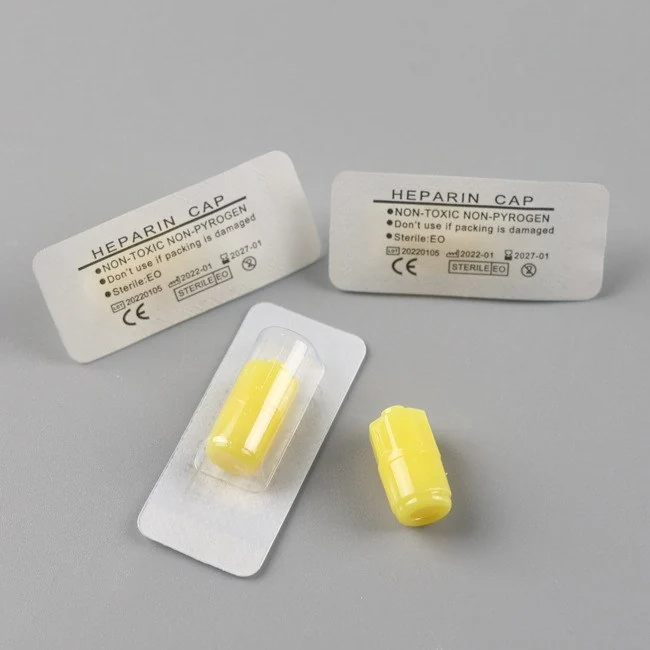
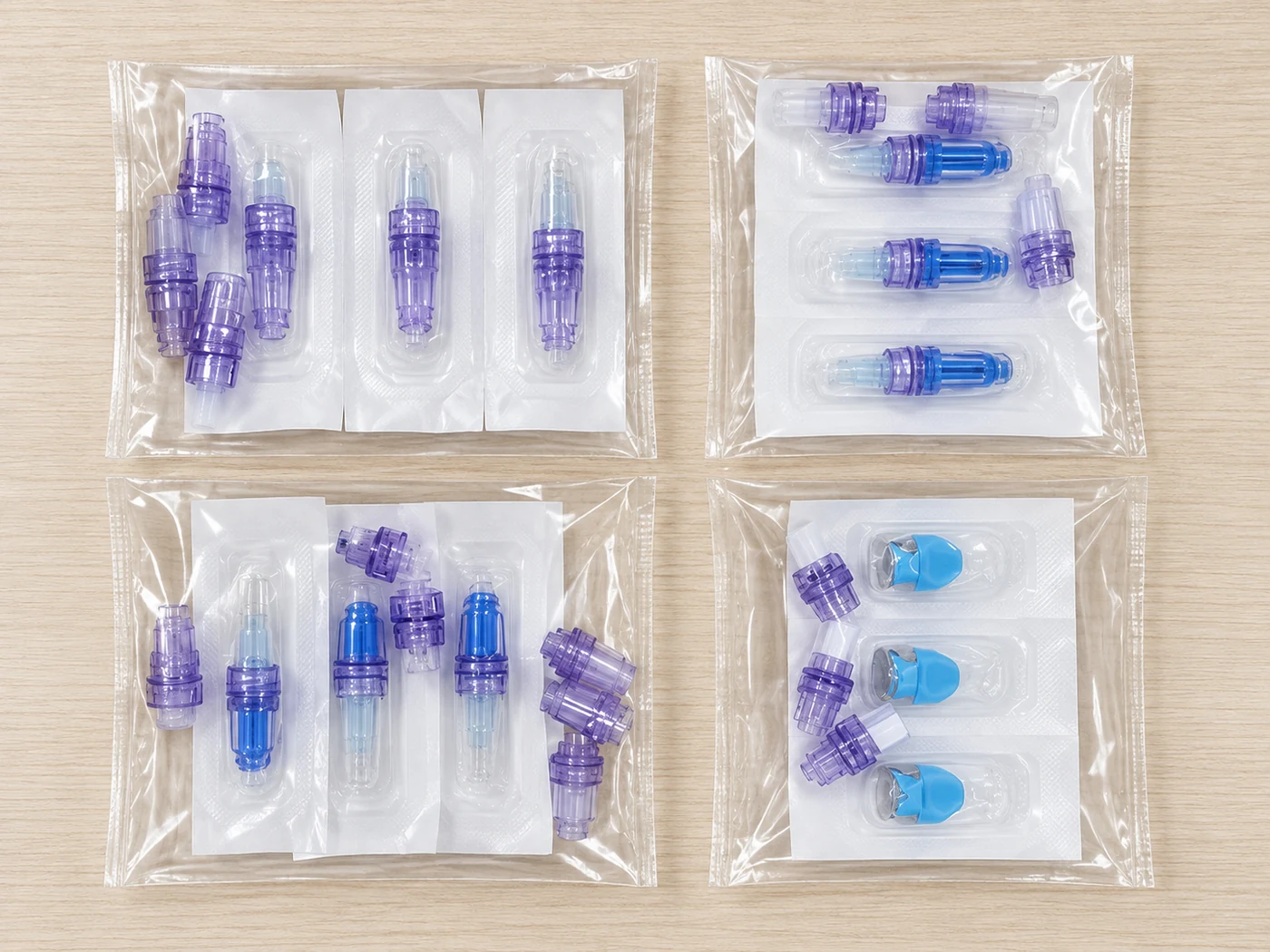
- Connection and sealing: the needle-free connector / Y injection site, the heparin cap for IV catheter and the IV bottle seal patch.
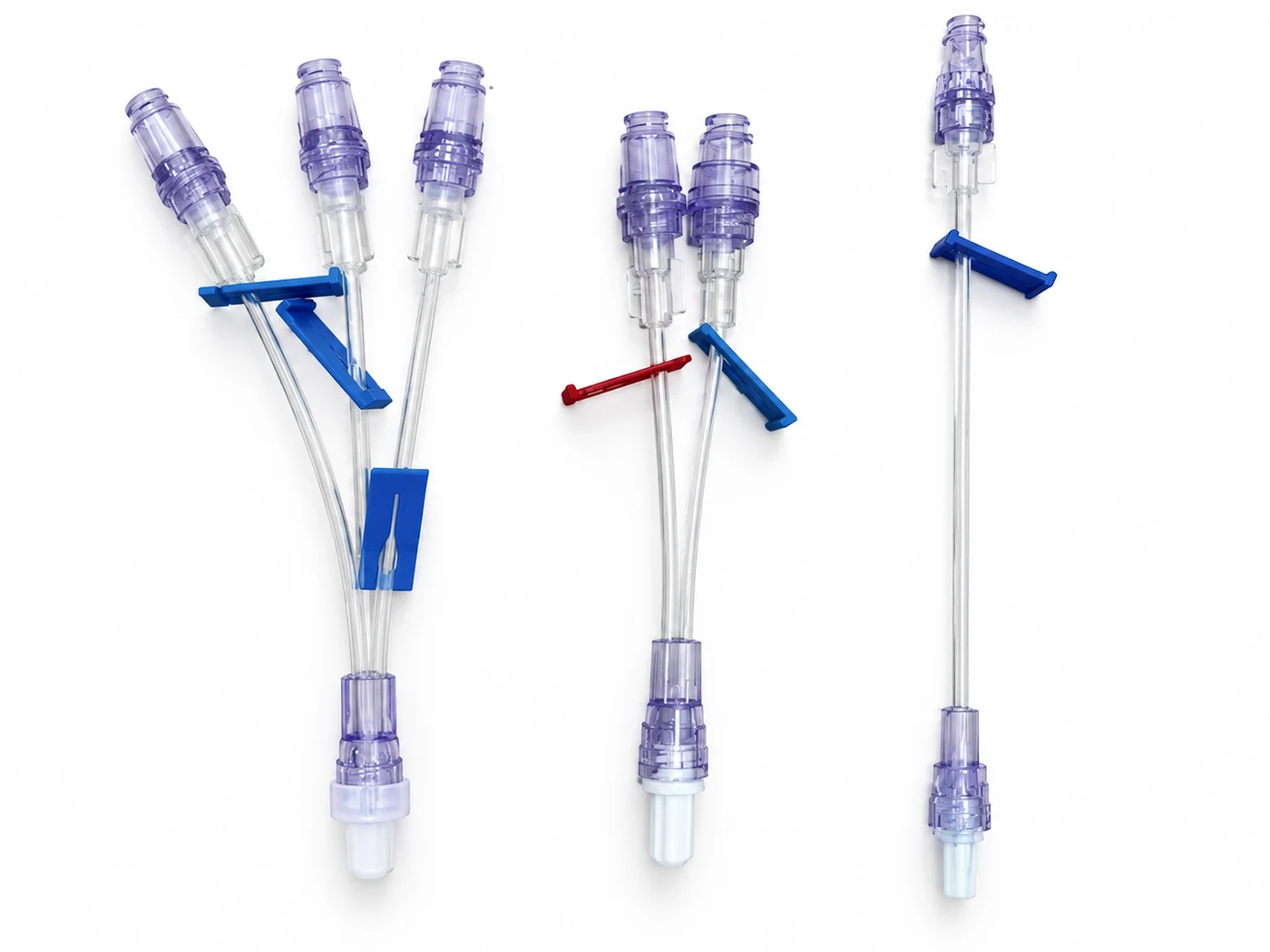
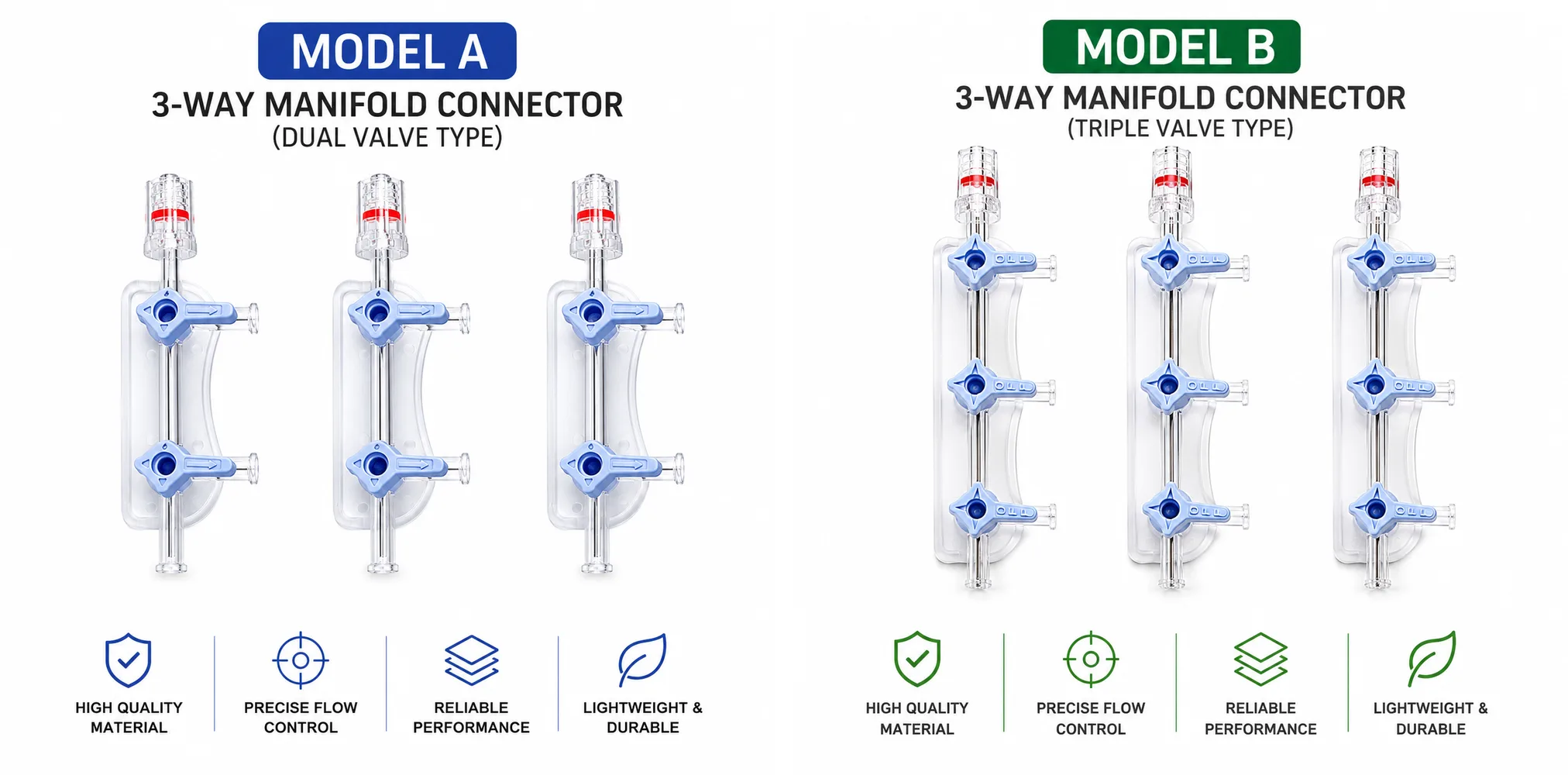
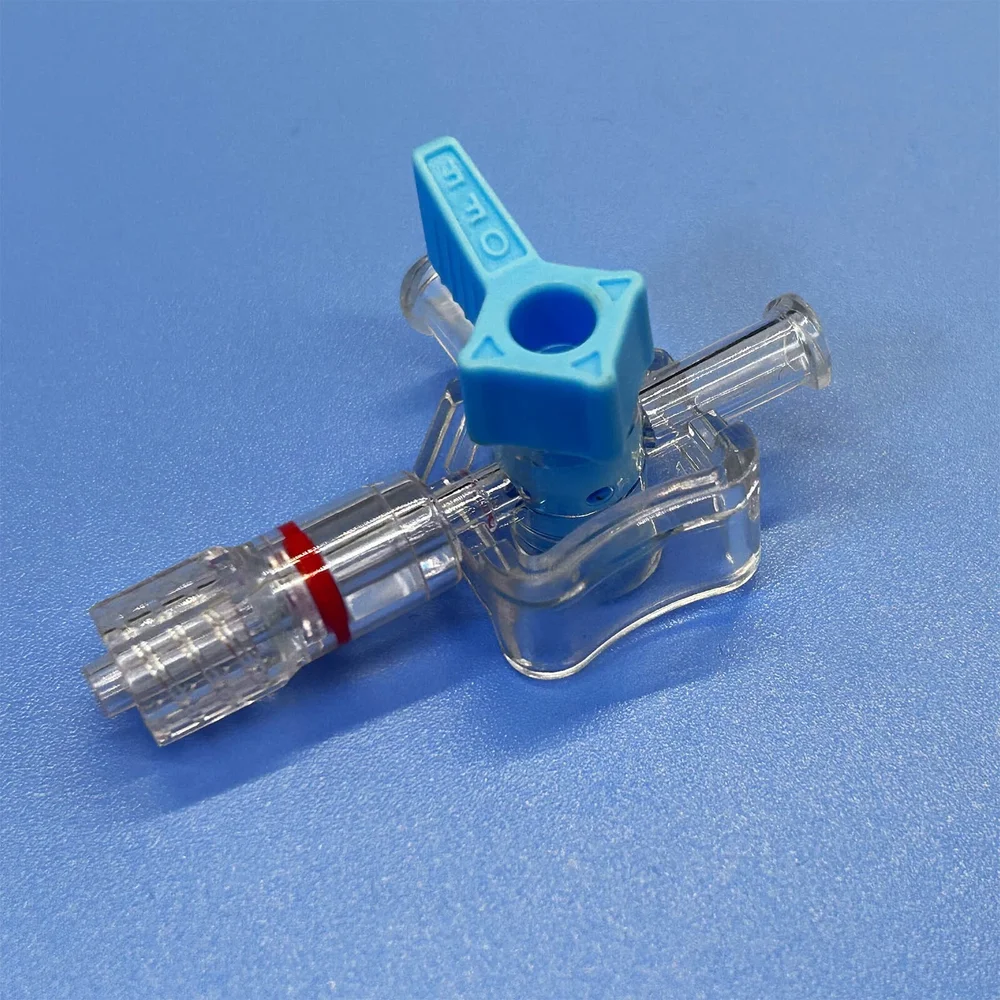
- Multiple access on one line: the 3-way extension line with needle-free connector, which splits one venous access into 1, 2, 3 or 4 branches with a valve and clamp on each, in 2.7 or 4.0 mm tubing and made-to-order length.
A reusable tourniquet or a poor bottle seal can become a vector for nosocomial infection — which is why high-volume centres move to single-use disposables.
Macrodrip vs microdrip: the drop factor
Each set delivers a fixed number of drops per millilitre — the drop factor, printed on the package and the key to dose calculation:
| Set type | Drop factor | Typical use |
|---|---|---|
| Macrodrip | 20 gtt/ml (some 10 or 15) | Adults, high volumes |
| Microdrip | 60 gtt/ml | Paediatrics, neonates, precision drugs |
The universal formula is: drops/min = (volume in ml × factor) ÷ time in minutes. The precision microdrip set lets you fine-tune small volumes accurately. The full calculation with worked examples is in IV set: how often to change it and how to calculate the drip rate.
The needle-free connector: the gateway for infection
The needle-free connector is the most-handled point of the line and, if contaminated, bacteria reach the bloodstream directly. Two measures define it:
- Disinfection before each access (scrub the hub): vigorous friction with 70% isopropyl alcohol for at least 15 seconds, then let it dry.
- Replacement with the administration set: every 4–7 days in general, every 24 h with lipids or blood products, and immediately if there is blood residue.
Choosing one mechanism (positive, negative or neutral pressure) and standardising it across the centre avoids clamping errors. The full protocol is in needle-free connector: how often to change it and how to disinfect it (SAS/SASH).
Gauge: choosing thickness by patient
Needle and IV catheter size is measured in Gauge (G): the higher the number, the thinner. The colour code is universal:
| Gauge | Colour | Use |
|---|---|---|
| 18 G | Green | Blood products, contrast, adult |
| 20 G | Pink | General fluid therapy |
| 22 G | Blue | Small veins, elderly, paediatrics |
| 24 G | Yellow | Neonates, very small veins |
The butterfly / scalp needle carries this same colour code. The full chart of gauges, flows and uses is in IV needle and catheter gauge chart.
What to check when buying infusion supplies wholesale
For infusion clinics, hospitals and distributors:
- Latex-free and DEHP-free — required in paediatrics, oncology and many public tenders.
- Clear drop factor (macro 20 / micro 60 gtt/ml) printed on the package.
- Universal Luer-lock connection compatible across sets, connectors, three-way stopcocks and extensions.
- Hermetic seal and a transparent path with no dead space that traps blood or biofilm.
- CE / ISO 13485 certification and lot traceability for infection-control audits.
We ship to Central America, South America and the US with permanent stock, flexible MOQ, samples and an OEM option. Quote on WhatsApp in under 24 h.
Related articles
IV Infusion Set: How Often to Change It and How to Calculate the Drip Rate
Read article →Needle-Free Connector: How Often to Change It and How to Disinfect It (SAS/SASH)
Read article →IV Needle and Catheter Gauge Chart: Colours, Flow Rates and Uses
Read article →IV Supplies for Infusion Clinics: Complete Guide
Read article →Frequently asked questions — IV Infusion
What are your lead time and registration support for IV supplies?
Stock references ship quickly; OEM orders or customised DEHP-free lines need a longer production lead time. Every lot carries traceability and CE / ISO 13485 documentation for registration in the destination country.
How do you calculate drops per minute?
With the formula: drops/min = (volume in ml × drop factor in gtt/ml) ÷ time in minutes. For example, 1000 ml over 8 hours with a 20 gtt/ml macrodrip gives about 42 drops/min. With a 60 gtt/ml microdrip, microdrops/min match the ml/hour.
How often is the needle-free connector changed?
It is changed together with the administration set: every 4 to 7 days in general, every 24 h if used for parenteral nutrition, lipids or blood products, and immediately if it is disconnected, left with blood residue or contamination is suspected.
Which IV gauge should I use by patient?
18 G for blood products, contrast and the standard adult; 20 G for general fluid therapy; 22 G for small veins, the elderly and paediatrics; and 24 G for neonates. The rule is to use the smallest gauge (highest number) that meets the indication.
Are your supplies latex-free and DEHP-free?
Yes. We offer latex-free and DEHP-free lines, a common requirement in paediatric and oncology protocols and in public tenders. Every lot carries traceability and CE / ISO 13485 certification.
Do you offer an accessible minimum order for mid-sized clinics?
Yes. We work with a flexible MOQ adapted to mid-sized clinics, with no need to overstock, plus samples for evaluation and a private-label (OEM) option for distributors.