Spine & Orthopedics
3 products available — Bone cement system, vertebral access kits and kyphoplasty balloon for minimally invasive spine surgery.
Buying guide — Spine & Orthopedics
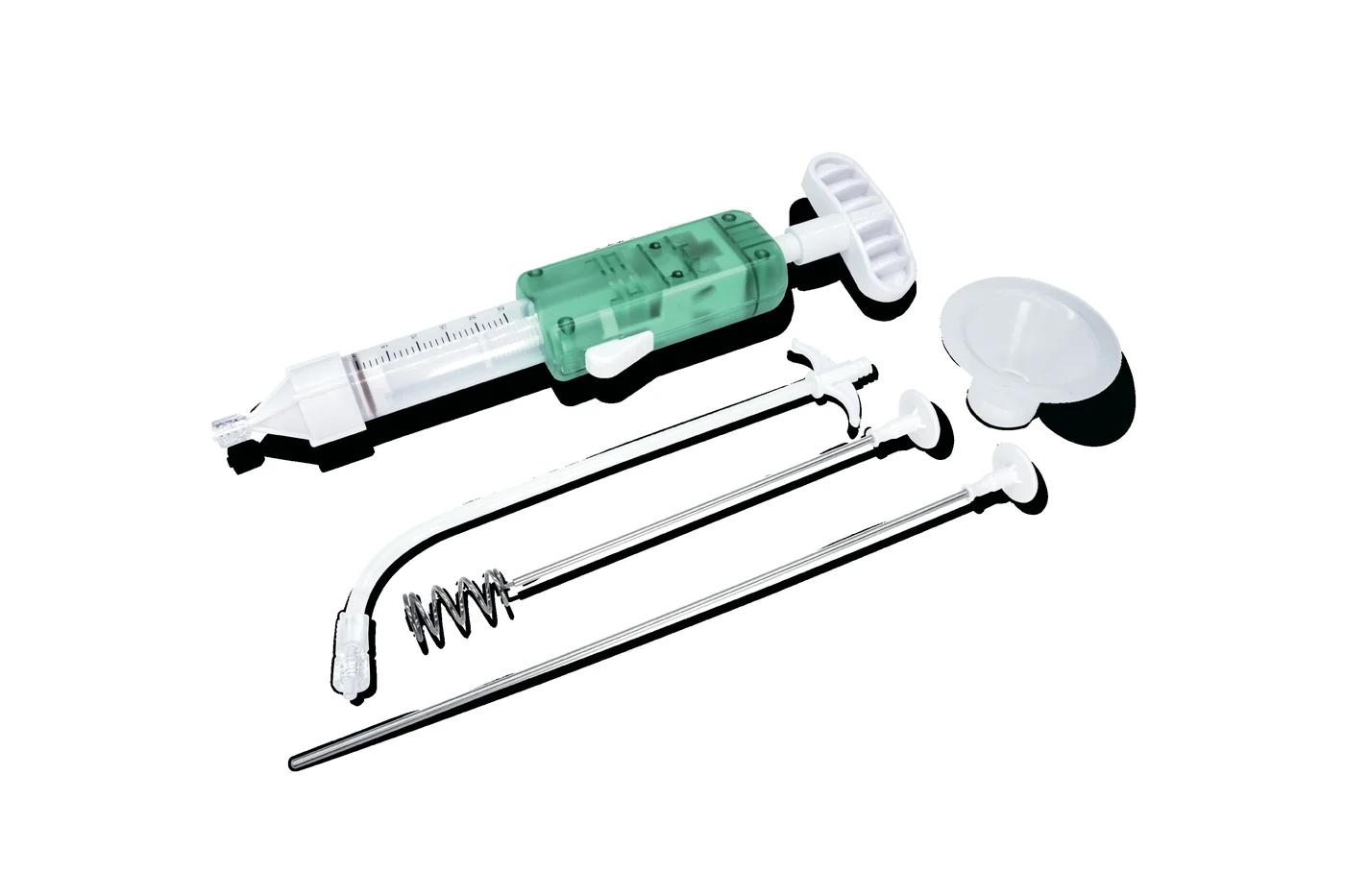
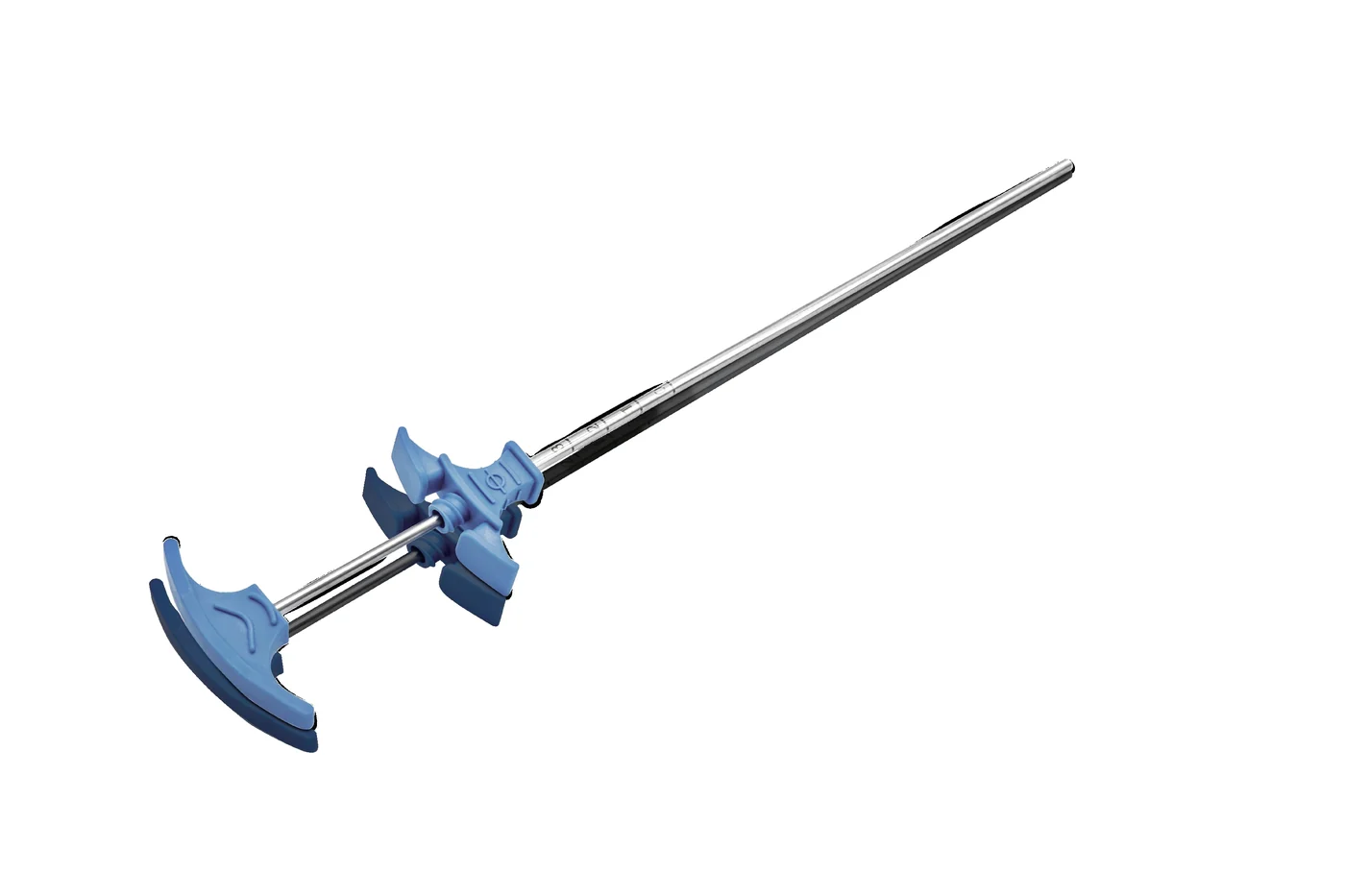
Minimally invasive spine consumables are bought as a procedure, not as parts: the access kit opens the track to the vertebral body, the kyphoplasty balloon creates the cavity, and the cement system mixes and delivers the fill through the same access. A spine unit consumes the three in fixed ratio per case, and this category serves them aligned — including the detail that governs the whole procedure: the cement's viscosity window, which waits for no one.
What to verify before buying
- Bought per procedure: access + balloon (if kyphoplasty) + cement — quote the set
- Sequential access (2.5/3.0) or single-puncture (3.6/4.2), uni- or bilateral — surgeon's school
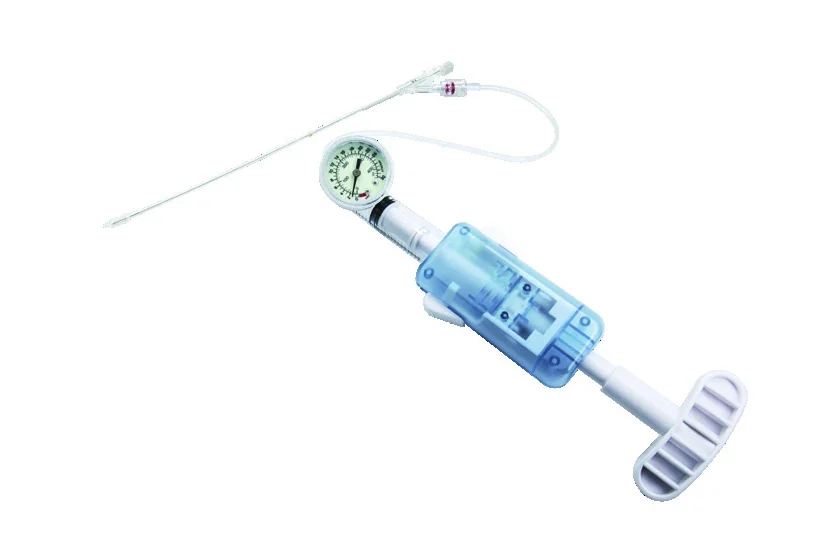
- The kyphoplasty balloon works at 300 psi — its inflator is the 30/40 bar gauge device from the cath-lab line
- The cement system mixes and delivers in one body — fewer transfers, more usable window
- ⚠ High-class device: destination registration by the distributor, longer lead times
The procedure as the unit of purchase
Access. Trocar kits to the vertebral body in two techniques: sequential dilatation (2.5/3.0) for stepwise opening, single puncture (3.6/4.2) for direct entry. Uni- or bilateral by approach.
Cavity. The kyphoplasty balloon (6×10 / 6×15 mm, 300 psi) restores height and creates the space the cement will fill at low pressure — the difference between kyphoplasty and direct vertebroplasty.
Fill. The cement system integrates mixing and delivery: cement goes from powder to injector without transfers, and every transfer saved is seconds of viscosity window gained.
The per-case ratio is fixed (one access per pedicle, one balloon per cavity, one cement system per session), so orders are sized by cases per month — send that number and we build the mix.
Frequently asked questions — Spine & Orthopedics
Which inflator does the kyphoplasty balloon use?
A gauge inflator that reads comfortably around 20 bar (300 psi ≈ 20.7 bar): the 30 or 40 bar device from our cath-lab line. Many units already have it from hemodynamics; if not, it joins the same order.
Sequential or single puncture?
Surgeon's school. Sequential opens stepwise and forgives in hard bone; single is faster in practised hands. The kits exist in both for exactly that reason — confirm your customer's technique before fixing the mix.
How is this material classified?
High class in every market (implantable or bone-contact). The distributor registers in destination with our technical file, ISO 13485 and per-batch sterilisation; lead times run longer than for general consumables.