Radiology & Contrast Media
4 products available — Contrast injector syringes for CT, MRI and DSA, 24-hour tubing systems and filling accessories.
Buying guide — Radiology & Contrast Media
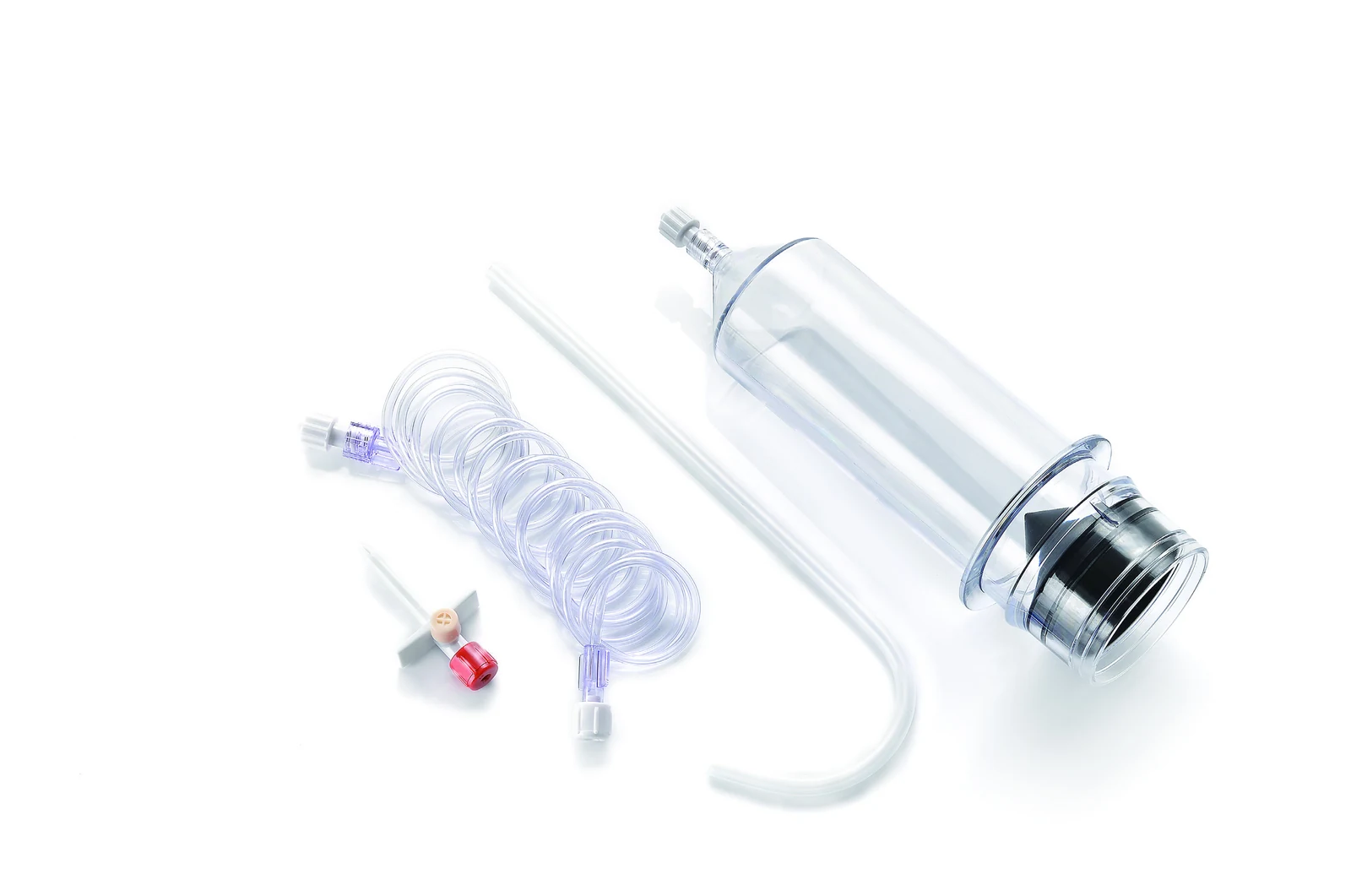
In radiology the purchase starts with the machine, not the product. An injector syringe is chosen by the injector head it fits, not by how many millilitres it holds — a consumable that does not seat in the head cannot be adapted, and a CT room standing idle for want of compatible syringes costs more than the order did. That is why this category is organised by injector brand and model — Medrad/Bayer, Liebel-Flarsheim, Nemoto, Medtron, EZEM — rather than by capacity. We supply CT, MRI and DSA syringes, the 24-hour tubing system and the filling accessories to distributors and importers serving imaging departments.
What to verify before buying
- Exact injector model — brand and version; Stellant and Stellant D take different syringes
- Working pressure — DSA needs 1200 PSI; a 500 PSI line is not a power-injection line
- Single or dual head — decides whether you need one syringe or a pair
- Tubing: per patient or the 24-hour system — this changes cost per study, not just unit price
Compatibility by injector: the one thing you have to get right
The expensive mistake in this category is not overpaying, it is ordering the wrong reference. Injector syringes are specific to the head: barrel diameter, plunger travel and the retention system all differ between manufacturers and, within one manufacturer, between generations of the machine.
Before we quote we need the brand and exact model from the injector's plate, not the family name. Departments often run a CT injector from one brand and an MR injector from another — list them all and we quote the mix as a single reference.
Machines we cover
| Modality | Brand | Models |
|---|---|---|
| CT | Medrad / Bayer | Stellant, Stellant D, MCT & Plus, OP-100, VCT610, ECT710, Salient |
| CT | Liebel-Flarsheim | CT 9000, CT 9000 ADV, OptiVantage |
| CT | Nemoto Kyorindo | A-25, A-60, Dual Shot CT |
| CT | Medtron | Accutron HP 832, Accutron CT-D862 |
| CT | EZEM | Empower CT, Empower-D (ACIST) |
| MRI | Medrad / Bayer | Spectris, Solaris EP |
| MRI | Liebel-Flarsheim | Optistar LE Elite |
| MRI | Nemoto Kyorindo | Sonic Shot 50 |
| MRI | Medtron | Accutron MR |
| MRI | Bracco | Empower MR |
| DSA | Medrad / Bayer | Mark V, Mark 7, Mark 7 Arterion |
| DSA | Liebel-Flarsheim | Angiomat 6000, Illumena |
| DSA | Nemoto Kyorindo | 120S, Rempress |
Syringes ship in single or dual configuration to match the head, from 60 to 250 ml. The pack is semi-transparent so the radiographer can identify the reference without opening it.
The 24-hour tubing system and why it changes cost per study
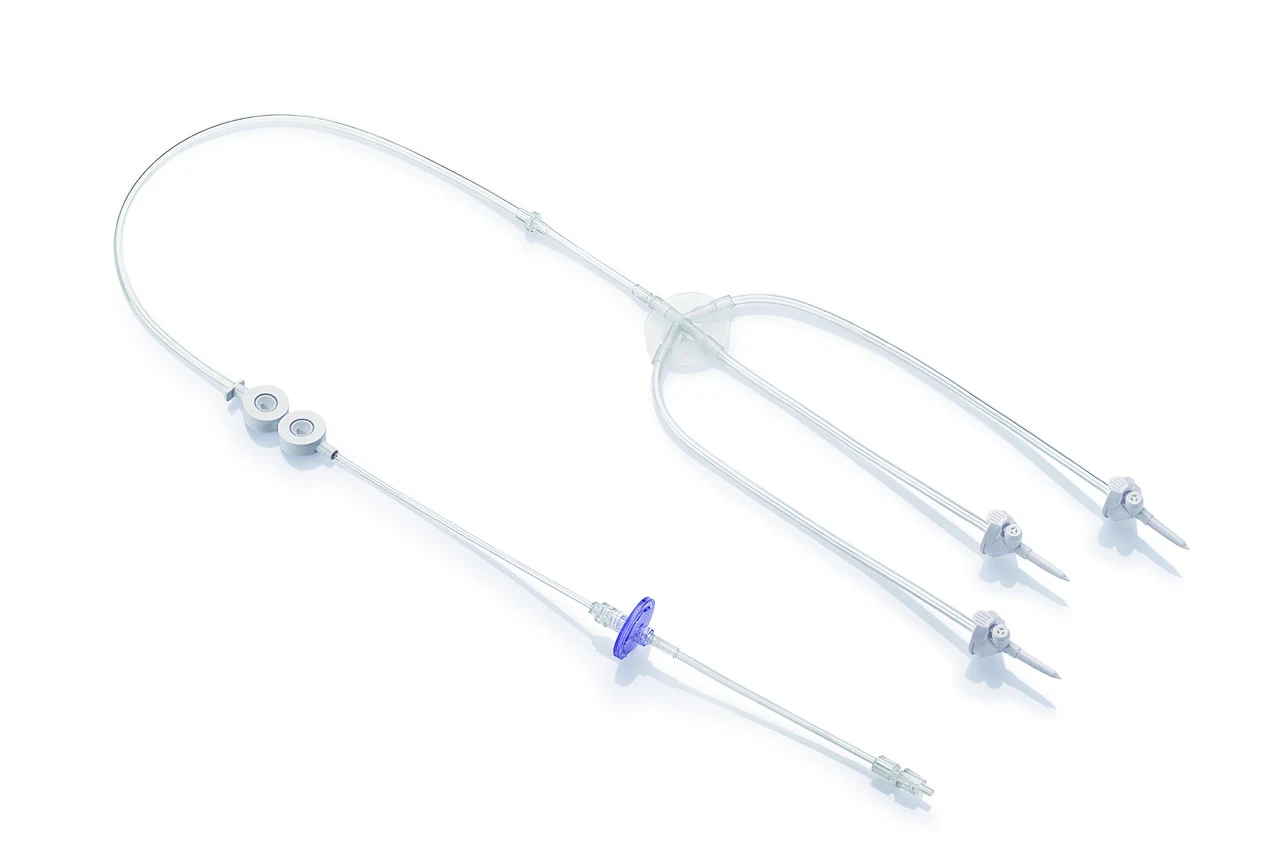
Conventional tubing is replaced in full for every patient. The 24-hour system splits the circuit in two: an inner run that stays connected to the injector for the whole session, and an outer run from the circuit to the patient that is changed for each study.
The difference shows up in cost per study rather than unit price. In a room doing twenty CTs a day, changing only the outer run cuts both material and the preparation time between patients; the inner run is replaced once at the end of the session.
What the inner run carries
- Standard Luer connectors throughout
- An air filter in the bottle spike
- A fluid filter that stops particulate before the line
- Several check valves that prevent reflux toward the saline side
- A pressure sensor to monitor injection flow
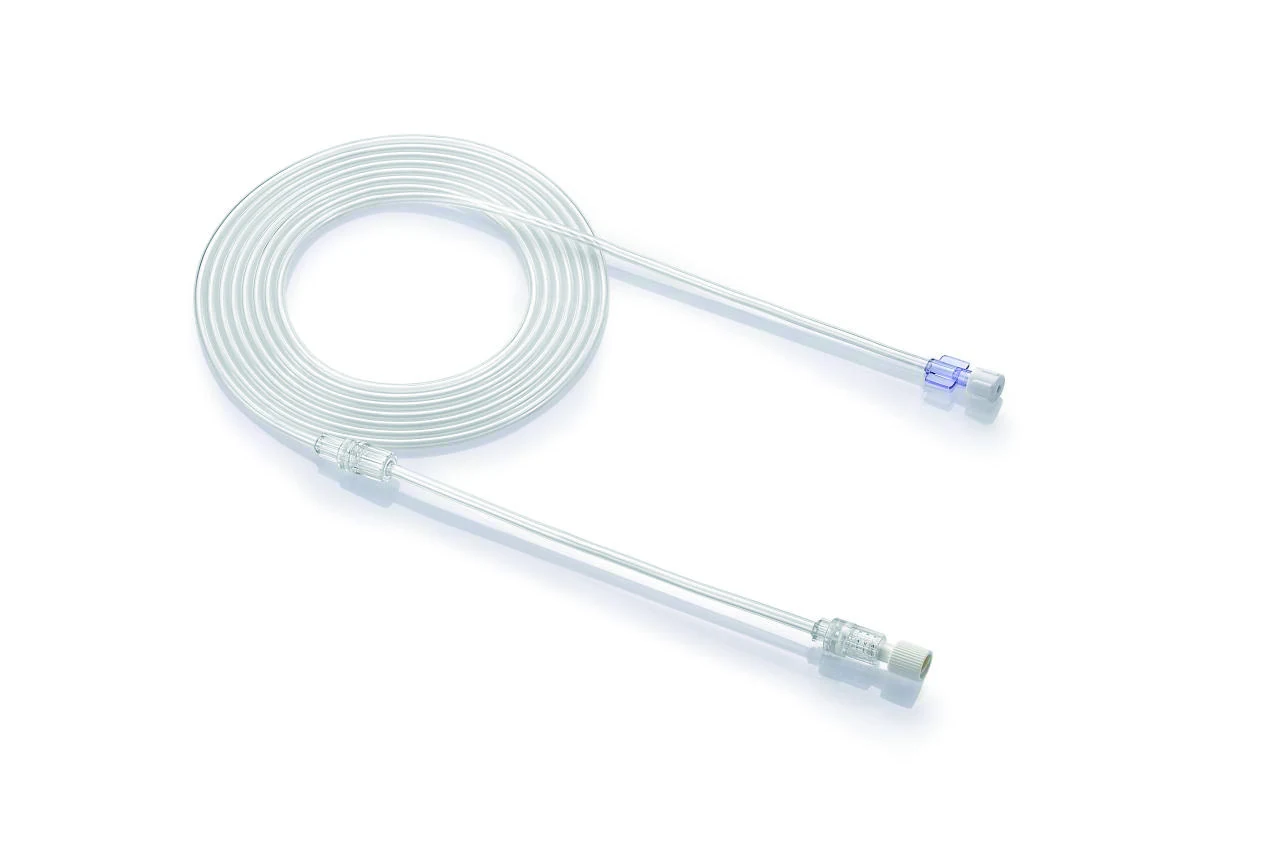
Outer runs are made from 150 to 320 cm and inner runs across the same range, to suit the distance between injector and table. Tell us the real distance in your room: a short line forces the injector to be moved, and a long one leaves slack where it can catch.
Pressure is the specification you cannot approximate
Lines in this category come in three pressure classes and they do not substitute upward.
| Class | Use | Note |
|---|---|---|
| 500 PSI | Monitoring lines and low-demand connections | Softer wall; not for an injector |
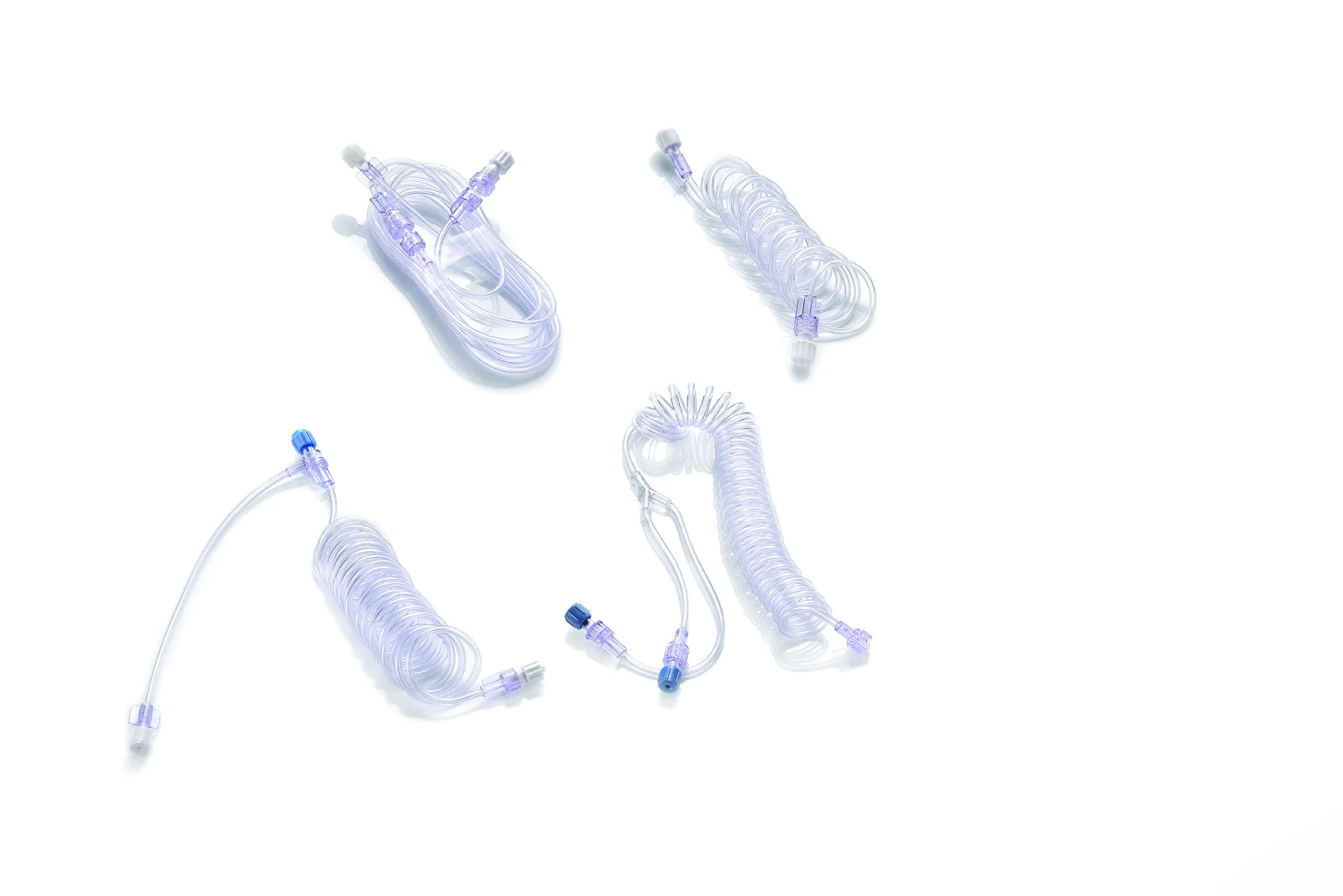
| 600 PSI | Intermediate coiled tubing | Reach with retraction, no hanging loop |
| 1200 PSI | Power injection and the DSA room | Reinforced construction |
A power injector works far above 500 PSI. Fitting a lower class is not a question of safety margin but of different construction, and the failure happens with contrast under pressure in the room. If the line will see an injector, specify the class at the order.
Coiled tubing exists for a practical reason: it extends when the table or the patient moves and retracts afterwards, so no loop of tubing hangs where it can be caught. It costs more than straight tubing and earns that where the room geometry changes during the study.
Frequently asked questions — Radiology & Contrast Media
How do I know which syringe my injector takes?
Send us the brand and exact model as printed on the injector's plate. The family name is not enough: Stellant and Stellant D, or Accutron HP 832 and Accutron CT-D862, take different references. With the model we confirm reference and capacity before quoting.
Do you cover MRI and angiography injectors, or only CT?
All three. CT, MRI and DSA cover different brands and models and each has its own syringe line; the DSA room additionally needs 1200 PSI tubing. If your department runs several modalities we quote them together.
What is the difference between normal tubing and the 24-hour system?
Conventional tubing is replaced in full for every patient. The 24-hour system keeps the inner run connected to the injector for the whole session and changes only the outer run between studies. The right comparison is cost per study, not price per unit.
Can I order a 500 PSI line and use it on the injector?
No. A power injector works well above that pressure, and the 500 PSI line is a different construction rather than the same line with less margin. For power injection, specify the 1200 PSI class from the order.
Are these original parts from the injector manufacturer?
No. They are compatible consumables manufactured under an ISO 13485 quality system and intended to work with the injector models listed. They are not made or endorsed by the holders of those brands; the brand names appear only to identify machine compatibility.
What documentation do you provide for registration?
Technical file, the manufacturer's ISO 13485 certificate and per-batch sterilisation documentation for your submission to COFEPRIS, INVIMA, ARCSA, DIGEMID or the local equivalent. The finished-device registration is held by the distributor in the destination market.