High-Pressure Coiled Tubing for Contrast — 500, 600 & 1200 PSI
SKU: XY-CCT | Tubo Espiral de Alta Presión para Contraste — 500, 600 y 1200 PSI
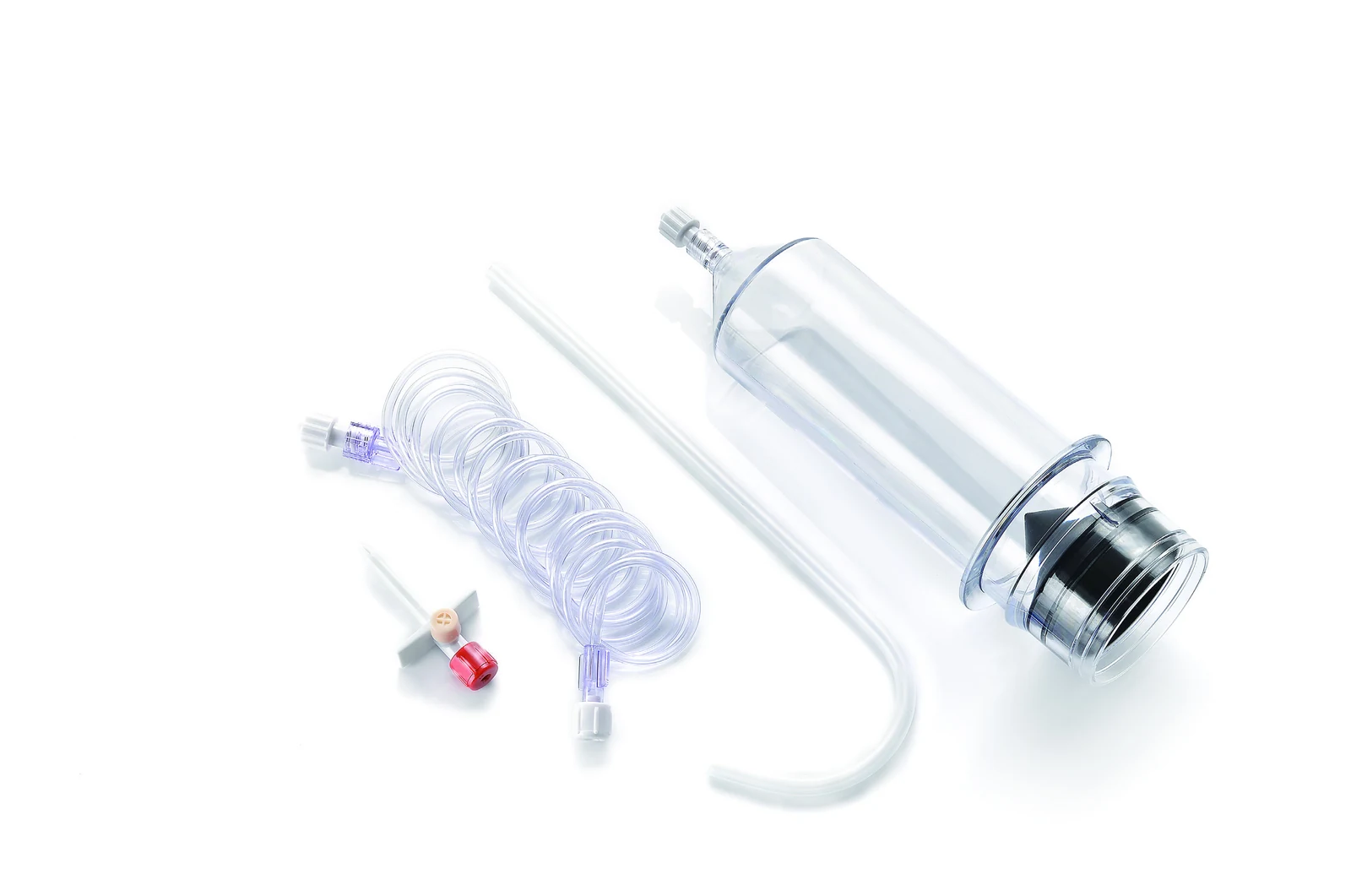
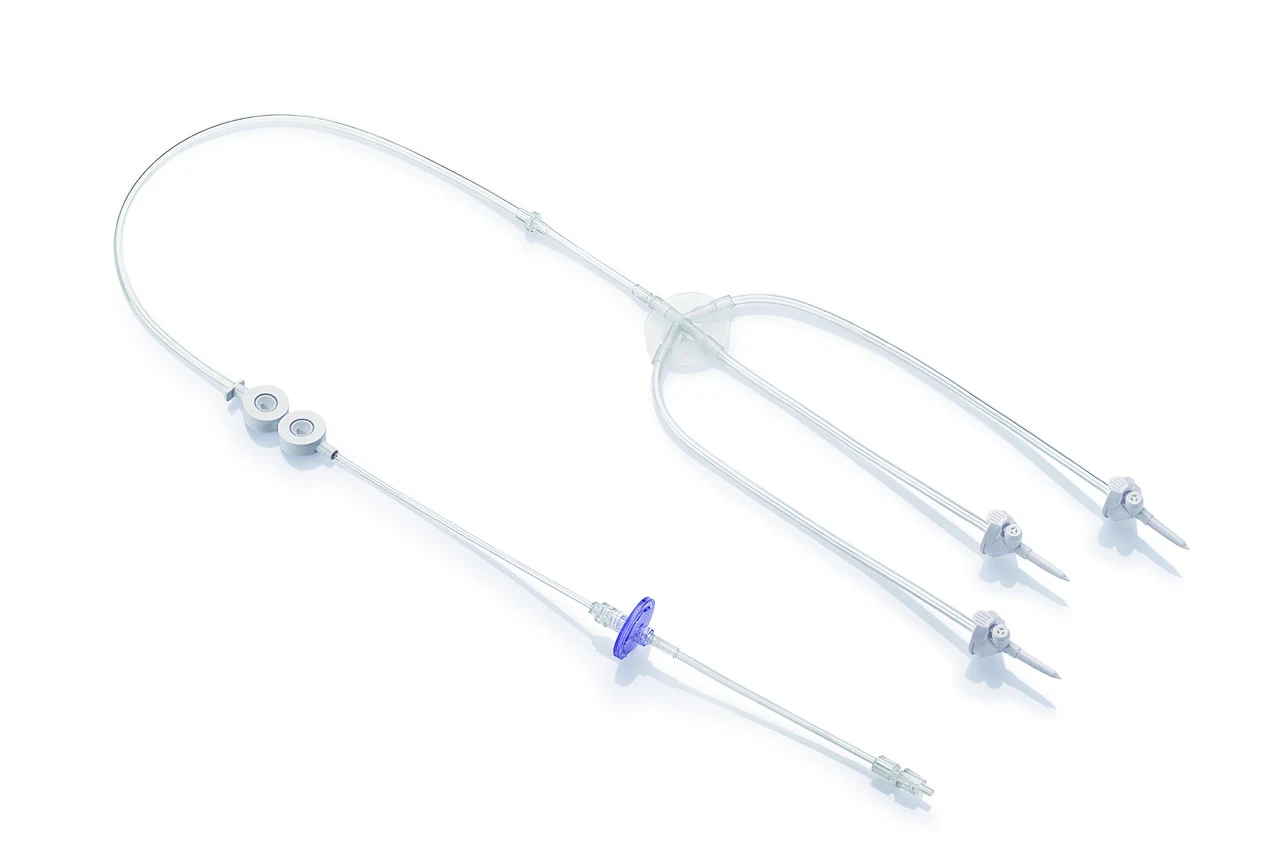
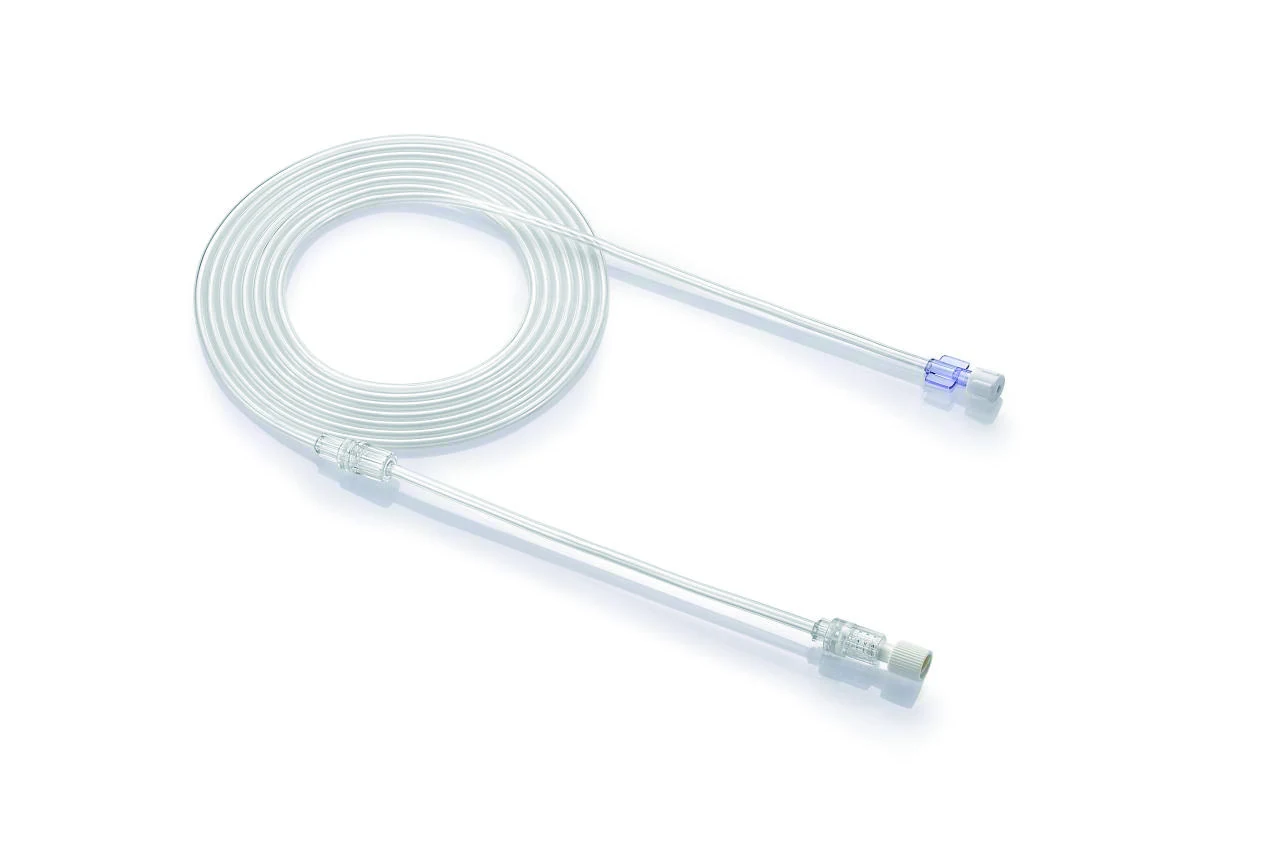
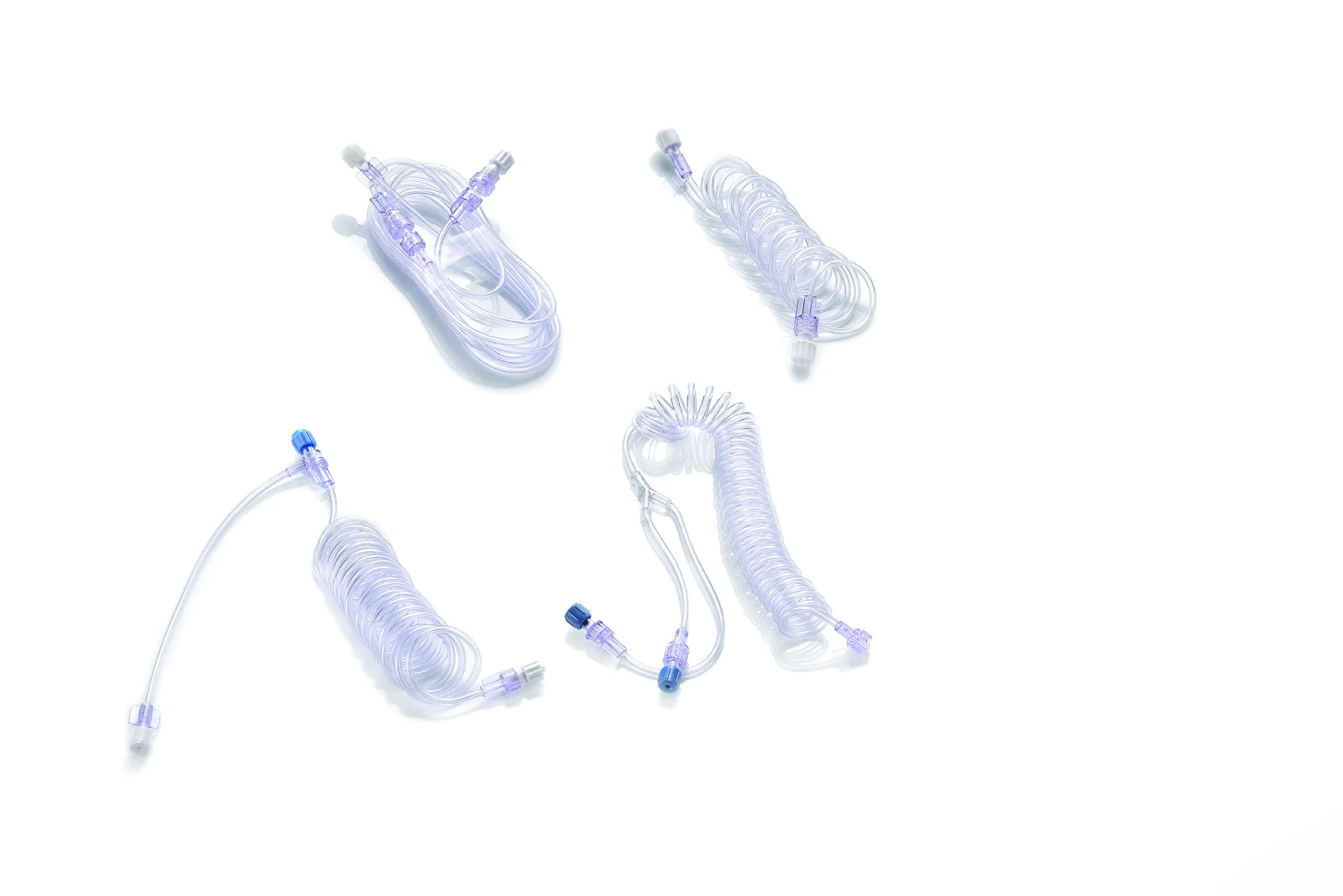
Injector connecting lines come in three pressure classes and they do not substitute upward. The 500 PSI class covers monitoring lines and low-demand connections; 600 PSI is the intermediate coiled tubing; 1200 PSI carries reinforced construction and is what the digital angiography room requires. A power injector works far above 500 PSI — fitting a lower class is not a question of safety margin but of different construction, and the failure happens with contrast under pressure inside the room. The coiled format exists for a practical reason: it extends when the table or the patient moves and retracts afterwards, so no loop of tubing hangs where it can be caught. It costs more than straight tubing and earns that where room geometry changes during the study. Available in single and Y types.
Technical Specifications
Clinical Uses
- Connecting a contrast injector to the patient in CT and MRI
- Digital angiography rooms, where the 1200 PSI class is required
- Rooms where the table or patient moves during the study (coiled format)
- Joining a contrast line and a saline line (Y format)
Pressure classes
Choose by the pressure the line will see, not by price. The classes do not substitute upward: a 500 PSI line on a power injector is not the same line with less margin, it is a different construction.
| Class | Bore | What it is for |
|---|---|---|
| 500 PSI | 3.05 mm | Monitoring lines and low-demand connections |
| 600 PSI | 3.6 mm | Intermediate coiled tubing — reach with retraction, no hanging loop |
| 1200 PSI | 3.81 mm | Power injection and the DSA room — reinforced construction |
The Y type joins two sources — contrast and saline — into a single line to the patient. State format, pressure class and length when requesting a quote.
Frequently Asked Questions — High-Pressure Coiled Tubing for Contrast — 500, 600 & 1200 PSI
Can I use a 500 PSI line on a power injector?
No. A power injector works well above that pressure, and the 500 PSI line is a different construction rather than the same line with less margin. If the line will see an injector, specify the 1200 PSI class from the order.
What does the coiled format buy me over straight tubing?
Reach without slack. The coil extends when the table or patient moves and retracts afterwards, so no loop of tubing hangs where it can be caught. It costs more than straight tubing and earns that where the room geometry changes during the study.
What is the Y type for?
It joins two sources into a single line to the patient, typically contrast and saline, so the flush follows the bolus without disconnecting anything. It is ordered with dual-head injectors or where the protocol flushes immediately.
Request a Quote — High-Pressure Coiled Tubing for Contrast — 500, 600 & 1200 PSI
Reply within 24 business hours with FOB/CIF price, MOQ and lead time. SKU XY-CCT is already attached to your request — just add the quantity.
Request a Sample
Samples available for evaluation. Basic items: free sample. Higher-value items: a sample fee may apply. Shipping not included.
Full Description — High-Pressure Coiled Tubing for Contrast — 500, 600 & 1200 PSI
Pressure class is not a price tier
It is the one line on the order that cannot be approximated. A power injector generates far more than 500 PSI, and the 500 PSI line is built differently — thinner wall, different reinforcement. Fitting it to an injector is not accepting a smaller safety margin; it is fitting the wrong part, and the failure mode is contrast at pressure inside an occupied room. If the line will see an injector, specify 1200 PSI at the order and take the cost.
Why anyone pays extra for a coil
Reach without slack. Straight tubing long enough to allow the table to move leaves a loop hanging off the side for the whole study, and that loop is what gets caught on a rail or a foot. A coil extends and retracts with the movement. Where the room geometry is fixed, straight tubing is the sensible buy.
When the Y type is the right part
A Y joins contrast and saline into one line to the patient, so the flush follows the bolus without anyone disconnecting anything. It goes with dual-head injectors and with protocols that flush immediately. On a single-head machine with no flush step it is an unnecessary connection.
What to specify
- Pressure class, driven by what the line connects to - Coiled or straight, driven by whether the geometry moves - Single or Y - Length