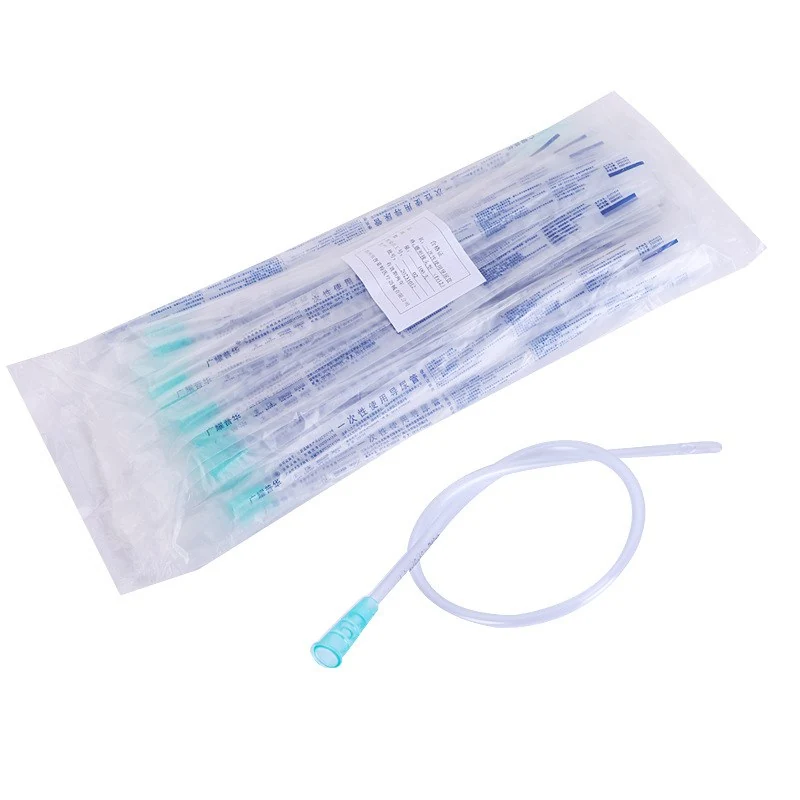
The French scale (Fr, also Charrière or CH) measures the size of catheters and tubes: Foley catheter, suction catheter, nasogastric tube, drains and more. This is the quick reference for how French converts to millimetres, the colour code by size, and the key difference between the French and Gauge scales. It complements our Foley catheter size guide and the suction catheter sizes guide.
How French converts to millimetres
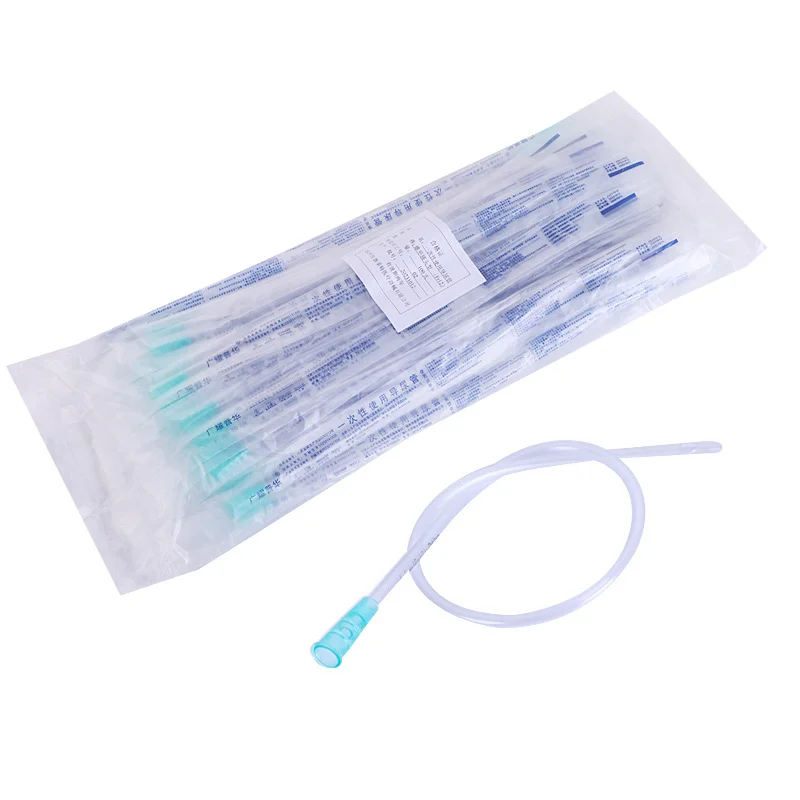
French measures the outer diameter of the catheter. The conversion is direct:
1 French = 1/3 of a millimetre (0.33 mm) → Outer diameter (mm) = French ÷ 3 → French = diameter (mm) × 3
The higher the French number, the larger the catheter (the opposite of the Gauge scale). Conversion chart and the colour code commonly used on Foley catheters:
| French (Fr) | Outer diameter | Common colour |
|---|---|---|
| 6 | 2.0 mm | Light green |
| 8 | 2.7 mm | Blue |
| 10 | 3.3 mm | Black |
| 12 | 4.0 mm | White |
| 14 | 4.7 mm | Green |
| 16 | 5.3 mm | Orange |
| 18 | 6.0 mm | Red |
| 20 | 6.7 mm | Yellow |
| 22 | 7.3 mm | Violet |
| 24 | 8.0 mm | Blue |
The colour code lets you identify the size at a glance on the catheter funnel.
It is worth knowing where the French scale stops applying: it is used on catheters and tubes, but not on the infusion line. An IV set, an extension or a needle-free extension line is specified directly in millimetres of outer and inner diameter (2.7 × 1.6 mm, 2.7 × 1.0 mm, 4.0 × 3.0 mm), without going through Fr at all. Ordering an extension “in 8 Fr” is a common specification error on purchase orders.
Typical sizes by catheter type
French is used across many catheter families; these are the usual ranges:
| Catheter | Typical size |
|---|---|
| Adult Foley | 14–16 Fr (male 16–18, female 14–16) |
| Paediatric Foley | 6–10 Fr |
| Adult suction catheter | 12–14 Fr |
| Paediatric suction catheter | 8–10 Fr |
| Adult nasogastric tube | 14–18 Fr |
| Double-J ureteral stent | 4–8 Fr, core 4.8–6 Fr (length 20–28 cm by height) |
| Drains / others | per indication |
General rule: use the smallest size that does the job, to reduce mucosal trauma. For suction through an endotracheal tube, the catheter should also not exceed half the tube's internal diameter.
Size isn't the only dimension — length matters too. For the same French, a catheter comes in different lengths to suit the anatomy: Foley standard ≈40 cm and female ≈20–26 cm; intermittent and suction catheters vary the same way. For intermittent catheterisation the most-used sizes are 12–14 Fr (female 10–12, male 12–14). Choose size and length by patient, not the French alone.
The clearest case of that rule sits above the bladder. The double-J ureteral stent is ordered as a size-by-length pair, 4 to 8 Fr by 20 to 28 cm, and the length is set by the patient's height, not by the indication. How that becomes an assortment is in the guide to choosing double-J size and length.
French vs Gauge: don't mix up the scales
French and Gauge both measure size, but they are opposite scales used on different products:
| French scale (Fr) | Gauge scale (G) | |
|---|---|---|
| Used on | Catheters and tubes (Foley, suction, NG, drains) | Needles and short IV catheters |
| Direction | Higher number = thicker | Higher number = thinner |
| Measures | Outer diameter (×3 mm) | Diameter related to tubes-per-inch |
In other words: a 24 Fr catheter is thick, but a 24 G needle is very thin. For needle and IV catheter sizing, see the IV needle gauge chart and colour code.
Choosing catheters by size for your warehouse
With catheters, what really prevents errors is a visible colour code on the funnel or hub, together with the printed scale and the length marks on the catheter body. Material follows dwell time: silicone for long-term catheterisation, PVC for short-term, and always latex-free. It's worth keeping a mix of adult and paediatric sizes so the right one is never out of stock.
We make the PVC Foley catheter and the disposable suction catheter across the full French range, with CE, ISO 13485, EO sterilisation and lot traceability; we'll send samples of the most-used sizes for you to try before ordering volume. See how to order wholesale or message us on WhatsApp and we'll quote for your destination.
Frequently Asked Questions
How many millimetres is 1 French?
1 French equals 1/3 of a millimetre (0.33 mm) of outer diameter. To convert, divide the French number by 3: an 18 Fr catheter, for example, is 6.0 mm in outer diameter. For the reverse, multiply the diameter in mm by 3.
Does a higher French mean thicker or thinner?
A higher French number means a thicker catheter. It is the opposite of the needle Gauge scale, where a higher number means thinner. That is why a 24 Fr catheter is thick while a 24 G needle is very thin.
What Foley catheter size is used in adults?
Usually 14–16 Fr (sometimes 16–18 Fr in men and 14–16 Fr in women). In paediatrics, sizes range from 6 to 10 Fr. The general rule is to choose the smallest size that drains well to reduce mucosal trauma.
What is the difference between the French and Gauge scales?
French (Fr) is used on catheters and tubes and increases with thickness (higher number = thicker). Gauge (G) is used on needles and short IV catheters and decreases with thickness (higher number = thinner). They are opposite scales and not interchangeable.