In most of Latin America, a huge share of medical-supply spending is awarded through public tenders (social-security hospitals, health ministries, consolidated purchasing) and private bids from clinic chains. For a distributor or importer, winning those tenders is not only about price: it depends on submitting the right documentation, meeting the technical specification to the letter, and guaranteeing lead times. This guide summarises what a medical-supply tender requires, how a direct-manufacturer supplier helps you compete on price and compliance, and the mistakes that disqualify a bid.
What a tender actually evaluates
A medical-supply tender is almost never decided on lowest price alone. The committee evaluates three blocks:
| Block | What they check | Where points are lost |
|---|---|---|
| Technical compliance | That the product meets the exact spec sheet (sizes, material, connector, sterilization) | Offering an "equivalent" that misses one parameter |
| Legal/regulatory documentation | Valid product registration, CE, ISO 13485, free-sale certificate | Expired, mistranslated or un-apostilled document |
| Delivery capacity | Stock, lead time, production capacity, warranty | Promising a lead time you can't meet → penalties and future disqualification |
Winning is a balance: a competitive price with impeccable documentation and a realistic lead time. Failing one disqualifies the other two.
The documentation you need (and the manufacturer must give you)
The document package disqualifies more bids than anything else. For a typical tender you need:
- Product registration in the country (COFEPRIS, INVIMA, ANMAT, DIGEMID, ISP, ARSA, etc.) — you file it, but the manufacturer must give you the technical dossier.
- ISO 13485 certificate and CE Declaration of Conformity / CE mark from the manufacturer.
- Free Sale Certificate (CFS) and a manufacturer's / authorization letter allowing you to bid their product.
- Technical data sheets plus ISO 10993 biocompatibility and EO sterilization reports.
- Lot traceability and, per the terms, physical samples for evaluation.
A serious direct manufacturer provides this whole package; a middleman often cannot. We compile it on our quality & certifications page and send it for your dossier.
How to compete on price without losing margin
Tender price is won through cost structure, not by sacrificing margin:
- Buy factory-direct: removing middlemen lowers the base cost. That is why a direct-manufacturer supplier beats a trader.
- Volume and consolidation: combining several references into one order/container reduces freight per unit.
- The right Incoterm: choosing EXW/FOB and handling your own logistics often lowers total cost versus DDP, if you have importing experience.
- Private label (OEM): for large contracts, manufacturing under your brand improves margin and locks in the buyer.
The key is to compute the total landed cost (product + freight + duties + clearance), not just the FOB price.
Lead times, stock and the risk of default
Lead time is where most distributors get burned. In a tender, missing the deadline means penalties and, worse, being barred from future bids.
- Confirm the real lead time with the manufacturer before bidding, separating in-stock references (fast delivery) from made-to-order ones.
- Add a safety margin: production days + transit (air days, sea weeks) + customs clearance.
- Secure backup stock for the contract's critical references.
- Agree in writing on replenishment capacity and lot-defect warranty.
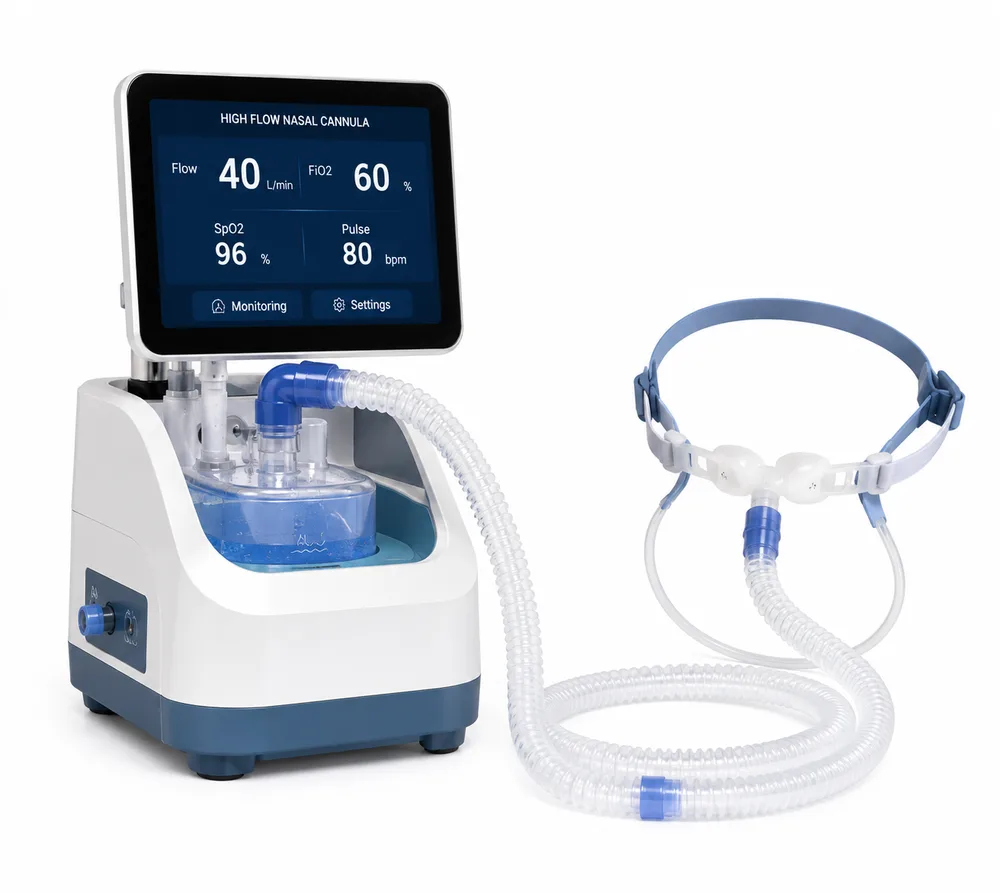
High-turnover products such as breathing circuits, HFNC high-flow systems, Foley catheters and exam gloves should be in permanent stock to serve a contract without gaps.
Mistakes that disqualify a bid
- Offering an "equivalent" that misses the spec: if the terms ask for double-lumen and you offer single, you're out, even if it's cheaper.
- Expired or un-legalised document: a lapsed CE or ISO, or a CFS without apostille/official translation, voids the bid.
- No manufacturer authorization letter: many tenders require it to prevent unauthorised resale.
- Unrealistic lead time: promising 15 days when sea transit is 30.
- No samples when the terms require them for physical evaluation.
- Price without breakdown of taxes/freight when a cost structure is required.
Avoiding these six mistakes already puts you ahead of much of the competition. Edaochi supports its distributors with the full document package, samples, an OEM option and lead times confirmed in writing. Prepare your next tender: quote on WhatsApp in under 24 h.
Frequently Asked Questions
What documents does a medical-supply tender require?
Usually: valid product registration in the country, the manufacturer's ISO 13485 certificate and CE mark/Declaration, a free-sale certificate (CFS), a manufacturer or authorization letter, technical data sheets, ISO 10993 biocompatibility and sterilization reports, and lot traceability. Depending on the terms, also physical samples for evaluation.
Why does a direct manufacturer help win tenders?
Because it provides the full document package (CE, ISO 13485, data sheets, authorization letter) that a middleman often cannot, and because buying factory-direct lowers the base cost, allowing a more competitive price without sacrificing margin.
How do I avoid being disqualified on lead time?
Confirm the real lead time with the manufacturer before bidding, separate in-stock references from made-to-order ones, add a safety margin for production, transit and customs clearance, and secure backup stock for the contract's critical references.
Can you give me an authorization letter to bid your product?
Yes. As the manufacturer we provide a manufacturer's / authorization letter, along with the free-sale certificate and the rest of the technical dossier, so you can submit your bid in public tenders and private competitions.