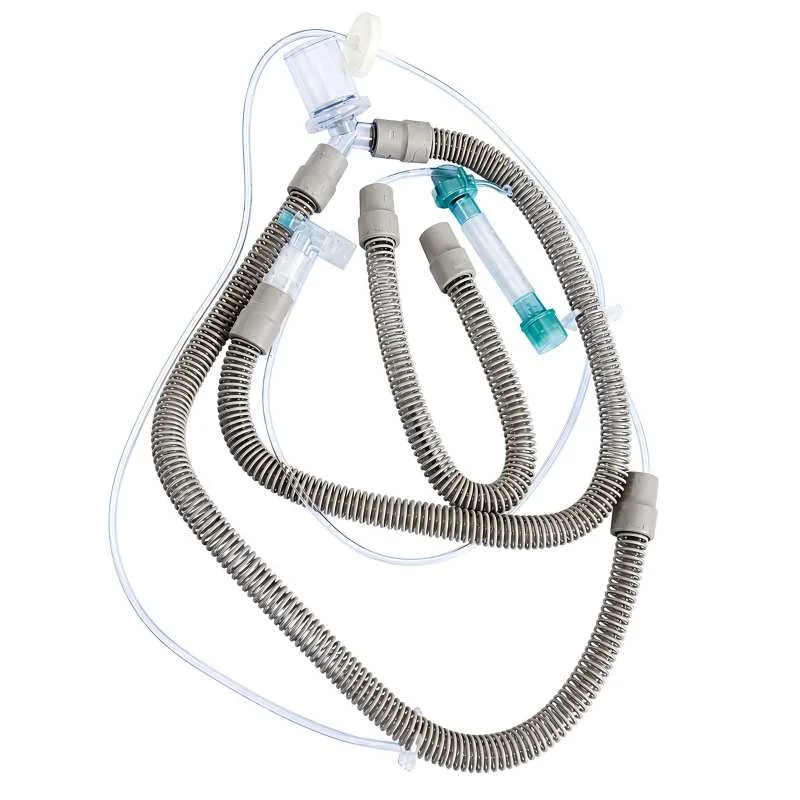
The debate between single-use (disposable) and reusable supplies is, at heart, a debate about infection control and total cost. After the pandemic, infection-prevention standards tightened and the balance shifted strongly toward single-use at critical patient-contact points. This guide explains when single-use is the right choice, which healthcare-associated infections it prevents (VAP, CLABSI, CAUTI), how to compare real cost, and which supplies should always be single-use.
Why single-use gained ground
The single-use item removes the weakest link of the reusable: reprocessing (cleaning, disinfection or sterilization between patients). Incomplete reprocessing leaves biofilm and microbial load that a new device doesn't have. So at critical contact points with the airway, bloodstream and urinary tract, the regulatory and clinical trend is clearly toward single-use:
- Eliminates cross-contamination between patients.
- Guarantees factory-validated sterility (EO sterilization with a per-lot indicator).
- Removes human variability of manual reprocessing.
- Simplifies traceability by lot number.
Reusable keeps its place in durable equipment (steel surgical instruments, laryngoscopes with validated sterilization, etc.), not in critical-contact consumables.
The infections single-use prevents
Three healthcare-associated infections (HAIs) relate directly to devices and improve with properly used single-use supplies:
| Infection | Associated device | Key single-use item |
|---|---|---|
| VAP (ventilator-associated pneumonia) | Circuit and airway | Breathing circuit, suction catheter, HMEF filter |
| CLABSI (catheter-related bloodstream infection) | Vascular access | Needle-free connector, IV set |
| CAUTI (catheter-associated UTI) | Urinary catheter | Foley catheter, closed drainage system |
The common mechanism: each patient gets a new, sterile device, with no inherited biofilm. See the anaesthesia & ventilator breathing circuit, the needle-free connector and the PVC Foley catheter.
Real cost: unit price vs total cost
The classic argument for reusable is the per-use price. But the reusable's total cost of ownership includes items you don't see on the label:
- Labour for cleaning and reprocessing per cycle.
- Water, energy, detergents and sterilization (autoclave/EO).
- Process validation and controls, records and audits.
- Replacement from wear and reprocessing failures.
- The cost of an HAI: a single VAP, CLABSI or CAUTI episode costs far more — in length of stay and treatment — than years of disposable consumables.
When you add it all up, for critical-contact consumables single-use is usually cheaper and safer than reprocessed reusable.
What should always be single-use
As a practical rule, these are single-use and not transferable between patients:
- Airway: breathing circuits, suction catheters, HME/HMEF filters, oxygen cannulas, masks.
- Vascular access: IV sets, needle-free connectors, three-way stopcocks, extensions.
- Urinary tract: Foley catheters and drainage systems.
- Barrier and PPE: examination gloves, caps, shoe covers, surgical drapes.
Examination gloves deserve a special mention: they are the most-consumed item and are never washed or reused — see the medical gloves guide.
How to standardize your disposable catalogue well
For a clinic, a hospital or a distributor standardizing a single-use catalogue, there are five things worth insisting on. Sterility validated by ethylene oxide, with an indicator on each pack and the method documented per lot. Latex-free material and, wherever there's lipid contact or neonatal use, DEHP-free. Lot traceability and CE / ISO 13485 documentation, essential for registration and tenders. A full range of sizes and gauges plus permanent stock, so you never improvise or run dry. And packaging robust enough to hold the sterile barrier to the point of use.
We make the full range of critical-contact consumables (respiratory, infusion, ICU, nursing and collection) with that documentation, and we send samples to evaluate; if you need private label, we do that too. We'll sort it out on WhatsApp.
Frequently Asked Questions
Why is single-use preferred over reusable?
Because it removes reprocessing between patients, the failure point of reusable. Single-use guarantees factory-validated sterility, avoids cross-contamination and removes the variability of manual cleaning, reducing the risk of healthcare-associated infections at critical-contact points.
Isn't single-use more expensive than reusable?
Per unit yes, but the reusable's total cost includes labour, water, energy, detergents, sterilization, validation and replacement, plus the huge cost of a single associated infection. Adding it all up, for critical-contact consumables single-use is usually cheaper and safer.
Which supplies should always be single-use?
Those in critical contact with the airway, blood and urinary tract: breathing circuits, suction catheters, filters, cannulas, IV sets, needle-free connectors, Foley catheters and drainage systems, plus PPE (gloves, caps, drapes, shoe covers).
Which infections does single-use help prevent?
Mainly VAP (ventilator-associated pneumonia), CLABSI (catheter-related bloodstream infection) and CAUTI (catheter-associated UTI), because each patient receives a new, sterile device with no biofilm inherited from the previous patient.