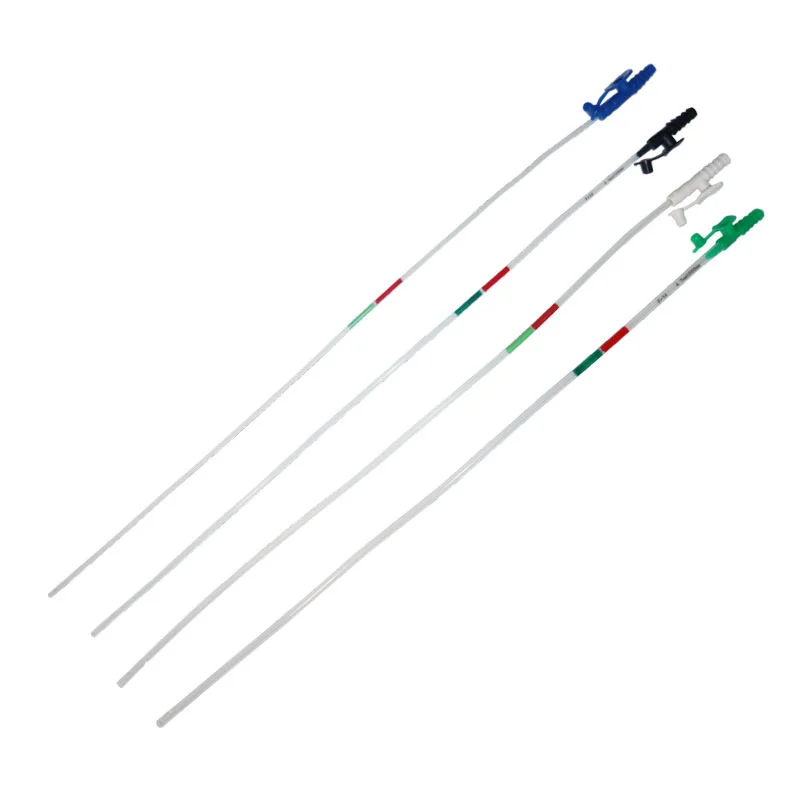
In the ventilated patient, suctioning secretions is a daily, critical task, and how it's done directly affects the risk of ventilator-associated pneumonia (VAP). There are two approaches: open suction, with a single-use catheter introduced after disconnecting the patient, and closed or in-line suction, built into the circuit. Let's look at how they differ, what the evidence says about infection, when each one is preferable, and what suction supplies a department needs to cover both.
Open or closed: what they are
In open suction the patient is disconnected from the ventilator and a sterile single-use disposable suction catheter is introduced. It's the most widespread, economical and universal method; it needs sterile technique and, on disconnection, briefly interrupts ventilation. In closed (in-line) suction the catheter sits inside a protective sleeve permanently connected to the circuit, so you suction without disconnecting the patient or breaking the system, which cuts the loss of PEEP and staff exposure to aerosols.
| Open | Closed (in-line) | |
|---|---|---|
| Ventilator disconnection | Yes | No |
| PEEP loss / derecruitment | Greater | Less |
| Staff aerosol exposure | Greater | Less |
| Cost per event | Low | Higher (but lasts 24–72 h) |
What the evidence says about VAP
For years it was taken for granted that closed suction reduced VAP. Today's evidence is more nuanced: meta-analyses show no clear difference in VAP incidence between open and closed suction when the technique is correct. Where the closed system does win is in patient stability (by not disconnecting, saturation and PEEP drop less, useful in ARDS and high-PEEP patients), in staff biosafety (less aerosolization, relevant with transmissible respiratory pathogens), and when the patient needs very frequent suctioning.
In most departments, open suction with a sterile single-use catheter and good technique remains safe, effective and far cheaper. What isn't up for negotiation, either way, is a new catheter for every open-suction event and respecting the vacuum pressure by age.
Pressure, size and technique (both systems)
Whatever the system, the safety principles are the same. Vacuum pressure goes by age: 80–120 mmHg in adults, 80–100 in paediatrics and 60–80 in neonates; turning it up doesn't suction better, it just injures the mucosa. The size, in French, should not exceed half the internal diameter of the endotracheal tube. Each suction pass lasts at most 10–15 seconds, with prior oxygenation. And always sterile and atraumatic: insert without suctioning, suction on withdrawal.
The full detail is in suctioning technique and pressure in mmHg and the suction catheter sizes guide.
What supplies a suction service needs
To cover open suction and the procedures around it, a service needs a few things. Sterile suction catheters across the full size range, neonatal to adult: the disposable suction catheter. A suction connector with a control port to regulate the vacuum with a finger. For the sterile procedure, the suction kit with catheter and glove. And the vacuum source: a portable electric aspirator for transport and emergencies, and a higher-capacity hospital one for the OR and ICU.
Do you also need a closed (in-line) suction system? Message us on WhatsApp and we'll advise on availability and compatibility with your circuit.
Before buying in volume
For hospitals, ICUs and distributors, what's worth checking is concrete. That the catheters come in the full range of French sizes, neonatal to adult, with legible depth marks. That the tip is atraumatic, with side holes, and the connector has a comfortable vacuum control. That they're EO-sterilised with an indicator on every individual pack, and latex-free. On the aspirators, adequate vacuum and flow, an anti-backflow jar with a filter, low noise and, on the portables, a battery for transport. And, for tenders, CE / ISO 13485 certification with lot traceability.
We make and export suction catheters in every size, plus connectors, kits and portable and wall electric aspirators. Ask for a sample before the big order; message us on WhatsApp with the quantities and we'll get you a box price.
Frequently Asked Questions
Does closed suction prevent pneumonia (VAP) better than open?
Current evidence shows no clear difference in VAP incidence between the two systems when technique is correct. The closed system mainly adds value in patient stability (no PEEP loss from disconnection) and staff biosafety (fewer aerosols), not necessarily in less VAP.
Can the open suction catheter be reused?
No. The open suction catheter is sterile and single-use: a new catheter is used for each suction event and then discarded. Reusing it introduces direct contamination into the airway.
What vacuum pressure should I use?
By age: adult 80–120 mmHg, paediatric 80–100 mmHg and neonate 60–80 mmHg. Raising the pressure doesn't improve suctioning and damages the mucosa. Each pass should last at most 10–15 seconds, with prior oxygenation.
What catheter size should I choose?
The catheter should not exceed half the internal diameter of the endotracheal tube, so it doesn't occlude the airway or generate excessive negative pressure. It's chosen on the French scale according to the tube and patient size.