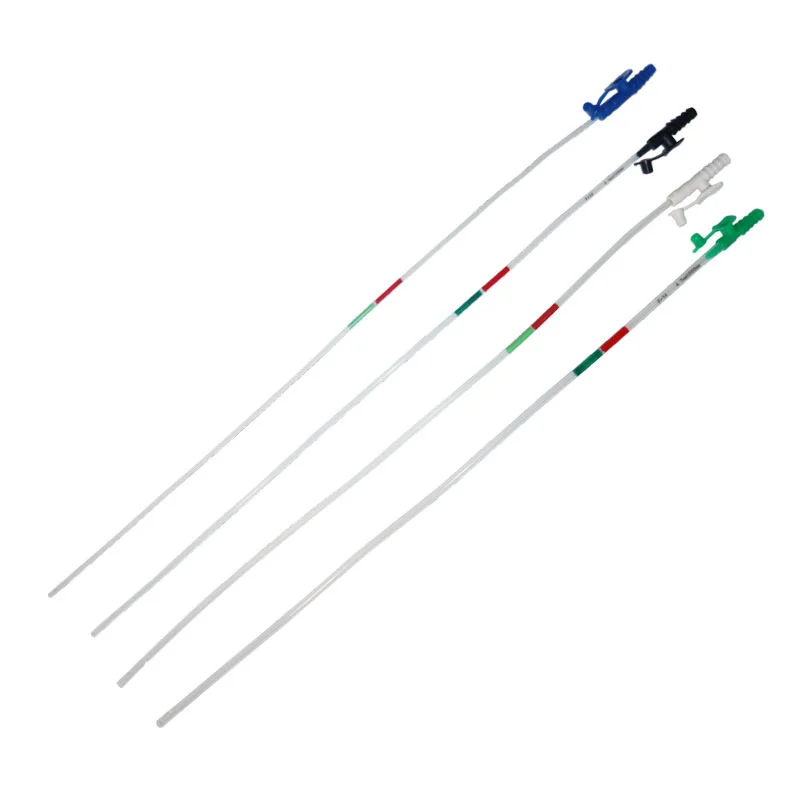
Suctioning secretions is a daily procedure in ICU, the ER and home care, but doing it with the wrong pressure or technique injures the mucosa, causes hypoxia and can contaminate the airway. The two key questions are "how many mmHg should I suction at?" and "what is the step-by-step technique?". This guide brings together the recommended vacuum pressures by age, the correct procedure, the most common mistakes and what to check when buying suction catheters and aspirators wholesale. It complements our suction catheter sizes guide.
How many mmHg to suction at: vacuum pressure by age
Vacuum pressure should be the lowest effective: enough to remove the secretion, but not so high that it injures the mucosa or causes atelectasis. Reference ranges for airway suctioning:
| Patient | Recommended vacuum pressure |
|---|---|
| Adult | 80 to 120 mmHg (up to 150 mmHg for very thick secretions) |
| Paediatric | 60 to 100 mmHg |
| Neonate / infant | 60 to 80 mmHg |
How it is set: occlude the end of the tubing (without the catheter) and adjust the aspirator gauge to the desired value *before* connecting the catheter to the patient. Never "by eye".
Why it matters: excessive pressure traumatises the tracheal or nasal mucosa, causes bleeding, collapses alveoli (atelectasis) and worsens hypoxia. Insufficient pressure forces repeat passes and prolongs desaturation. Surgical field suction (not airway) uses much higher pressures: that is a different scenario.
Catheter size and the half-diameter rule
The catheter must not occlude the airway: if it is too thick, it also sucks out air and worsens hypoxia. The classic rule for an endotracheal or tracheostomy tube is that the catheter's outer diameter should not exceed half the tube's internal diameter.
Indicative sizes (French scale, Fr):
| Patient | Suction catheter size |
|---|---|
| Adult | Fr 12 to 14 |
| Paediatric | Fr 8 to 10 |
| Neonate | Fr 5 to 8 |
Choose a catheter with an atraumatic tip and side holes and with length markings so it is not advanced further than necessary. See the size detail in the suction catheter sizes guide.
When to suction: on indication, not on a schedule
Suctioning is not scheduled "every few hours": it is done only when there are signs that the patient has secretions they cannot clear on their own. Routine suctioning without indication injures the mucosa, promotes hypoxia and raises the risk of infection and bleeding.
The signs that do call for suctioning are: visible or audible secretions (noise or gurgling in the airway), an ineffective cough, a drop in oxygen saturation, a rise in peak pressure on the ventilated patient, laboured breathing or crackles on auscultation. In the absence of these signs, the best move is not to suction.
Suctioning technique step by step
Before:
- Hand hygiene and PPE (gloves, mask; eye protection and N95 if there is aerosol or TB risk).
- Check the aspirator and set the pressure to the age range.
- Pre-oxygenate the patient (FiO₂ 100% / hyperoxygenation) before suctioning, especially in the ventilated patient.
- Prepare sterile saline and a catheter of the correct size.
Procedure:
- Maintain sterile technique with the dominant hand and the catheter.
- Insert the catheter WITHOUT applying suction (with the control open or unoccluded), to the indicated depth — without forcing against resistance.
- Apply suction only on withdrawal, occluding the control intermittently, with a gentle rotating outward movement.
- Do not exceed 10–15 seconds per pass in adults (less in children and neonates): it is the maximum time without re-oxygenating.
- Re-oxygenate between passes and let the saturation recover before repeating.
- Limit the number of passes to those needed; flush the catheter with saline between suctions if reused within the same procedure.
- Discard the catheter (single use), remove gloves, hand hygiene and record the secretion characteristics.
Closed suction systems: in high-risk ventilated patients, the closed system allows suctioning without disconnecting the patient from the ventilator, reducing desaturation and contamination.
Common mistakes and how to avoid them
1. Pressure too high. Suctioning above 120–150 mmHg in adults (or not checking the gauge) injures the mucosa and causes bleeding. Fix: always set and verify beforehand.
2. Applying suction while inserting the catheter. Suctioning on the way in traumatises the mucosa along the whole path and removes oxygen unnecessarily. Fix: suction only on the way out.
3. Passes too long. More than 15 seconds causes hypoxia and bradycardia (especially in children). Fix: time it and re-oxygenate between passes.
4. Not pre-oxygenating. Suctioning an already hypoxic patient without hyperoxygenation precipitates desaturation. Fix: always pre-oxygenate beforehand in the ventilated patient.
5. Oversized catheter. A catheter that is too thick occludes the airway and worsens hypoxia. Fix: apply the half-tube-diameter rule.
6. Reusing the catheter between patients. Suction catheters are single-use; reusing them spreads infection. Fix: one sterile catheter per procedure.
Choosing suction catheters and the aspirator
To supply an ICU, ER or home-care service, in the catheters look for a full size range (Fr 5 to 14) with a size scale and a visible colour code covering neonate, paediatric and adult. The tip should be atraumatic with side holes and an integrated finger vacuum control; sterile, single-use and latex-free.
On the aspirator, what matters is an adjustable vacuum range covering paediatric and adult values with a reliable gauge. Pick a portable unit for transport and home care, or a floor or wall unit for theatre and ICU; check the jar has an anti-spill and anti-backflow system plus a filter to protect the pump, and that the noise is bearable for continuous use. If you also collect sputum for the lab, drop a sputum trap into the circuit.
We make suction catheters, the all-in-one suction kit and hospital suction pumps with CE, ISO 13485 and lot traceability. Ask us for the technical documentation and a few samples before quoting volume, and we'll take it from there on WhatsApp.
Frequently Asked Questions
How many mmHg should you suction secretions at?
For airway suctioning: adult 80–120 mmHg (up to 150 for very thick secretions), paediatric 60–100 mmHg and neonate 60–80 mmHg. Use the lowest effective pressure and set the gauge before connecting the catheter. Excessive pressure injures the mucosa, causes bleeding and atelectasis.
How long can each suction pass last?
No more than 10 to 15 seconds per pass in adults, and less in children and neonates. It is the maximum time without re-oxygenating; exceeding it causes hypoxia and, in children, bradycardia. Between passes you must re-oxygenate and let the saturation recover before repeating.
Do you apply suction while inserting or withdrawing the catheter?
Only on withdrawal. The catheter is inserted without applying suction (control open) to the indicated depth; suction is applied intermittently as it is withdrawn, with a gentle rotating movement. Suctioning on the way in traumatises the mucosa and removes oxygen unnecessarily.
What size suction catheter should you use?
Indicatively Fr 12–14 in adults, Fr 8–10 in paediatrics and Fr 5–8 in neonates. The rule for an endotracheal or tracheostomy tube is that the catheter's outer diameter should not exceed half the tube's internal diameter, so as not to occlude the airway and worsen hypoxia.