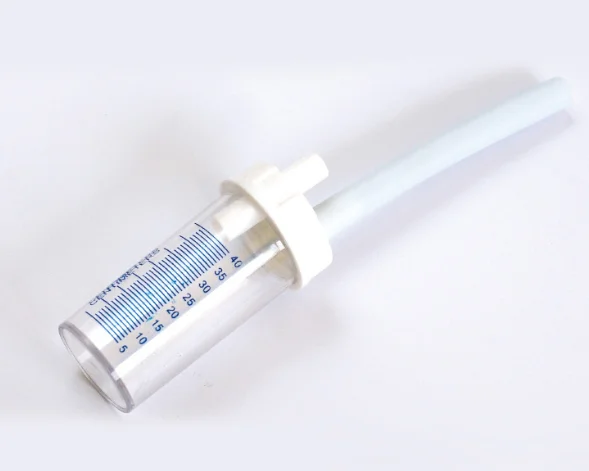
The disposable mucus trap (mucus specimen trap / sputum trap) is one of the most-used consumables in ICU, anaesthesia, the ER and pulmonology — and one of the most confused with a plain suction device. They are not the same. The mucus trap is not a treatment device: it is a respiratory specimen collector placed in line with the suction circuit to retain sputum, mucus and tracheobronchial secretions in a sterile graduated bottle, ready for direct shipment to the lab.
What is a mucus trap and how does it differ from a suction device?
A conventional tracheal suction device has one clinical goal: to clear the patient's airway. The secretions are suctioned straight into the unit's waste canister. The patient breathes better, but the secretions are lost as waste — no use for lab diagnosis.
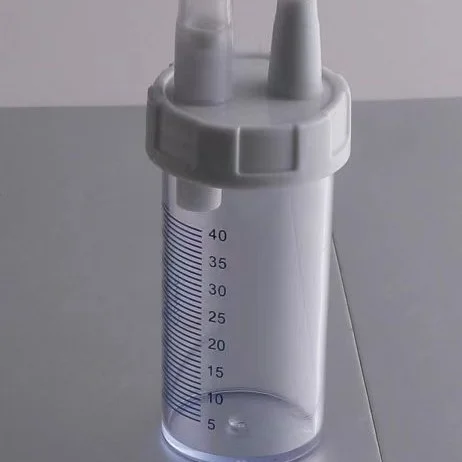
The mucus trap solves this with a simple principle. The device is placed in series between the suction catheter and the vacuum source. The negative pressure passes through the bottle, but the secretions — denser than air — are retained in the sterile graduated container. The result: the patient gets the usual suction and the lab gets a fresh, sealed sample in the same procedure, with no extra step.
In practice, the mucus trap is used when there is a diagnostic indication: suspected bacterial pneumonia, tuberculosis diagnosis, lower-airway culture, infection surveillance in an intubated patient, or viral diagnosis (influenza, SARS-CoV-2). Without that indication, routine suction with a direct catheter is enough and cheaper.
Equivalent commercial names: Mucus Specimen Trap, Sputum Trap, Suction Specimen Trap, Mucus Extractor.
How it works: the suction circuit with a mucus trap
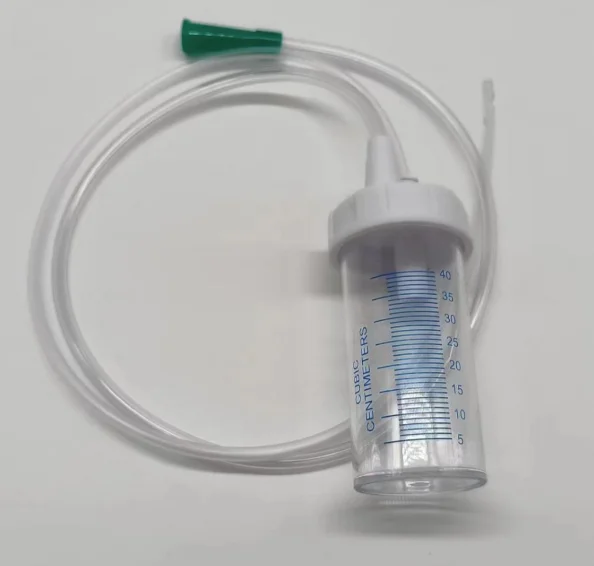
Understanding the connection circuit is key to using the device correctly and avoiding errors that contaminate the sample or reduce its quality.
The complete circuit: Suction catheter (patient side) → bottle inlet port → sterile graduated bottle → side port → collapse-proof tube → vacuum source (suction unit or wall outlet)
The bottle acts as a trap by density difference: air passes on to the suction unit, secretions stay in the bottle. The vacuum passes end to end, but mucus and sputum lack the kinetic energy to jump the bottle and continue to the unit.
The anti-contamination adapter: the component that stops the non-sterile suction tubing (running from bottle to unit) from contaminating the inside of the bottle. A quality trap includes it as standard; without it, reusable tubing can contaminate the sample with tube flora.
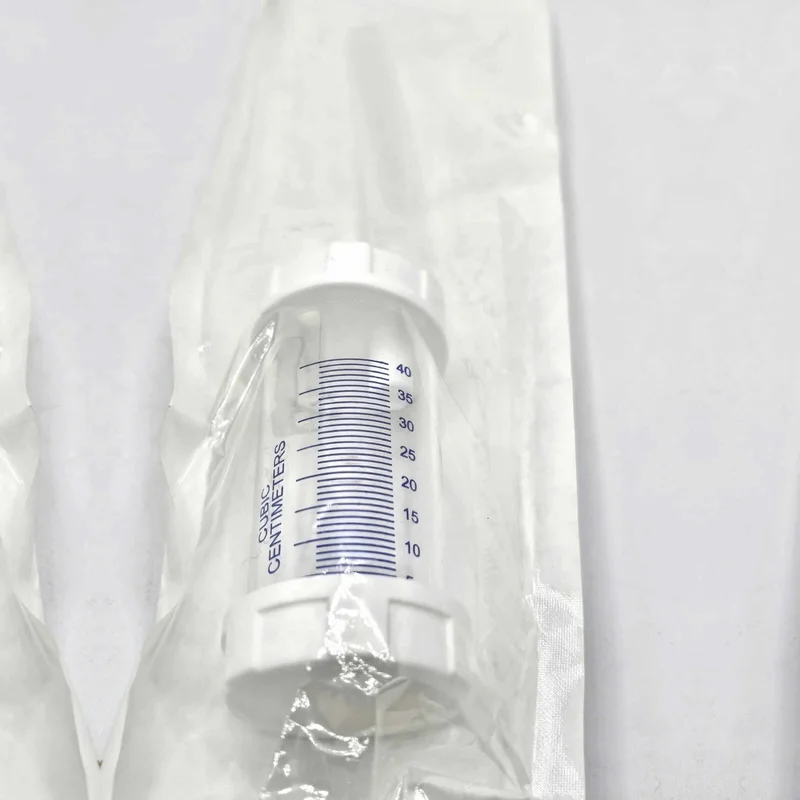
The graduated bottle: a scale in 5 mL increments (with 2 mL subdivisions at the bottom) lets you measure the collected volume in real time without opening it. This matters because labs have minimum volumes: 1 mL for direct stain (Gram, AFB), 3 mL for bacterial culture, 5 mL for mycobacteria (TB) culture.
The 5-inch collapse-proof tube: double-wall to resist vacuum without deforming, latex-free, compatible with wall suction (−40 to −80 mmHg), portable (−20 to −50 mmHg) and stand units (−60 to −90 mmHg). The suction catheter that feeds it is sized per our suction catheter sizes and types guide.
Clinical applications: when the mucus trap is needed
ICU and mechanical ventilation — the main indication: intubated or tracheostomy patients cannot expectorate voluntarily. The mucus trap is the only practical way to get lower-airway samples in these patients without bronchoscopy. Indicated in suspected ventilator-associated pneumonia (VAP), pulmonary sepsis, bacterial colonisation monitoring in critical patients, and antibiotic-resistance surveillance.
Tuberculosis diagnosis: sputum collected with a mucus trap is a reference method for active pulmonary TB, accepted by the WHO and national TB programmes. Valid for AFB stain (Ziehl-Neelsen, auramine), solid (Löwenstein-Jensen) and liquid (MGIT 960) culture, and molecular PCR GeneXpert MTB/RIF Ultra. In intubated patients with active TB, the sensitivity of tracheobronchial aspirate exceeds 80–90%.
Anaesthesia and surgery: in general-anaesthesia cases needing respiratory samples, the trap allows collection simultaneous with routine suction, with no extra instrumentation or OR time.
Emergency: in the initial assessment of acute respiratory failure, severe pneumonia or suspected TB, the trap takes the sample at the same time as airway suction, before starting empirical antibiotics.
Outpatient pulmonology: patients with bronchiectasis, immunosuppression (HIV, transplant, chemotherapy) or chronic respiratory failure needing quality lower-airway samples for periodic cultures.
Neonatology and paediatrics: the 2 mL scale at the bottom allows precise measurement of small samples. Compatible with low-pressure suction (max −0.02 MPa) and fine-gauge catheters (Fr 6–8). Useful in neonatal respiratory infection and RSV surveillance.
Viral diagnosis: SARS-CoV-2, influenza A/B, RSV PCR. Tracheobronchial aspirates have higher viral load and diagnostic sensitivity than nasopharyngeal swabs in intubated patients.
Selection guide: what to look at when buying for a hospital or clinic
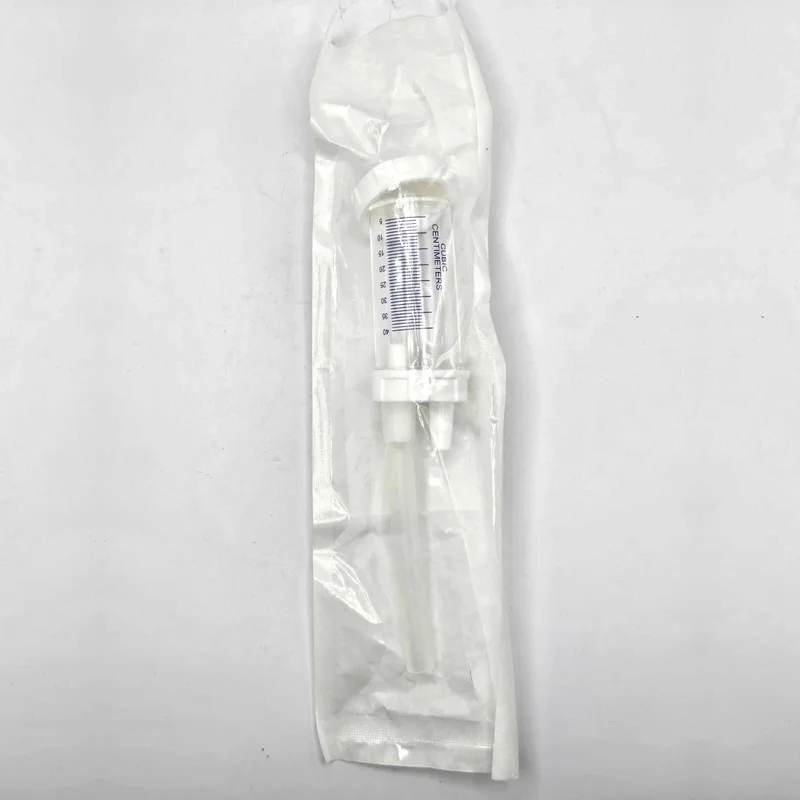
The mucus trap market has dozens of manufacturers with very different specs. The criteria that matter for an institutional purchase:
Bottle volume: the most-used adult standard is 40 mL, enough for the vast majority of diagnostic indications (minimum required: 3–5 mL for TB, 1–3 mL for general bacteriology). 30 mL versions exist for paediatrics, 70/80 mL for high secretion output. For general adult ICU use, 40 mL is the standard.
Graduation scale: look for a visible 5 mL scale with 1–2 mL subdivisions at the bottom. Without graduation you can't verify the lab minimum was reached.
Anti-contamination adapter: must be included as standard. If the manufacturer sells it separately or omits it, the sample can be contaminated by suction-tube flora.
Tube material: latex-free is mandatory for hospitals serving latex-allergic patients. A reinforced (heavy-wall) tube is needed so it doesn't collapse under vacuum.
Sterilisation and packaging: EO (ethylene oxide) is the standard method. An external sterility indicator on the peel-pouch lets you detect a broken sterile chain before use.
Certifications for hospital tenders: ISO 13485 manufacturer and CE mark (MDR 2017/745); some countries require national registration. Request technical documentation before quoting.
Reference price (2026): wholesale 40 mL traps run about USD 0.30–1.20 per unit by volume and origin; CE-certified versions for regulated markets sit at the upper end. For hospitals using 500–2000 units/month, tiered discounts are significant.
Use protocol: how to connect and use the mucus trap correctly
Before the procedure:
- Check peel-pouch integrity and the sterility indicator. If the indicator has changed or the pouch is torn, discard.
- Label the bottle with patient data BEFORE opening the peel-pouch.
- Select the appropriate suction catheter: F14 standard adult, F12 thin adult, F10 paediatric/neonatal.
- PPE: sterile gloves, N95 mask if TB or airborne infection is suspected, eye protection.
Assembly and procedure:
- Open the peel-pouch without touching the inside of the bottle.
- Connect the suction catheter to the top inlet port of the bottle.
- Connect the collapse-proof tube to the side port and to the vacuum source.
- Set pressure: adults 80–120 mmHg, paediatric 60–80 mmHg, neonates 40–60 mmHg.
- Suction per protocol: insert the catheter without vacuum past the carina, withdraw 1–2 cm and apply vacuum with a slow rotating motion. Max 15 seconds per pass in adults.
- Repeat 1–2 times if volume is insufficient; check the graduated scale.
- Remove and discard the catheter.
- Close the screw cap tightly. Do not shake the sample.
- Place in a biohazard bag labelled with patient, sample type (tracheal aspirate), date, time and required transport temperature.
Transport times to the lab:
- Bacterial culture: max 2 hours at room temperature; up to 24 h at 4 °C.
- AFB and mycobacteria culture (TB): up to 24 h at room temperature; up to 7 days at 4 °C.
- GeneXpert or viral PCR: as AFB. Ship to reference labs in IATA P650 triple packaging.
5 common mistakes using mucus traps and how to avoid them
Mistake 1 — Connecting the bottle backwards. If the inlet (patient) and outlet (vacuum) ports are swapped, secretions are not retained but pass straight to the suction unit. Fix: identify the ports before connecting — inlet to catheter, side port to suction tube.
Mistake 2 — Excessive vacuum pressure. More than 120 mmHg in adults traumatises the mucosa, bleeds into the sample and lyses leukocytes. The lab may reject a haemorrhagic sample as non-representative. Fix: check the gauge before starting and set the recommended range.
Mistake 3 — Omitting the anti-contamination adapter. Some users discard it without knowing its function. Without it, the (non-sterile, if reusable) suction tubing contaminates the bottle. Fix: always include it in the assembly.
Mistake 4 — Transport delay. Leaving the sample more than 2 hours at room temperature invalidates bacterial cultures. Pseudomonas and Acinetobacter — two of the most frequent VAP pathogens — are very sensitive to time outside the host. Fix: send to the lab within the first 30 minutes when possible.
Mistake 5 — Reusing the mucus trap. A used bottle has inner walls colonised with the previous patient's flora; any later sample grows contaminated. The mucus trap is strictly single-use, by design and by infection-control guidelines.
We manufacture 40 mL disposable mucus traps with anti-contamination adapter included, 2 mL graduation at the base, latex-free and DEHP-free, with CE / ISO 13485. Message us on WhatsApp with the volume you need and we'll put together a box price.
Frequently Asked Questions
Does the mucus trap work with any suction unit?
Yes. The 40 mL mucus trap is compatible with battery portable suction units, hospital electric table or stand units, and centralised wall vacuum. The 5-inch collapse-proof tube resists the pressure of all these systems without deforming, and no extra adapters are needed in most hospital installations.
When do I need a mucus trap instead of routine suction?
When there is a diagnostic indication: suspected bacterial pneumonia or VAP needing culture, TB diagnosis or follow-up, pathogen identification in a critical intubated patient, viral diagnosis, or any case where respiratory secretions will be analysed in the lab. Without a diagnostic indication, routine suction with a direct catheter is enough.
How does the mucus trap differ from bronchoalveolar lavage (BAL)?
Tracheobronchial aspirate with a mucus trap is a non-invasive procedure done by nursing during routine suction. BAL requires bronchoscopy, a specialist, sedation and extra equipment. For most ICU indications — bacterial pneumonia, VAP, TB — the trap aspirate has sensitivity comparable to BAL. BAL is reserved for cases where repeated tracheal aspirate is negative or for peripheral-lung pathogens.
What minimum volume does the lab need to process the sample?
Standard minimums are: 1 mL for direct stain (Gram, AFB), 3 mL for bacterial culture, 5 mL for mycobacteria (TB) culture. The graduated scale on the 40 mL bottle lets you verify the volume obtained in real time during the procedure, without opening the bottle.
Why 40 mL — is that the right size?
40 mL is the most-used adult standard: it comfortably exceeds the lab minimums (3–5 mL) while staying compact. 30 mL exists for paediatrics and 70/80 mL for high secretion output, but for general adult ICU, anaesthesia and ER use, 40 mL covers the vast majority of diagnostic indications.
Do you supply 40 mL traps with CE/ISO documentation?
Yes. We manufacture the 40 mL disposable mucus trap in clear graduated PVC with the anti-contamination adapter, screw cap and 5-inch latex-free collapse-proof tube, EO-sterile in an individual peel-pouch. CE and ISO 13485 documentation for import and tenders is included. We also offer private-label (OEM) packaging and a low minimum order — message us on WhatsApp with your volume and we'll respond with pricing.