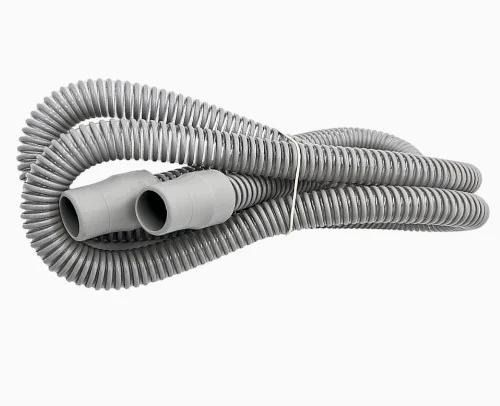
One of the most repeated questions in the ICU is "how often should the ventilator circuit be changed?". The answer changed completely in recent years: evidence shows that routinely changing the circuit on a fixed schedule increases the risk of ventilator-associated pneumonia (VAP), it does not reduce it. This guide explains the current replacement criterion, when the circuit does need changing, the role of the HME/HMEF filter and humidification, and what to check when buying circuits and filters wholesale for an ICU or a distributor.
The current criterion: do not change the circuit routinely
For a long time the circuit was changed every 2, 3 or 7 days "for hygiene". Accumulated evidence showed the opposite: every manipulation of the circuit moves contaminated condensate and secretions toward the patient's airway, and opening the system is an entry point for bacteria.
The current criterion, captured in VAP-prevention *bundles*, is clear:
- Do not change the circuit routinely by calendar.
- Change the circuit only when it is visibly soiled or malfunctioning.
Lengthening the change interval is associated with equal or lower VAP incidence and reduces cost and nursing workload. This applies to both invasive and non-invasive mechanical ventilation.
Important: "do not change routinely" does not mean "do not monitor". The circuit is inspected every shift for condensate, secretions or faults.
When the circuit DOES need changing
Replacement is by indication, not by date. Change the circuit (or the affected component) when:
- It is visibly soiled with secretions, blood or vomit.
- There is malfunction: leak, crack, broken connector, failure in the inspiratory/expiratory limb.
- The patient changes (single-patient circuit, never shared).
- The manufacturer's protocol for the circuit or ventilator indicates it.
Components with their own rule:
- Water/condensate traps: always empty draining the condensate away from the patient, without disconnecting the circuit and without the liquid refluxing toward the airway.
- Active humidification (heated cascade, e.g. Fisher type): follow the manufacturer's interval for the chamber; sterile water is topped up by consumption.
- HME/HMEF filter: see the next section — it has its own change criterion.
The HME / HMEF filter and humidification
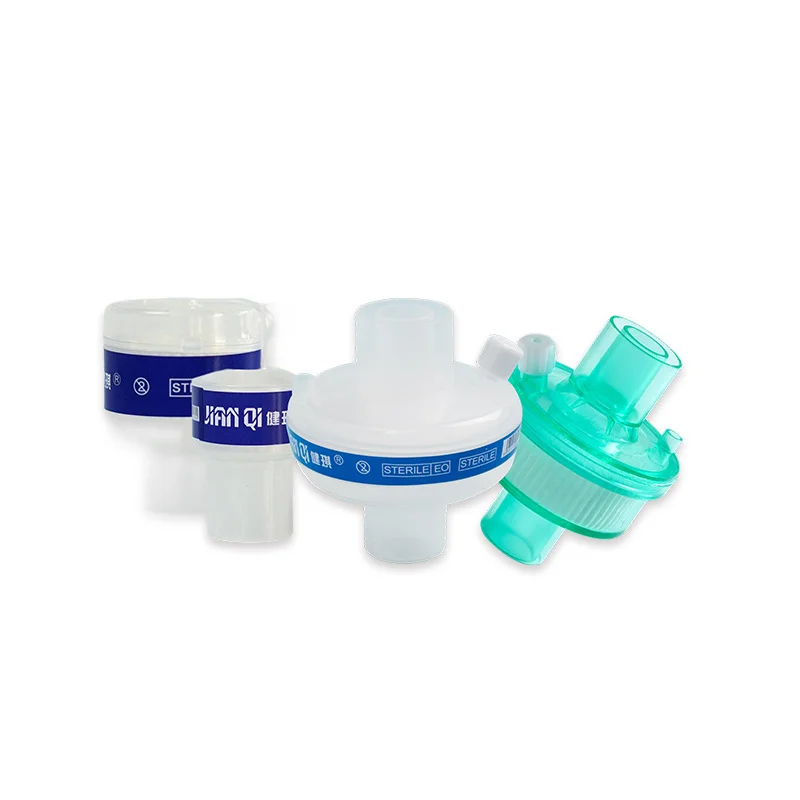
The HME (heat and moisture exchanger, or "artificial nose") retains the heat and moisture the patient exhales and returns them on the next breath. The HMEF adds a filter membrane that traps bacteria and viruses, protecting patient and ventilator from cross-contamination — see our HME filter for mechanical ventilation guide.
How often the HME/HMEF is changed:
- As a general rule, every 24 hours, and per manufacturer.
- Sooner if it is saturated with secretions, blood-stained, or if resistance rises (the patient "fights" the filter).
- HME must not be used at the same time as active humidification: it saturates and obstructs.
HME vs active humidification: the HME/HMEF is passive, simple and economical, ideal for most patients and for transport. Heated active humidification is reserved for thick secretions, prolonged ventilation or when the HME cannot condition the gas well. Choosing one or the other — not both at once — is part of the VAP-prevention bundle.
The VAP-prevention bundle, beyond the circuit
Circuit replacement is only one piece. VAP prevention rests on a set of measures (the *bundle*) acting together:
- Head of bed elevated 30–45° to reduce microaspiration.
- Oral hygiene with chlorhexidine per protocol.
- Daily sedation interruption and extubation assessment (do not prolong ventilation longer than necessary).
- Subglottic secretion suctioning in tubes that allow it.
- Condensate management without reflux toward the patient.
- Strict hand hygiene before and after handling the circuit.
- Controlled cuff pressure of the tube (20–30 cmH₂O).
Consistency across all these measures matters more than any single intervention. Routine circuit replacement was dropped from the bundle precisely because it provided no benefit.
How to choose ventilator circuits and filters
To supply an ICU or distribute, the circuit should be single-patient, disposable or single-use so it isn't reused between patients, and it helps to stock adult and paediatric or neonatal sizes, since an adult size isn't used in a paediatric patient. Standard 22/15 mm ISO connectors let it couple with most ventilators without adaptors, though it's always worth confirming compatibility with the hospital's equipment. The configuration varies with humidification: with or without a gas-sampling line, with water traps, heated or not, coaxial or dual-limb, depending on whether active or passive HME humidification is used. The material, latex-free medical PVC, EO sterilisation and ISO 10993 biocompatibility. Among filters, the HMEF (with filter) is the one that provides an antimicrobial barrier: check the bacterial and viral filtration efficiency and that the dead space suits the patient size, which weighs especially in paediatrics.
We make them with CE (MDR 2017/745), ISO 13485 and lot traceability for audits and tenders, with national registration per country; ask us for samples before quoting volume and we'll take it to WhatsApp.
Frequently Asked Questions
How often is the ventilator circuit changed?
The ventilator circuit is NOT changed routinely by calendar. Current evidence shows that frequent replacement increases the risk of VAP. It is changed only when it is visibly soiled, malfunctioning, or when the patient changes. It is, however, inspected every shift to detect condensate or secretions.
How often is the HME or HMEF filter changed?
As a general rule, the HME/HMEF is changed every 24 hours and per manufacturer, or sooner if it is saturated with secretions, blood-stained or breathing resistance rises. HME must not be used together with active humidification, because it saturates and obstructs.
Why does changing the circuit often increase the pneumonia risk?
Every manipulation of the circuit moves contaminated condensate and accumulated secretions toward the patient's airway, and opening the system introduces environmental bacteria. That is why VAP-prevention bundles recommend not changing the circuit routinely, but only when it is soiled or not working.
HME or active humidification?
The HME/HMEF (passive) is simple, economical and sufficient for most patients and for transport. Heated active humidification is reserved for very thick secretions, prolonged ventilation or when the HME cannot condition the gas well. The two are not used at once: the HME would saturate.