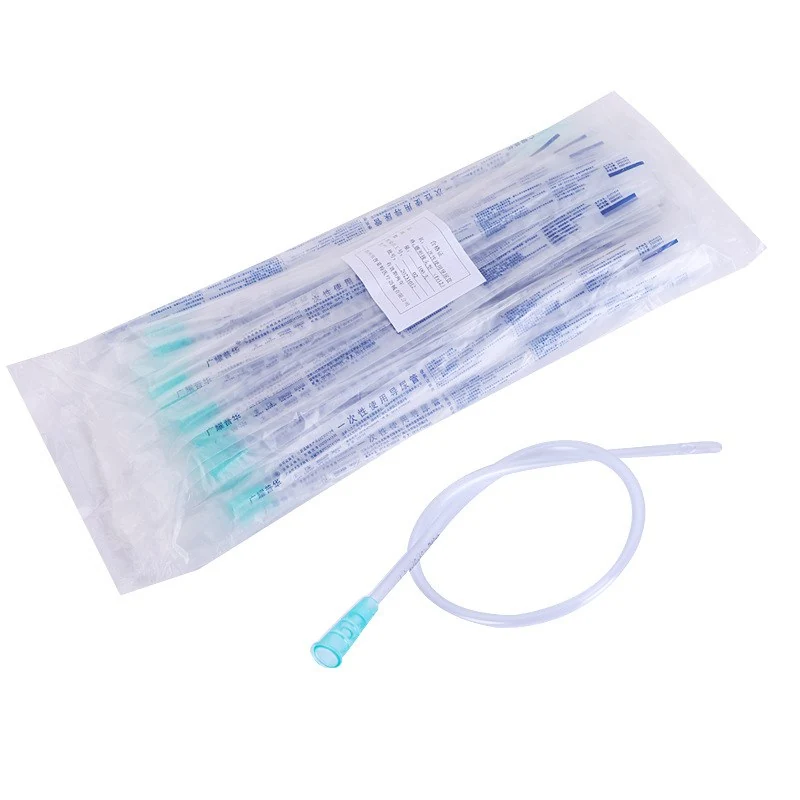
The Foley catheter (the indwelling balloon urinary catheter) is one of the most-used supplies in any hospital, clinic or ER: bladder drainage in retention, surgery, ICU urine-output monitoring, long-term care. But when you order, the question isn't "what is it", it's "which one do I order": what French size, which tip, how many ways, what balloon and what material. Let's go through it in order, with a Fr→mm chart and the funnel colours, the difference between a straight (Nelaton) tip and a Coudé/Tiemann one, when it's 2-way or 3-way, and what to look at before buying in volume. For the overview of all catheter families, that's in the guide to the types of catheters.
What it is and what it's made of
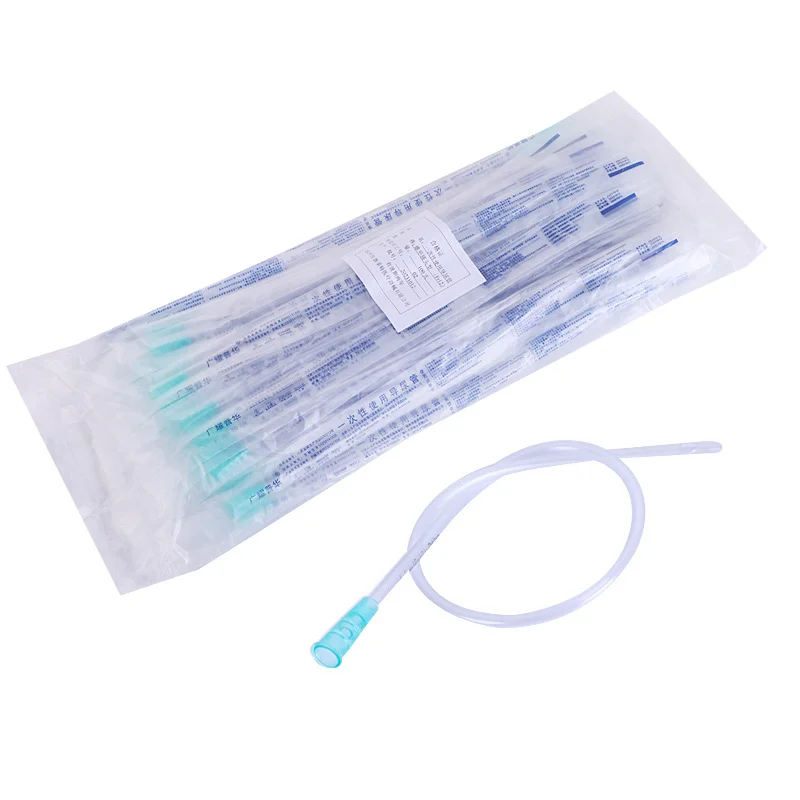
A Foley catheter is a flexible urinary catheter passed through the urethra into the bladder, held in place by a balloon inflated with sterile water once it's inside. Unlike a single-use straight catheter (the Nelaton, with no balloon), the Foley is indwelling and drains urine continuously into a collection bag.
It's worth knowing its parts, because that's what you order. The shaft is the main tube, and its thickness is measured on the French (Fr) scale. The tip is the end that goes in first, and it's either straight or curved. Near the tip sits the retention balloon, inflated (5, 10 or 30 ml) so the catheter can't slip out. Inside run the lumens, or ways: one to drain and one to inflate the balloon on a 2-way, plus a third to irrigate on a 3-way. And at the external end is the funnel, colour-coded by size, where the bag connects.
So the purchase comes down to four variables: size (Fr), tip type, number of ways and balloon volume. Let's take them one at a time.
French (Fr) sizes and the colour chart
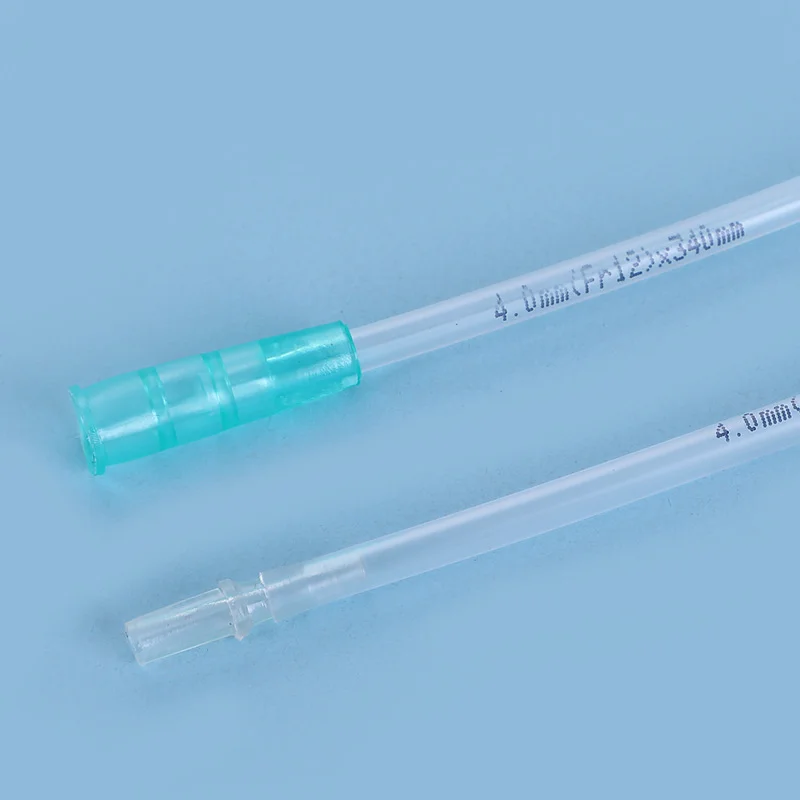
Size is measured on the French scale (Fr, or CH for Charrière), which is the catheter's outer circumference. The rule is easy: 1 French equals a third of a millimetre of outer diameter, so an 18 Fr is 6 mm across. The higher the number, the thicker.
To avoid mix-ups, each size carries a colour on the funnel, by international standard:
| Size (Fr) | Outer diameter | Funnel colour | Typical patient |
|---|---|---|---|
| 6 – 10 Fr | 2.0 – 3.3 mm | Paediatric | Children and infants |
| 12 Fr | 4.0 mm | White | Female, clear urine |
| 14 Fr | 4.7 mm | Green | Standard adult (female) |
| 16 Fr | 5.3 mm | Orange | Standard adult |
| 18 Fr | 6.0 mm | Red | Male, urine with sediment |
| 20 – 22 Fr | 6.7 – 7.3 mm | Yellow / Violet | Haematuria, clots, post-surgery |
| 24 Fr | 8.0 mm | Blue | Irrigation, large clots |
When choosing, the golden rule is the smallest size that drains well: an over-sized catheter is uncomfortable, can injure the urethra and blocks the periurethral glands. For a standard adult, 14–16 Fr covers most cases; with blood or clots (haematuria, post-TURP) you step up to 18–24 Fr, almost always 3-way for irrigation; and in paediatrics, 6–10 Fr. That's why a department restocking doesn't order plain "Foley catheters" but a range of sizes, with 14, 16 and 18 Fr as the core.
The same assortment logic, at much finer sizes, governs the unit's other urinary catheter: the double-J ureteral stent runs 4 to 8 Fr with 4.8 and 6 Fr as the core, and adds a second variable the Foley does not have, a length of 20 to 28 cm chosen by the patient's height.
The tip: straight (Nelaton) or Coudé/Tiemann
It's the second big decision, and the most-searched question: straight tip or Coudé? It changes the shape of the leading end. The straight one (Nelaton) has a rounded tip and is the routine choice: easier to place, cheaper and the first option in women and in men without a prostate problem. The Coudé or Tiemann has a curved, tapered tip, and it earns its keep exactly where the straight one won't pass: an enlarged prostate (BPH), a urethral stricture or a false passage.
If you're using a Coudé, two things are worth knowing: the curve goes in pointing up, toward the navel, because it follows the natural curve of the male urethra, and many have a marker lined up with the curve so you can orient it without seeing it. It's the catheter you switch to when a straight one "won't pass" in an older man, before forcing anything. For a hospital or a distributor, the usual mix is mostly straight tip, the high-turnover one, plus a smaller stock of Coudé in 16–18 Fr for urology and geriatrics.
Ways, balloon and material
Three smaller variables are left. The ways: the 2-way is the standard (one lumen drains, the other inflates the balloon) and covers about 90% of uses; the 3-way adds a lumen for continuous bladder irrigation, essential after prostate surgery, in haematuria with clots, or when the bladder has to be flushed, and always in a larger size (18–24 Fr).
The balloon is chosen by the patient: 5 ml in paediatrics, 10 ml for the general adult, and 30 ml when you need haemostasis by traction after prostate surgery or a reinforced fixation. One safety point that never changes: inflate the balloon with sterile water only, never air and never saline (salt can crystallise and block deflation), and to the volume printed on the funnel.
And the material sets the dwell time. PVC or coated latex is economical and goes for short-term use (7–14 days); it's the highest-turnover option in wards and the ER. 100% silicone is more biocompatible, latex-free and encrusts less, so it's the long-term one (up to about 4 weeks) and for latex-allergic patients. For the bulk of consumption, PVC in 14–18 Fr, 2-way and a 10 ml balloon; silicone as a separate line for long-stay carriers and allergic patients.
The full system: catheter plus bag
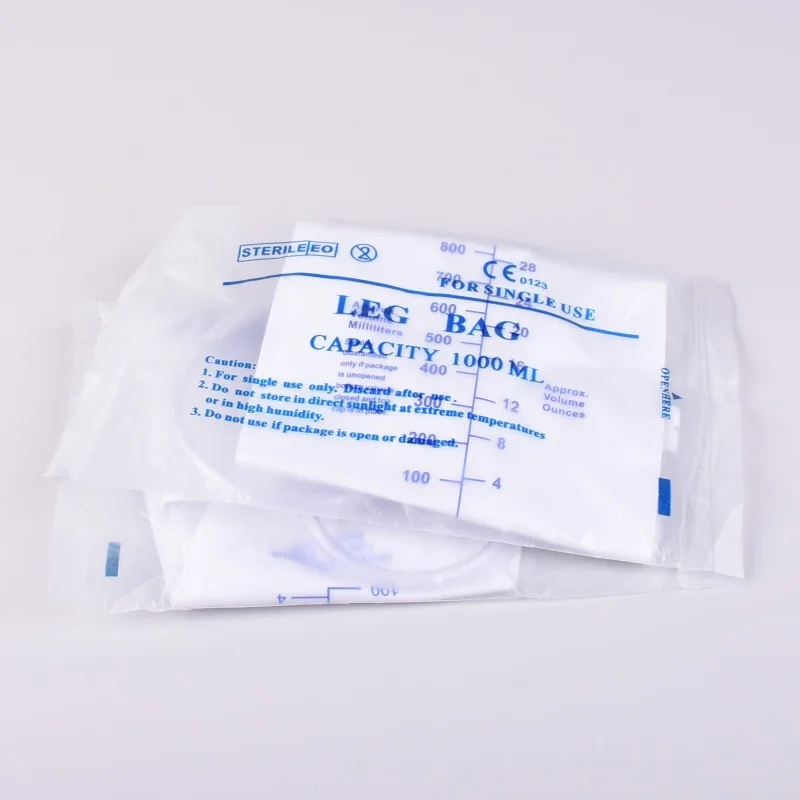
A Foley never works alone: it forms a closed drainage system with the collection bag, and when planning a purchase it's worth thinking about the whole system. For the bed-bound patient there's the 2000 ml bed bag, with a long tube, anti-reflux valve and bottom tap, hung below bladder level; keeping the system closed is what lowers the risk of catheter-associated urinary tract infection. For the ambulatory or home patient, the 750 or 1000 ml leg bag, strapped to the thigh, which at night connects to a larger bed bag. And some services prefer the all-in-one kit (catheter + sterile gloves + lubricant + drape + pre-filled water syringe) to guarantee asepsis and save nursing time in the ER.
Thinking about the full system avoids the classic mistake of having catheters and running out of the right bag, or mixing connectors that don't fit. The ideal is to standardise catheter, bed bag and leg bag from the same supplier. To choose between bed and leg, there's the urinary drainage bag guide.
Before buying in volume
For a hospital restocking or a distributor, what separates a reliable product from one that draws complaints and returns is fairly concrete. That the range runs F6 to F24 with the funnel colour-coded, so nursing can read the size at a glance. That straight and Coudé tips are there in the urology sizes (16–18 Fr), and both lines, 2-way and 3-way, with 3-way in the larger sizes. That the balloon doesn't leak: it's the most common failure point, and a self-deflating balloon expels the catheter. That the material is clearly declared, PVC for short-term and latex-free silicone for long-term and allergic patients. And the usual details: EO sterilisation with a dated individual pack and a protected tip, centimetre markings to check the depth, a universal connector, and the quality documentation (ISO 13485) for registration in your country.
We make the PVC Foley from F6 to F24, in 2-way and 3-way, with 5, 10 and 30 ml balloons, straight or Tiemann tip, colour-coded funnel and centimetre markings, EO-sterilised, with a latex-free line on request. We can supply the full system (catheter plus 2000 ml bed bag plus leg bag) with a compatible connector. Message us on WhatsApp with the sizes and quantities and we'll get you a box price.
Frequently Asked Questions
What size Foley catheter is used for an adult?
For a standard adult, 14–16 Fr covers most cases (14 Fr in females, 16 Fr in males). Step up to 18–24 Fr when there is haematuria, clots or after prostate surgery, usually with a 3-way catheter for irrigation. The general rule is to use the smallest size that drains well, to reduce discomfort and urethral trauma.
How do you read French (Fr) catheter sizes?
The French (Fr or CH) measures the outer circumference: 1 Fr equals 1/3 of a millimetre of diameter. So an 18 Fr catheter is 6 mm in outer diameter. The higher the number, the thicker the catheter. Each size also carries a standard funnel colour (e.g. 14 Fr green, 16 Fr orange, 18 Fr red) for quick identification.
When do you use a Coudé tip instead of a straight catheter?
A Coudé/Tiemann (curved) tip is used when a straight catheter cannot pass, typically in older men with an enlarged prostate (BPH), urethral stricture or false passage. It is inserted with the curve pointing up (toward the navel). For routine catheterisation and in females, the straight (Nelaton) tip is the first choice.
What is the difference between a 2-way and a 3-way Foley catheter?
The 2-way has one lumen to drain urine and one to inflate the balloon; it is the standard for retention and general drainage. The 3-way adds a third lumen for continuous bladder irrigation, indicated after prostate surgery (TURP) or in haematuria with clots, and always in larger sizes (18–24 Fr).
What is used to inflate the Foley catheter balloon?
The balloon is inflated with sterile water only, to the volume marked on the funnel (usually 10 ml in adults). It should never be inflated with air, because it can float and fail to anchor the catheter, nor with saline, because salt can crystallise inside the balloon and block deflation on removal.
PVC or silicone catheter — which should I order?
PVC is economical and indicated for short-term use (7–14 days); it is the highest-turnover option in wards and the ER. 100% silicone is more biocompatible, latex-free and resists encrustation better, indicated for long-term catheterisation (up to ~4 weeks) and latex-allergic patients. Most departments keep both lines.
Do you offer a low minimum order and private label (OEM) for distributors?
Yes. Edaochi Medical works with an accessible minimum order even for small clinics, with samples available for evaluation, and offers private-label (OEM) packaging for distributors. We manufacture F6 to F24 in 2-way and 3-way with quality documentation for medical-device registration. A box-price and MOQ quote is delivered on WhatsApp in under 24 hours.