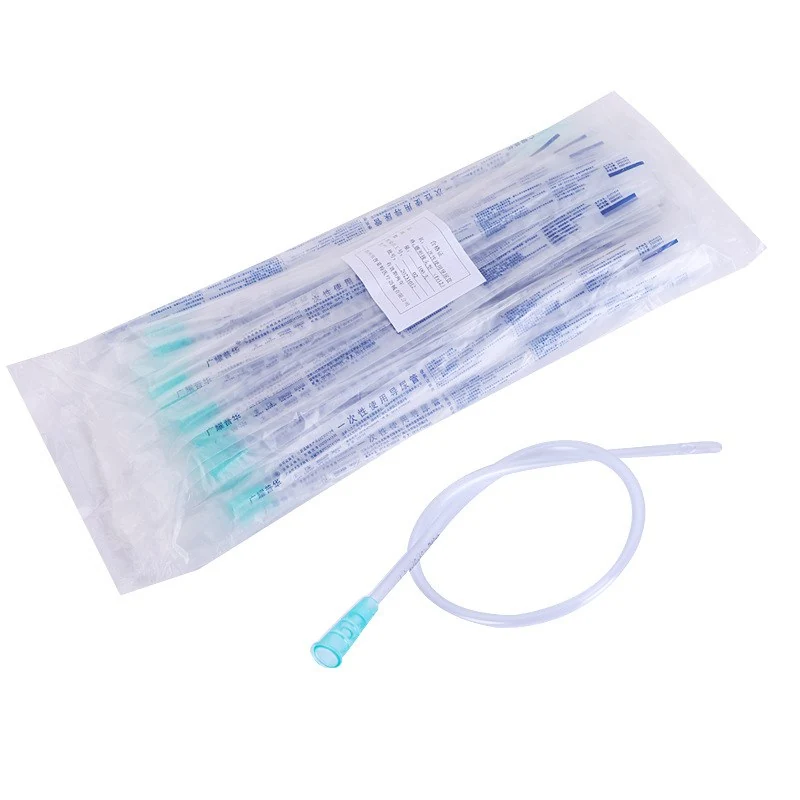
"How often is a Foley catheter changed?" is one of the most common questions in nursing, home care and among carers themselves. The short answer: it depends on the material — a latex catheter is changed every 2–3 weeks and a silicone one up to every 12 weeks — but the change should never be a rigid calendar. This guide brings together change frequencies by material, the daily care that prevents catheter-associated urinary tract infection (CAUTI), the warning signs that force an early change, and what to check when buying catheters and bags wholesale for clinics, care homes and home-care providers. It complements our Foley catheter sizes and types guide.
How often is a Foley catheter changed? Chart by material
The maximum life of a Foley catheter is set by its material, not a fixed date. Latex encrusts sooner and is changed more often; silicone lasts longer without encrustation. The most accepted reference frequencies:
| Catheter material | Maximum change frequency | Typical use |
|---|---|---|
| Latex / siliconised latex | Every 2 to 3 weeks | Short-term catheterisation |
| 100% silicone | Up to every 12 weeks (3 months) | Long-term indwelling |
| PVC (intermittent) | Single use, not indwelling | One-off emptying |
The difference matters for procurement: a silicone catheter costs more per unit, but being changed 4 times less reduces the number of procedures, the infection risk from handling and the total cost per patient per month. That is why it is the standard for care homes and long-stay home care.
Key point: these figures are the *maximum* term. No guideline recommends "waiting for the date": the catheter is changed sooner if obstruction, leakage, infection or heavy sediment appear (see the warning-signs section).
Why the change should NOT be routine on a fixed date
For years the catheter was changed "every X weeks" by protocol. Current evidence qualifies this: changing the catheter too often opens the closed system unnecessarily, and every opening is a chance for bacteria to enter. At the same time, leaving it beyond the material's life favours encrustation and blockage.
The modern criterion combines two rules:
- Do not exceed the material's life (latex ≤3 weeks, silicone ≤12 weeks).
- Change sooner if there is a clinical indication: obstruction, peri-catheter leakage, symptomatic infection, scheduled pre-procedure change or sediment that signals an imminent blockage.
In "blocker" patients (who obstruct recurrently), an individualised schedule is set based on how many days *that* patient takes to obstruct, changing 24–48 h before that point. Keeping the closed system as long as possible — no unnecessary disconnections between catheter and bag — is the single measure that most reduces CAUTI.
Daily Foley catheter care at home
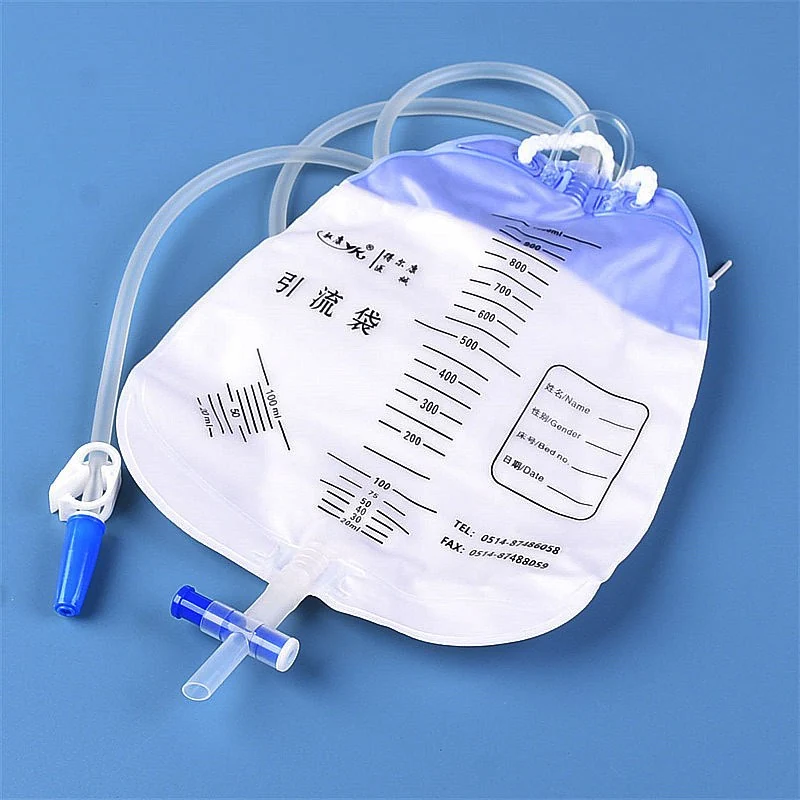
Most catheter-associated urinary infections are prevented with basic care a carer can perform at home:
Meatal and catheter hygiene:
- Wash the genital area and the first few centimetres of catheter daily with water and neutral soap, front to back in women; retract the foreskin in men.
- Do not use talc, perfumed creams or harsh antiseptics on the meatus.
Closed-system handling:
- Never disconnect the catheter from the bag unless indicated; if you must, disinfect the junction with alcohol before and after.
- Keep the bag always below bladder level so urine drains by gravity and does not reflux.
- Do not rest the bag on the floor: use the stand or hang it from the side of the bed.
Emptying and bag changes:
- Empty the bed bag when it is 2/3 full using the bottom tap, without touching the spout.
- Switch between a leg bag (day) and a 2000 ml bed bag (night) maintaining asepsis — see our bed bag vs leg bag guide.
Fixation and hydration:
- Secure the catheter to the thigh (women) or abdomen/thigh (men) to avoid traction and meatal pressure injuries.
- Unless contraindicated, maintain a good fluid intake: abundant urine output "flushes" the catheter and delays encrustation.
Warning signs: when to change the catheter early or call the professional
The carer should recognise when the situation exceeds routine care:
Change the catheter before the date if there is:
- Obstruction: urine stops draining and the patient feels suprapubic pressure or pain.
- Peri-catheter leakage (bypassing): urine escapes around the catheter — usually a sign of partial obstruction or bladder spasm, not that the catheter is "too small".
- Heavy sediment or crystals visible in the tubing, signalling a blockage.
- A damaged, cracked catheter or a leaking balloon.
Call the professional / go to the ER if there is:
- Fever, chills, cloudy or foul-smelling urine, flank pain — possible symptomatic infection.
- Frank blood or clots in the urine.
- No urine output at all despite changing the catheter.
- Accidental catheter removal with the balloon inflated (urethral injury risk).
Asymptomatic bacteriuria (bacteria in urine with no fever or symptoms) is expected in every long-stay catheterised patient and is not routinely treated with antibiotics: treating it only breeds resistance.
How to choose Foley catheters and bags
For a clinic, a care home or a home-care distributor, standardising procurement saves errors and cost. Material follows dwell time: 100% silicone for indwelling use, changed every 12 weeks and meaning fewer procedures, or siliconised latex for short-term, always confirming a latex-free option for allergic patients. Size is measured on the French scale: in adults the usual is Fr 14 to 16 with a 5 to 10 ml balloon, and buying a mix of sizes avoids running out; the Fr-to-mm conversion and colour code are in the Foley sizes guide. It also matters that the system is complete and compatible: catheter, 2000 ml bed bag and leg bag with universal connectors that form a closed system without adaptors, ideally from the same supplier to avoid incompatibilities. And sterility, individually sterile-packed (EO) with a visible indicator and lot traceability, which is what infection-control audits and tenders ask for.
We make them with CE and ISO 13485, and with national registration where the market requires it (INVIMA, COFEPRIS, DIGEMID or ANMAT); ask us for the technical documentation and a few samples before quoting volume, and we'll take it to WhatsApp.
Frequently Asked Questions
How often is a silicone Foley catheter changed?
A 100% silicone Foley catheter can stay in place up to 12 weeks (3 months), versus 2–3 weeks for a latex catheter. That is the maximum term: it is changed sooner if there is obstruction, leakage, heavy sediment or symptomatic infection. That is why silicone is the standard for long-term indwelling catheterisation.
Can a carer change the Foley catheter at home?
Replacing an indwelling Foley catheter is done by nursing staff or a specifically trained carer, using aseptic technique. Daily care — meatal hygiene, emptying the bag, keeping the system closed and the bag below the bladder — is done by the carer at home. With obstruction, fever or bleeding, they should contact the professional.
Why does urine leak around the catheter?
Peri-catheter leakage (bypassing) almost never means the catheter is "too small". It is usually due to partial lumen obstruction by sediment or to bladder spasm. The usual solution is to check patency and, if blocked, replace the catheter — not to increase the size, which can injure the urethra.
Should the catheter be changed if urine is cloudy or has bacteria?
Asymptomatic bacteriuria (bacteria in urine with no fever or symptoms) is common in every long-stay catheterised patient and is not treated with routine antibiotics. Action is taken only if there are symptoms: fever, pain, foul-smelling urine. Cloudy urine with heavy sediment can, however, signal an imminent blockage and justify a change.