What Is Actually In The Formula We Manufacture
Most private label nail products in this category are the same three or four chemical actives in different jars. This one is not, and a buyer evaluating it deserves to know precisely what they would be putting their brand on — the functional ingredient, the three botanicals by Latin name, and the regulatory category all of it sits in.
The functional base
Salicylic acid is the ingredient doing the measurable cosmetic work, and it is worth being precise about what that work is.
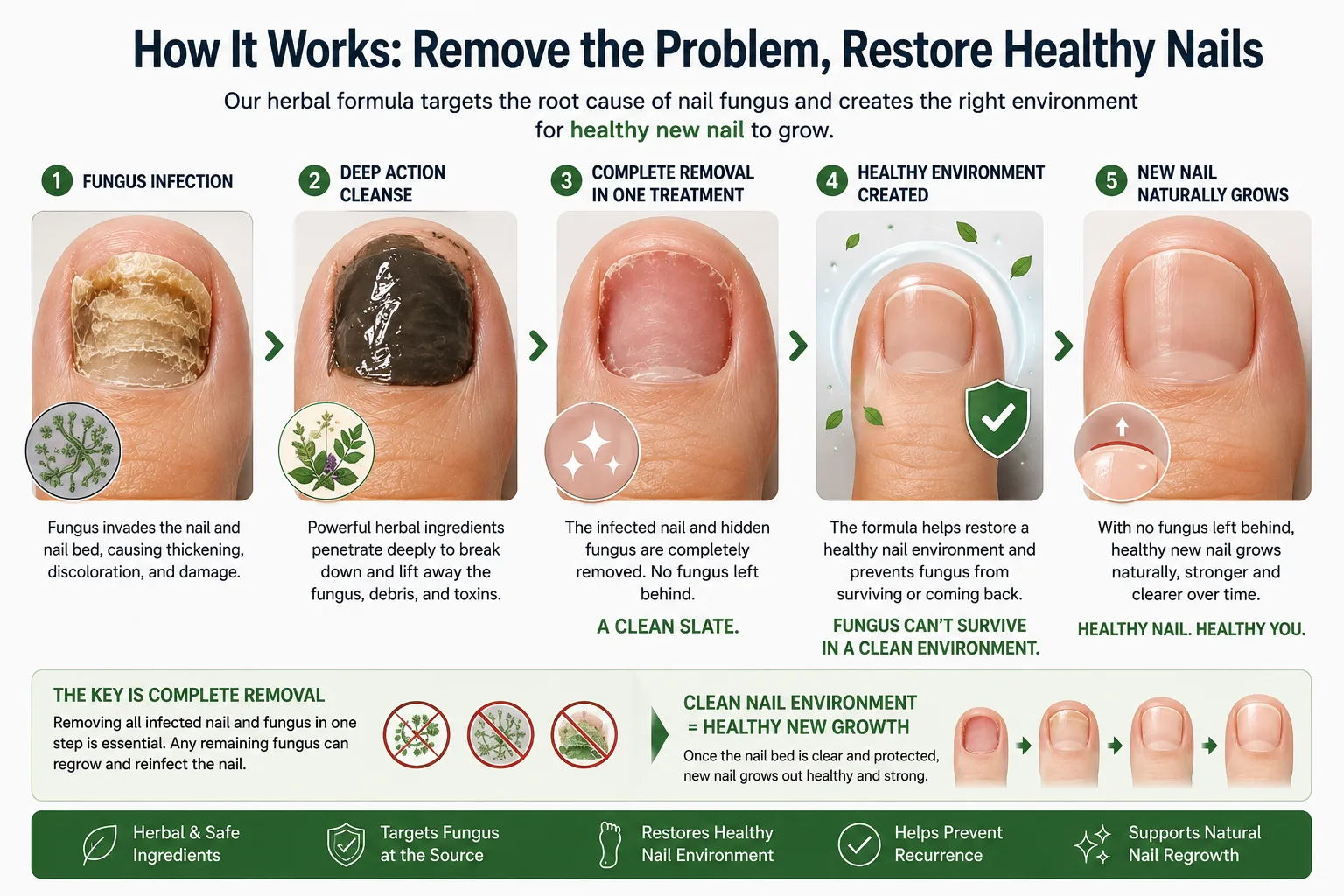
A point worth understanding before you plan your packaging copy: a thick, hardened nail plate is a barrier, and softening it is a real and necessary cosmetic job in its own right. That is what this formula is built to do. It is not a substitute for a medicine, and it should not be sold as one.
The three botanicals
Named by Latin binomial, because a buyer building a notification dossier needs the binomial and not a marketing word like “herbal blend”.
Sophora flavescens Aiton
苦参 (kǔ shēn)Dried rootOne of the most widely used herbs in traditional Chinese external preparations for the skin. In classical practice it belongs to the group applied topically for damp, itchy skin conditions, and it appears in a great many washes and ointments intended for the feet.
Commercially: It is the botanical buyers recognise first. If your market has any familiarity with Chinese herbal skincare at all, this is the name that carries.
Pseudolarix kaempferi Gord.
土荆皮 (tǔ jīng pí)Root or trunk barkUsed externally in traditional Chinese preparations specifically for the nails and the skin of the feet, usually in alcohol tinctures and ointments. It is a narrower, more specialist herb than Sophora — it is not a general-purpose skincare botanical.
Commercially: This is the ingredient that makes the formula category-specific rather than a generic herbal cream with a nail label on it.
Impatiens balsamina L.
凤仙花 (fèng xiān huā)Flower and stemKnown in English as garden balsam, and known across East and South Asia as the plant traditionally used to stain and condition the nails. Its association with nail care long predates any modern cosmetic industry.
Commercially: It gives the product a genuine nail-specific heritage story, which matters more than most buyers expect when the competing shelf is full of identical chemistry.
These descriptions cover traditional use and the commercial reason each ingredient is in the jar. They are not clinical claims, and they should not be transferred onto your packaging as if they were.
Where a buyer usually gets this wrong
The formula contains no antifungal drug active. It is supplied as a cosmetic nail and foot care preparation, not as a medicine.
Buyers are responsible for registration and claim wording in their own market — EU/UK CPNP or SCPN notification, US cosmetic labelling under MoCRA, or the local equivalent.
We supply ingredient breakdown, manufacturing details and product photography to support a buyer's own notification dossier.
We do not supply the product with drug claims, and we ask partners not to market it with claims to treat, cure or prevent a fungal infection.
Common questions
Is salicylic acid the active ingredient?
Salicylic acid at 1.6%–2.0% is the functional cosmetic ingredient. It is a keratolytic — it softens and helps shed hardened keratin, which is why it is standard in foot and nail preparations for thickened, rough nail plate and surrounding skin. It is not an antifungal.
So the formula contains no antifungal drug?
Correct, and this is deliberate rather than an omission. There is no terbinafine, no tolnaftate and no ciclopirox in the base. Adding one would move the product out of the cosmetic category into a medicines registration, which changes the cost, the timeline and the regulatory burden of every market a buyer wants to enter.
Why would I choose a botanical formula over a standard antifungal cream?
Because the standard antifungal cream is a commodity. Tolnaftate 1% is tolnaftate 1% whoever makes it, so the only remaining variable on the shelf is price, and a new brand loses that fight. A botanical formula with named traditional ingredients gives you a product story, a differentiated shelf position and a customer who is choosing the formula rather than the cheapest tube.
Can I see the full ingredient breakdown?
Yes — the full breakdown is issued to buyers under inquiry, because it is what your cosmetic notification dossier is built from. We publish the functional ingredient and the three named botanicals openly so you can evaluate the formula before you ask.
Can the botanical ratio be adjusted?
Within the cosmetic category, yes. Ratio, texture and fragrance are all discussable for an OEM run. What cannot change is the category itself.
What claims can I legally make with this formula?
Cosmetic claims: nail and skin appearance, softening, conditioning, care of thickened or discoloured nail plate. What you cannot claim without a drug registration is that the product treats, cures or prevents a fungal infection — that wording turns a cosmetic into an unapproved drug in the EU, the UK and the US alike.
Ask for the full breakdown
The complete ingredient list, with percentages and manufacturing detail, is issued to buyers under inquiry — it is the document your cosmetic notification is built from.
Sourcing this product for your brand?
We are the factory. The pages below cover manufacturing terms rather than consumer advice — minimum quantities, customisation, formulation and distribution.
Looking for a herbal toenail fungus cream?
Our herbal nail care formula is available for sample orders, wholesale supply, OEM packaging and distributor cooperation. Contact us to get started.