Herbal Toenail Fungus Treatment: A Simple Daily Approach
Traditional Chinese medicine has addressed skin and nail fungal conditions for centuries, long before modern antifungal pharmaceuticals existed. Certain botanical compounds — particularly from plants like Sophora flavescens and Pseudolarix kaempferi — have been used for their properties in external care preparations.
Today, these ingredients are formulated into topical creams designed for daily nail care. This page looks at the specific herbs involved, how they're applied in a modern external care context, and why the wrap-and-wait method is central to the approach.
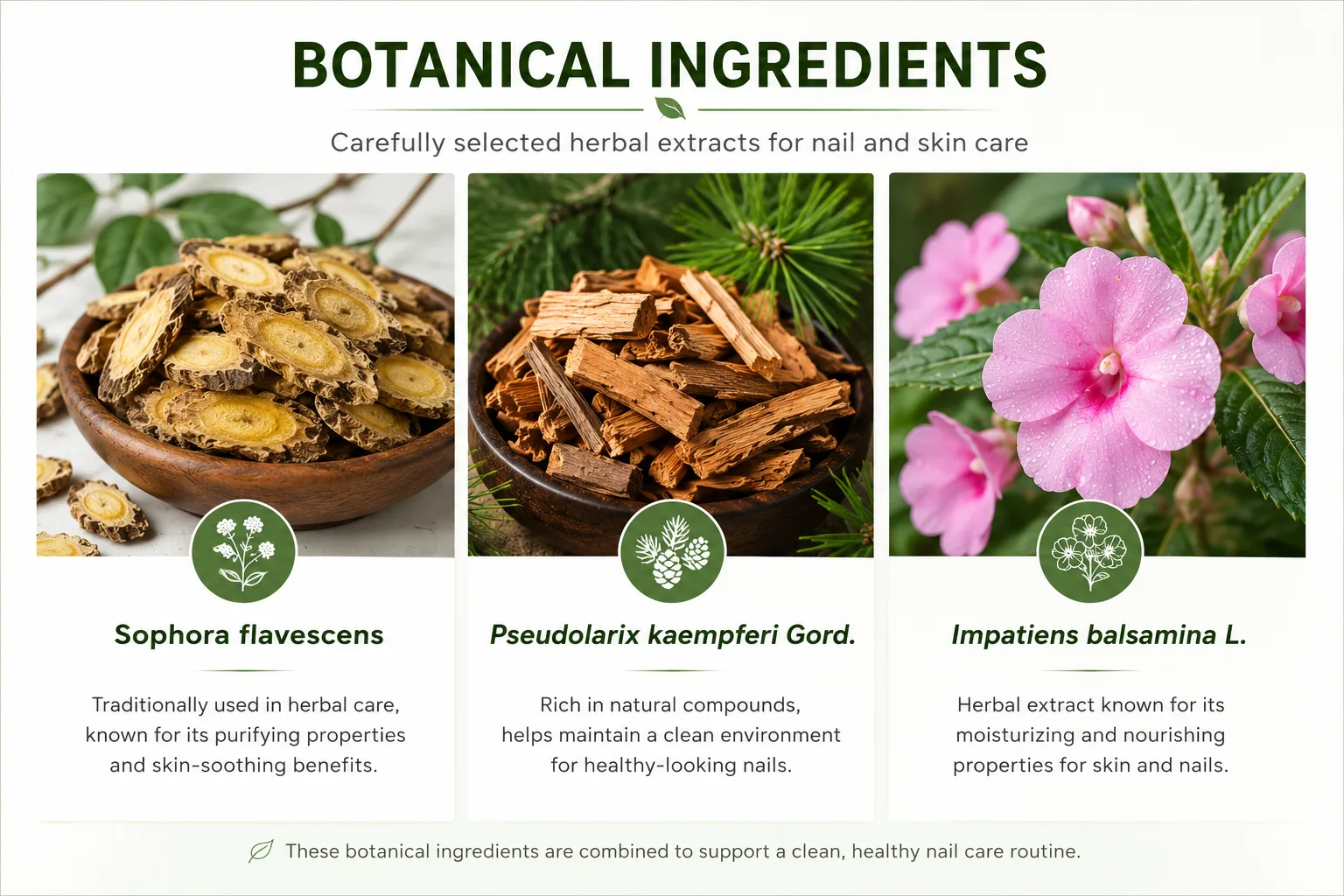
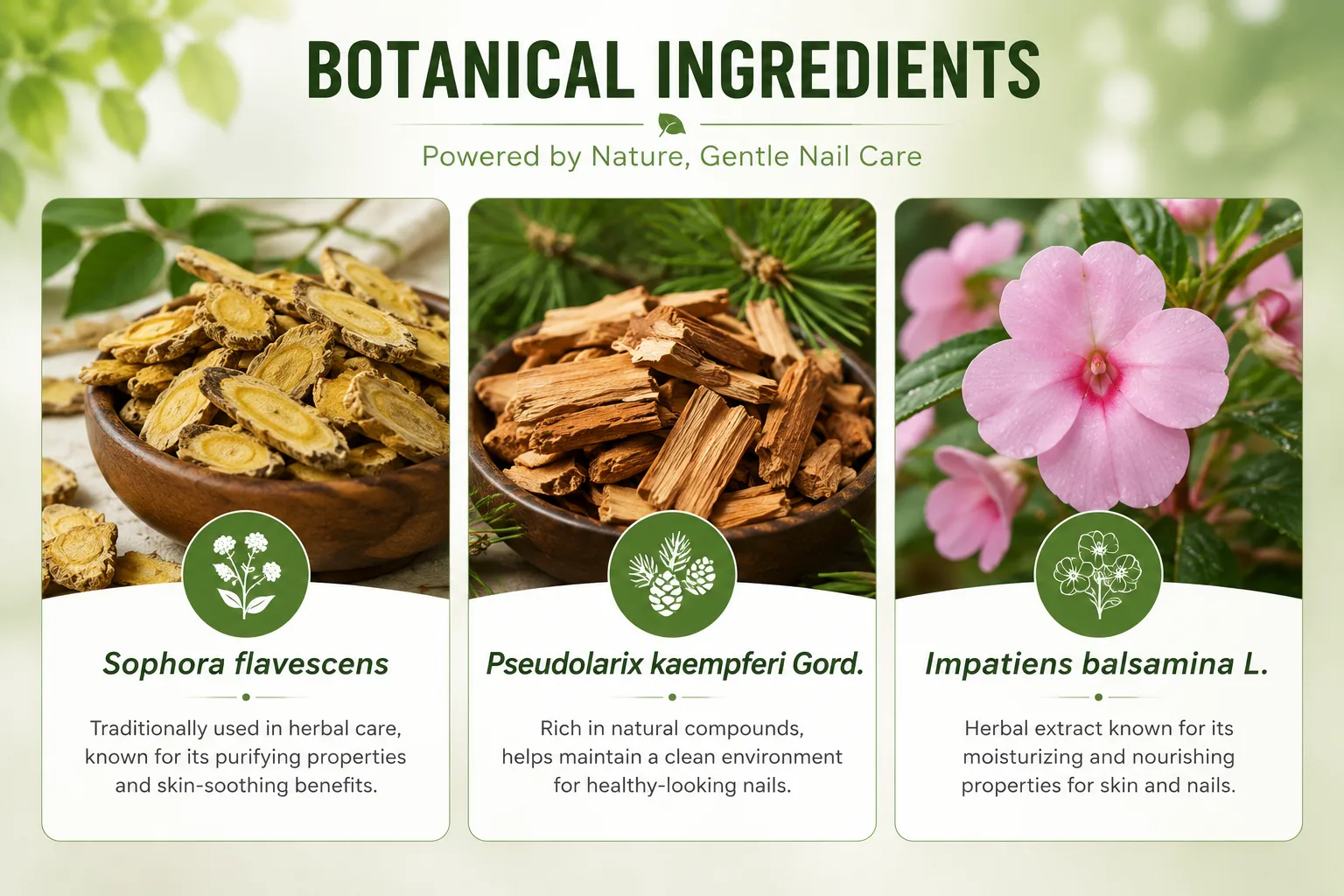
The three botanical extracts
Sophora flavescens (苦参, Ku Shen)
One of the most widely used herbs in Chinese dermatology. Matrine and oxymatrine — its key alkaloids — have been studied for antifungal, anti-inflammatory and antimicrobial properties in multiple laboratory settings. In traditional external preparations, Sophora flavescens is used for skin conditions characterized by itching, inflammation and fungal involvement. It's the backbone of many Chinese herbal preparations for skin and nail complaints.
Pseudolarix kaempferi Gord. (土荆皮, Tu Jing Pi)
The bark of the golden larch tree, a traditional Chinese medicinal material with a long history of use in external preparations for skin fungal conditions. Pseudolaric acids — the active compounds — have shown antifungal activity in laboratory studies. Tu Jing Pi is specifically traditional for treating tinea infections (fungal skin conditions), which share the same causative organisms as nail fungus.
Impatiens balsamina L. (凤仙花, Feng Xian Hua)
Garden balsam — used in traditional Chinese medicine for its external properties on nails and skin. Folk remedies involving the flowers and leaves have been used for nail conditions for generations in China, particularly for yellow and discolored nails. Modern extraction concentrates the active plant compounds for use in topical formulations.
Salicylic acid: the delivery enhancer
The herbal cream also contains salicylic acid at 1.6–2.0%. This isn't just for antifungal activity — salicylic acid is a keratolytic agent, meaning it softens and helps break down the outer layers of hardened, thickened nail tissue. This matters because one of the core challenges of treating nail fungus externally is getting active compounds through the nail plate to where the fungus actually lives.
By softening the nail surface and the thickened keratin layer, salicylic acid creates better conditions for the herbal extracts to work — and makes the nail surface easier to treat in subsequent cycles.
The wrap method — why it matters
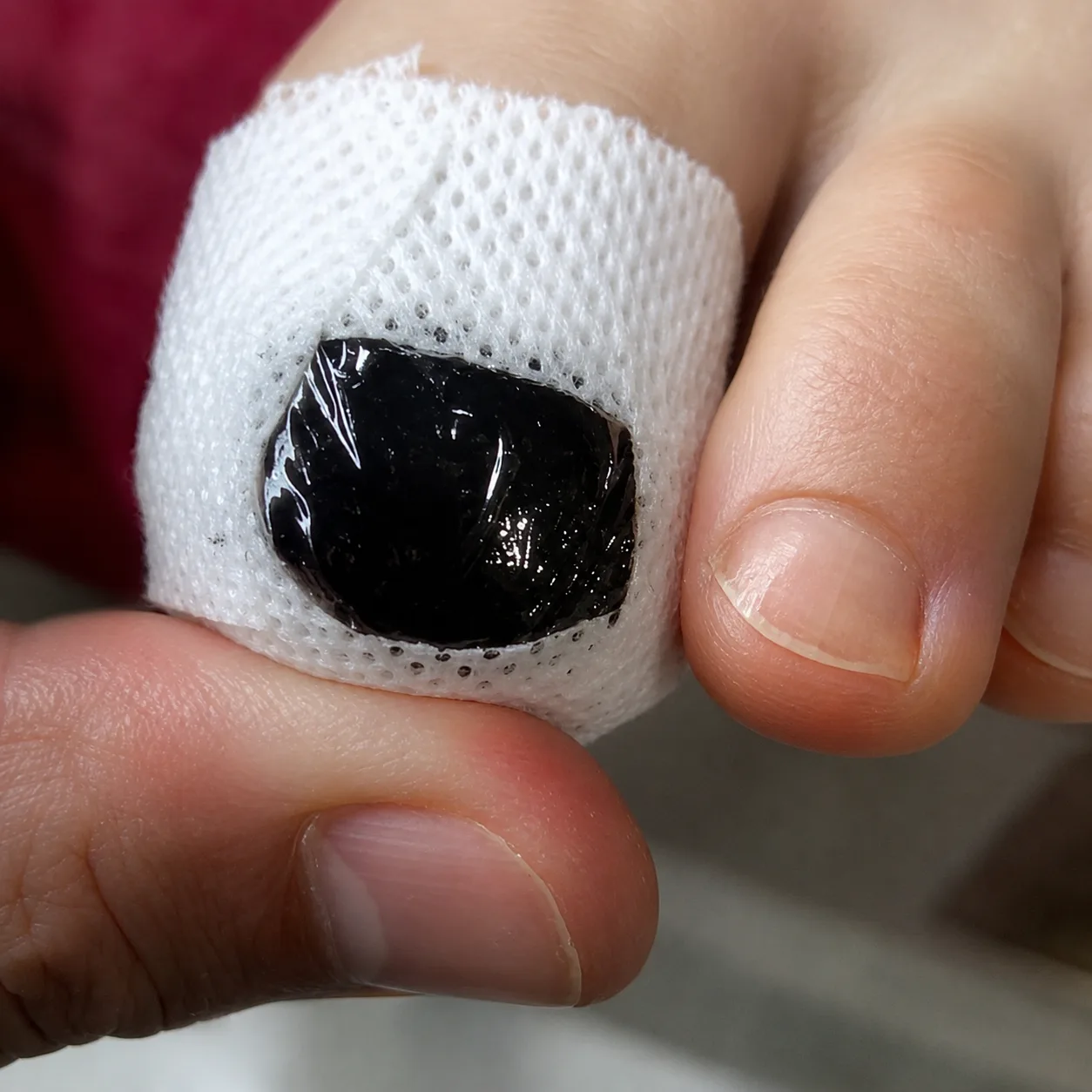
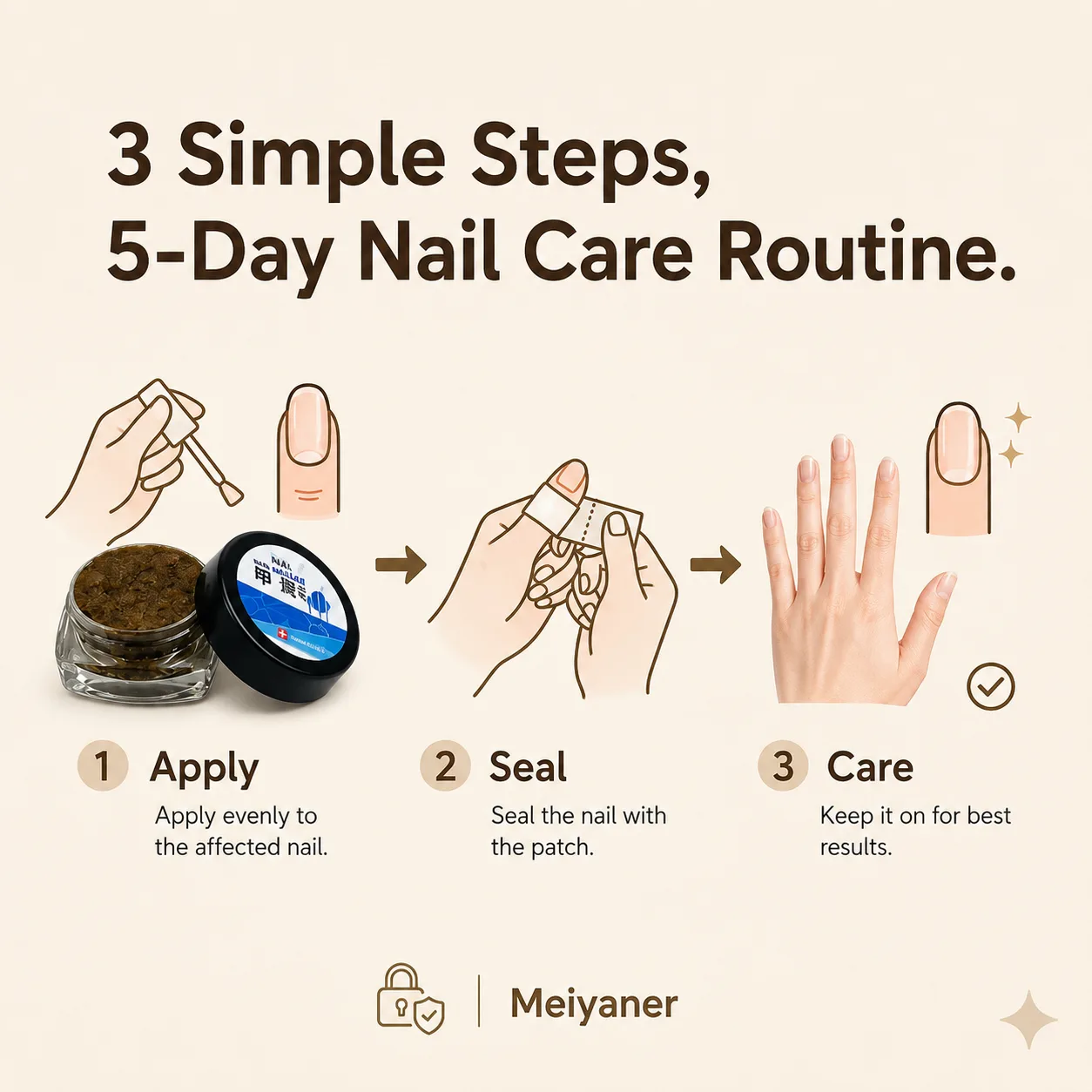
One of the key differentiators of this approach is the application method. After applying the herbal cream, the nail is covered with adhesive tape or a bandage and left in place for 5–7 days.
This extended-contact method addresses a fundamental problem with surface treatments: most products evaporate or wash off before they've had time to work. By keeping the cream in place under a seal for a full week:
- The cream maintains continuous contact with the nail surface
- The enclosed environment keeps the nail slightly moist, improving penetration
- The full 5–7 day period allows the herbal compounds to work consistently
Who is this treatment approach for?
Good fit
Consider other options
Interested in stocking this herbal cream?
Available for sample orders, wholesale supply, OEM packaging and private label. Suitable for herbal product retailers, online sellers, foot care distributors and pharmacy chains.