What Happens If Toenail Fungus Is Left Untreated?
Toenail fungus doesn't resolve on its own in the way a minor cut or bruise does. Without care, it tends to stay — and in many cases, gradually worsen over months and years.
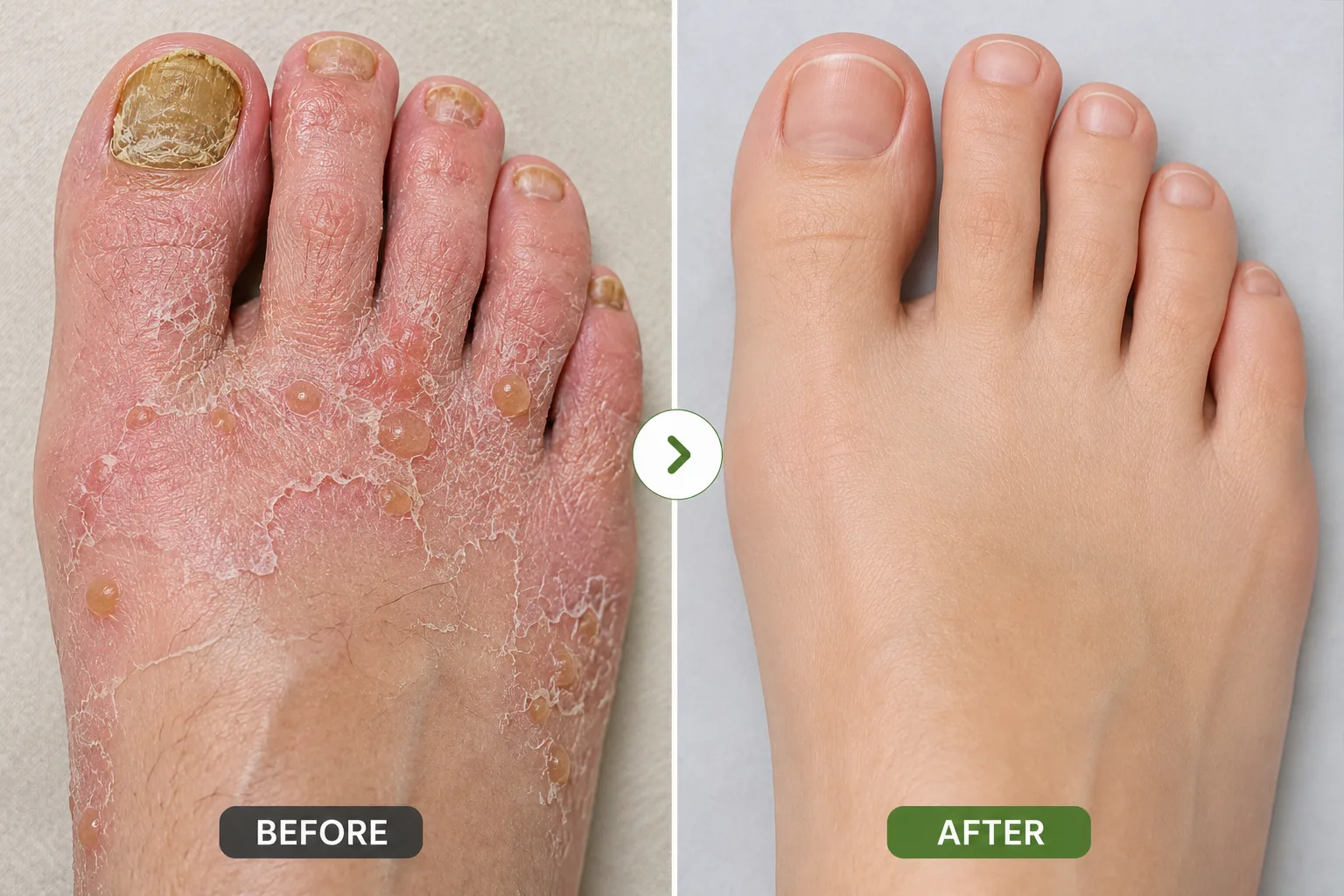
Stage 1: The nail changes shape and color
Early toenail fungus typically appears as a white or yellow spot under the tip of the nail, or a yellowing that starts at the edges. The nail may start to look slightly thicker. At this stage, most people still consider it a cosmetic matter and leave it alone.
Stage 2: Spreading and structural change
As fungus works deeper under the nail plate and spreads across the nail surface, the nail:
- Becomes significantly thicker — sometimes several times the normal thickness
- Turns more deeply yellow, brown or greenish
- Develops a crumbly or powdery texture, especially at the tip and edges
- May become distorted in shape, growing unevenly or curving
- Can begin to separate from the nail bed at the edges (this is called onycholysis)
The nail becomes difficult to trim normally. The thickness makes ordinary nail clippers ineffective, and the brittleness means chunks may break off unexpectedly.
Stage 3: Spreading to other nails
Fungus from one nail doesn't stay contained. Adjacent nails — particularly toes that press together — can become infected. Sharing nail clippers between an infected nail and healthy nails accelerates this. Over a year or two without treatment, multiple nails on both feet can be affected.
Stage 4: Pain and functional problems
This is where the "just cosmetic" argument fully breaks down. A nail that has thickened substantially creates pressure inside footwear. That pressure causes:
- Discomfort or pain when walking, especially in closed shoes
- Difficulty finding footwear that doesn't aggravate the affected toes
- Altered gait — changing how you walk to relieve pressure on painful toes
- Psychological impact — avoiding sandals, pools, or situations where feet are visible
Higher-risk situations where ignoring it is a poor choice
People with diabetes
Reduced circulation and slower healing mean that what would be a minor skin break in someone without diabetes can become a more serious wound. Thickened nails increase the risk of ingrown nails and pressure sores.
People with peripheral artery disease
Similarly, reduced blood flow to the feet means the body has less capacity to contain any infection that develops in the skin around the nail.
People with weakened immune systems
Whether from medication, illness or other causes, a compromised immune response means fungal infections can spread further and be harder to clear.
Older adults
Slower nail growth, thicker nails and reduced circulation combine to make fungal nail conditions both more likely and more persistent in older people.
The earlier, the easier
One of the clearest patterns in nail fungus is that early-stage cases respond faster to care than advanced ones. A nail that is just beginning to yellow at the tip needs less time to grow out than a nail that has been affected for three years and has thickened throughout.
If you already have yellow, thick or brittle toenails, starting a simple daily nail care routine early can make long-term management meaningfully easier. Even a modest improvement in the nail environment — keeping it drier, maintaining consistent external care — changes the conditions that allow fungus to persist.
Start a simple daily care routine
Our herbal nail care cream is designed for consistent daily use on yellow, thick and brittle toenails. Simple to apply, no prescription needed. Available in sample, wholesale and OEM supply.