What Causes Toenail Fungus? Why Nails Turn Yellow, Thick and Brittle
People often assume toenail fungus is a sign of poor hygiene. It isn't. You can wash your feet every day and still develop a fungal infection — because the conditions that let fungus take hold have more to do with environment and biology than cleanliness.
The organism responsible
In most cases, toenail fungus is caused by a group of fungi called dermatophytes — the same organisms that cause athlete's foot and ringworm. Less commonly, it can be caused by yeast (candida) or mold. These organisms don't need light to survive and they feed on keratin, which is exactly what nails and skin are made of.
Why toenails specifically?
Toenails spend the day inside shoes — warm, dark, and often moist from foot perspiration. That environment is close to ideal for fungal growth. Fingernails, which are exposed to open air most of the day, are much less commonly affected.
Tight shoes that press toes together, synthetic socks that trap moisture, and athletic footwear worn for hours at a time all make toenails more vulnerable. The big toe is most frequently affected because it experiences the most pressure and is most exposed to the front of the shoe.
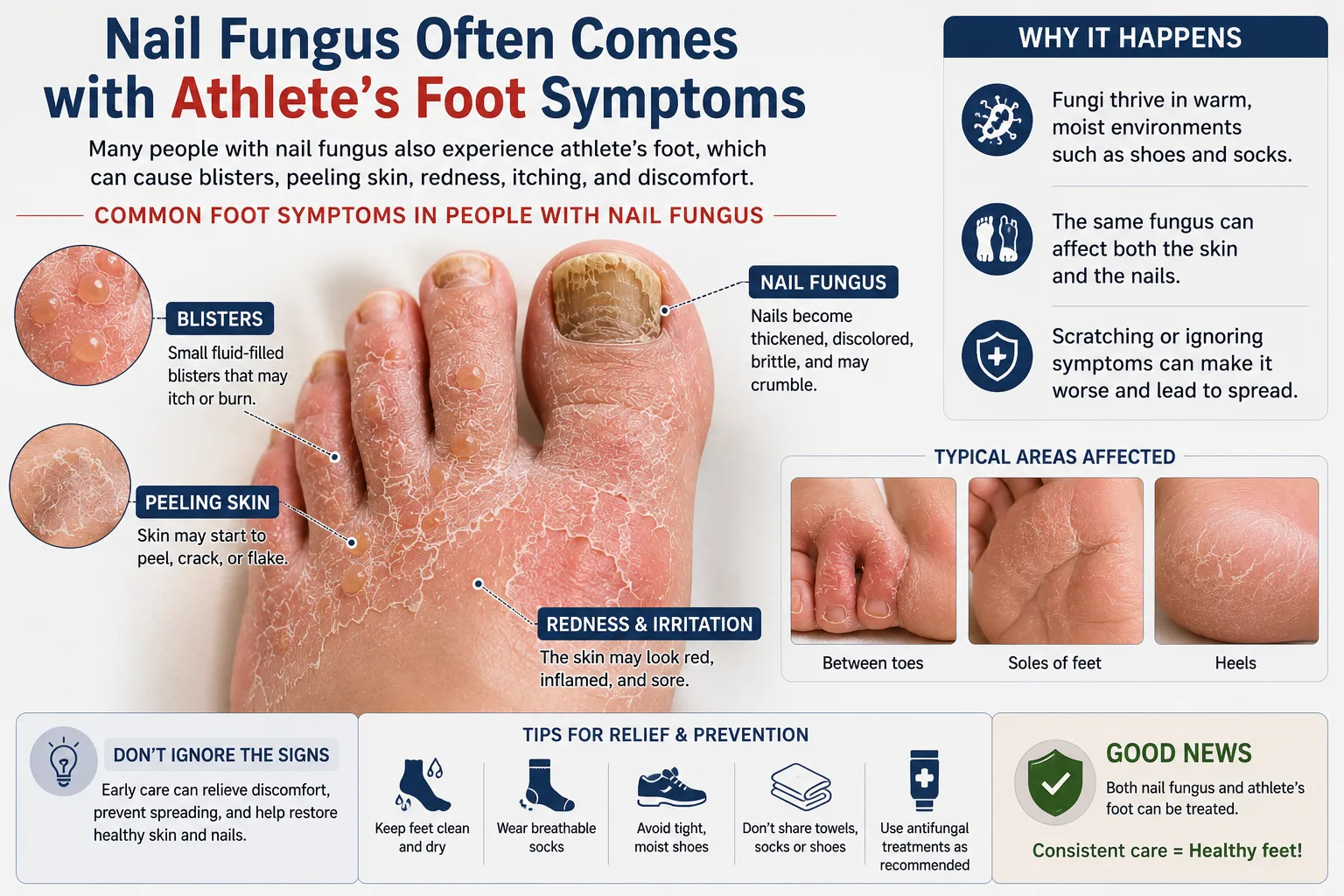
The athlete's foot connection — often overlooked
This is one of the most underappreciated causes of nail fungus. Athlete's foot — the itchy, peeling, sometimes blistering condition between the toes and on the soles — is caused by the same dermatophytes. If it isn't treated, the fungus can spread onto the toenails from the surrounding skin.
Many people treat their nail fungus but ignore the athlete's foot, then wonder why the nail fungus comes back. The foot skin is reinfecting the nails. Both need to be addressed.
Other contributing factors
Nail trauma or injury
A nail that has been stubbed, dropped something on, or repeatedly pressed against a shoe has microfractures in the nail plate — natural entry points for fungal spores.
Age
As people get older, nails thicken, become more porous, and grow more slowly. Slower growth means the nail takes longer to cycle through, giving fungus more time to establish.
Reduced circulation
Blood flow to the feet diminishes naturally with age, and more significantly in people with diabetes or peripheral artery disease. Less immune activity at the nail site means fungal infections face less resistance.
Weakened immune system
People on immunosuppressant medications or with immune conditions are more susceptible to fungal infections generally, including nail fungus.
Communal wet environments
Gym showers, public pools, locker rooms. Fungal spores thrive on wet tile and concrete and enter through the smallest openings in skin or nail.
Why does it keep coming back?
Recurrence is one of the most frustrating parts of nail fungus. People treat it, see improvement, then find the same yellow thickening appearing again a year later. The reasons fall into a few patterns:
- Treatment stopped before the new nail fully grew in — the affected nail grew out, but spores remained in the nail environment
- Old shoes were kept and continued to be worn — fungal spores survive in footwear for months
- Athlete's foot was not treated alongside the nail condition
- The underlying environment (tight shoes, heavy sweating, communal showers) was never changed
Reducing the risk of recurrence
Already dealing with yellow, thickening nails?
Once you understand what's driving it, a daily external herbal routine can help you manage the nail going forward. Sample orders, wholesale supply and OEM packaging available.