Is Toenail Fungus Contagious? How It Spreads — and What To Do
A lot of people think toenail fungus is just a cosmetic issue that only affects people who don't wash their feet. Neither is true. The fungus responsible — usually a dermatophyte — lives in warm, moist environments and moves easily between people who share spaces and objects. It's the same family of fungi that causes athlete's foot.
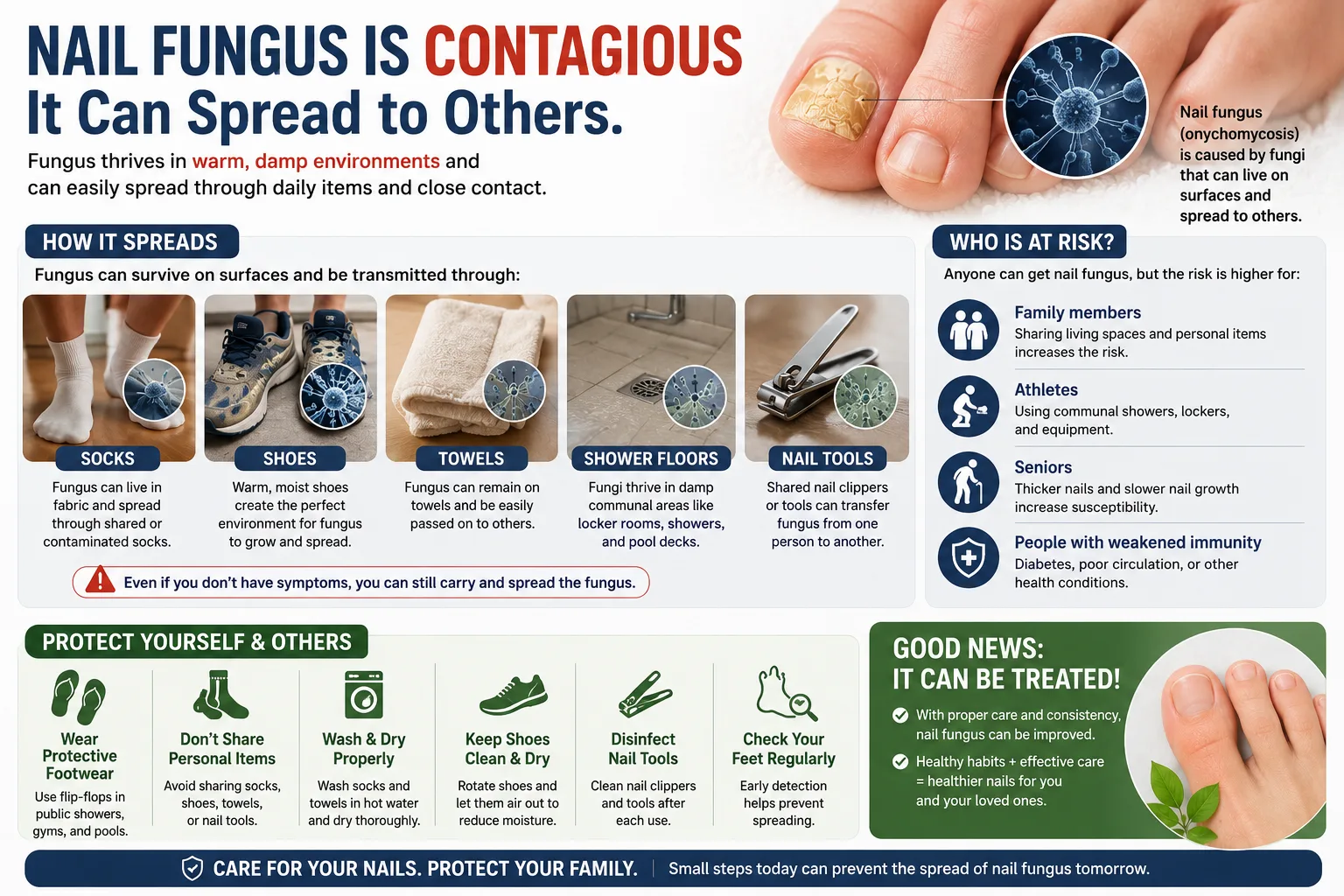
The main routes of transmission
Shared nail clippers or scissors
This is one of the most direct routes. Fungal spores stick to metal surfaces and survive for extended periods. A single use with an infected nail is enough to contaminate a clipper.
Wet communal floors
Public swimming pools, gym changing rooms, shared showers and locker rooms are classic environments. Fungus thrives on warm, damp surfaces where many bare feet pass.
Socks and shoes
Worn footwear holds moisture and warmth — exactly what fungus needs to survive. Sharing shoes or repeatedly wearing old shoes without letting them dry fully can sustain an infection.
Shared towels
Rubbing a shared towel between toes creates an easy path for fungal transfer, especially when someone with athlete's foot or toenail fungus has used it first.
From skin to nail (and back)
Athlete's foot is caused by the same group of fungi. If foot skin is infected and not treated, the fungus can migrate onto and under the nails. The reverse also happens — fungal nails can seed foot skin.
Who is more likely to pick it up?
Anyone can develop toenail fungus, but certain factors increase the chance of infection:
- Athletes and gym-goers — frequent exposure to communal showers and moist footwear
- Older adults — nails become thicker and slower-growing with age, creating more opportunity for fungal entry
- People with diabetes — reduced circulation and slower healing make the nail environment more vulnerable
- People with existing athlete's foot — the fungus is already on the foot and can migrate to nails
- People sharing living spaces — family members who share bathrooms face higher exposure if one person is affected
- Nail injury — a damaged nail creates an entry point that a healthy nail wouldn't have
Can it spread from one nail to others?
Yes. A single infected toenail can spread to adjacent nails over time, particularly if the nails are close together and share the same shoe environment. Many people who come looking for treatment have found that what started as one yellow big toe has, after a year of ignoring it, become three or four affected nails.
Practical steps to limit spread
If you already see yellow, thick or brittle nails
The earlier care starts, the smaller the affected nail area and the less time needed for full regrowth. A nail that's only beginning to yellow at one edge responds better to consistent care than one that has been thickening and discoloring for two years.
External care routines — including herbal cream applications — are particularly useful here because they can be maintained consistently at home without the need for prescriptions or doctor visits.
Want to treat the nail and limit the spread?
Caring for the affected nail alongside good hygiene helps stop the fungus jumping to other nails — or other people. Herbal external cream with sample orders, wholesale supply and OEM packaging available.