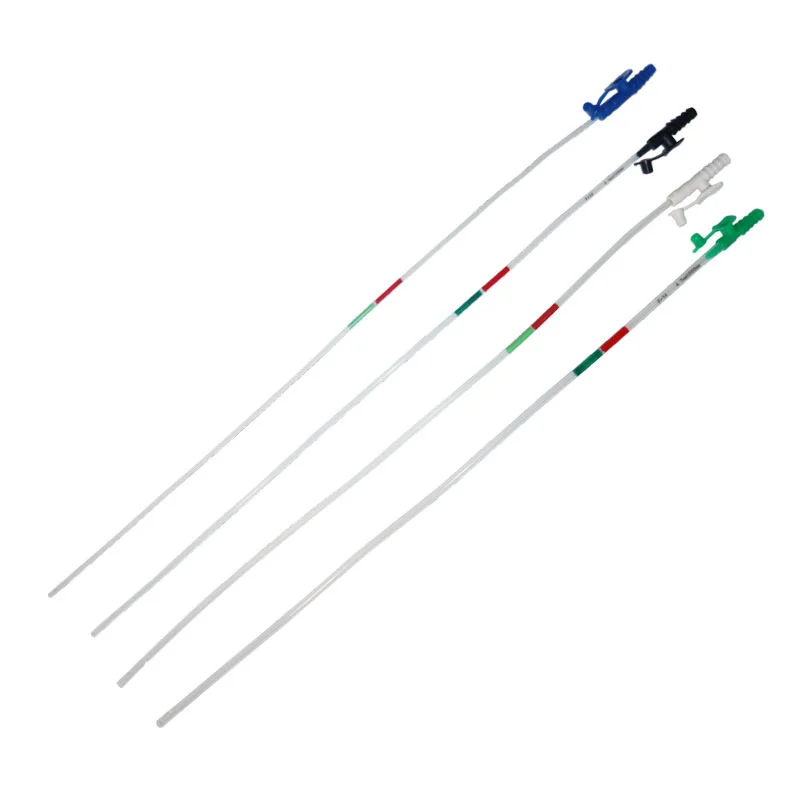
Secretion suction is one of the most-performed procedures in hospital and prehospital settings. It ranges from oropharyngeal suction in an unconscious ER patient to closed tracheal suction in invasive mechanical ventilation in ICU, plus neonatal nasal suction and secretion removal in surgery. Each application needs a different device: a correctly sized catheter, a complete kit for invasive procedures, or an electric aspirator with the right power and portability. Choosing wrong can compromise the procedure or, at worst, cause serious complications such as acute hypoxia, bronchospasm or hospital-acquired pneumonia.
Suction circuit components: check before use
A complete suction system is a chain: the vacuum source (wall vacuum, electric or manual aspirator), the vacuum regulator with gauge, the collection jar, the extension/connection tube and finally the catheter in contact with the patient. The chain must work at every link to be effective. A full collection jar interrupts the vacuum; a kinked tube reduces tip pressure; a leaking connection prevents reaching target pressure.
Quick 30-second check: confirm the jar has capacity; verify all connections are firm; occlude the catheter end with your thumb and watch the gauge (if vacuum reaches 80–120 mmHg in 2–3 seconds, the system works); release and confirm the gauge returns to zero. This check prevents the most critical ER error: discovering the system doesn't work when the patient is already compromised.
Tracheal suction catheters: technical features
The tracheal suction catheter is the component in direct contact with the airway. Clear medical PVC is the universal standard: transparency lets you see the aspirate (colour, consistency, blood) directly through the catheter — valuable diagnostic information.
Tip design is critical. The straight bevelled tip (type I) is the most economical and widely used. The atraumatic rounded tip with side holes (type II) has a lower incidence of tracheal erosion when the tip hits the carina or bronchial walls, and is preferable for patients suctioned more than 4–6 times a day. The proximal control zone with a thumb port determines technique: thumb control is the standard, applying vacuum only during withdrawal and never during insertion, to minimise hypoxia time. Sizing is covered in our suction catheter sizes and types guide.
Suction kits: advantages for urgent procedures
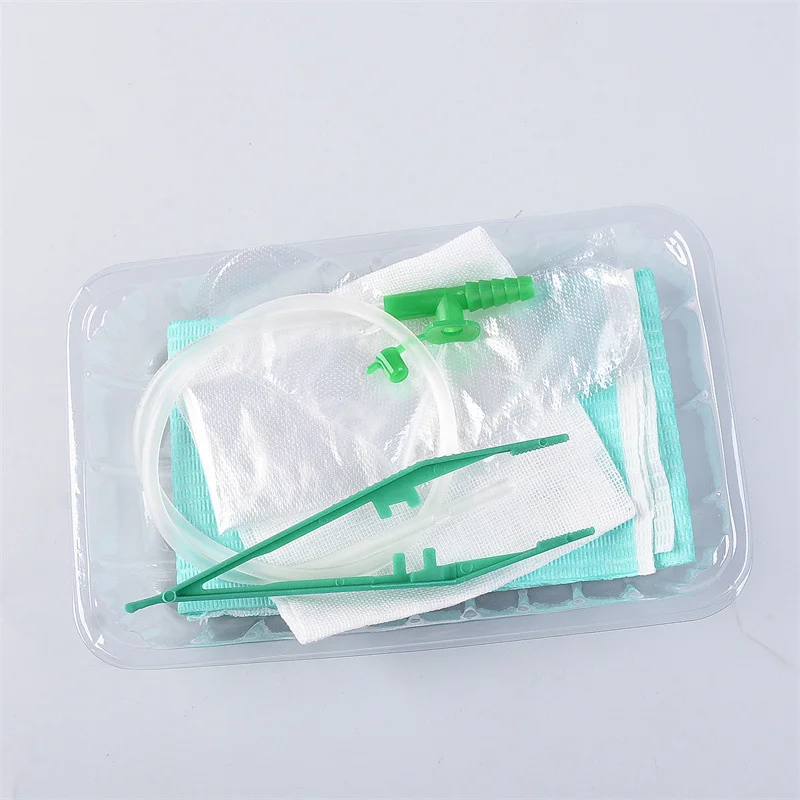
All-in-one suction kits reduce setup time, guarantee asepsis of all components and simplify the process in emergencies where every second counts. A typical kit includes the catheter in the indicated size, a sterile glove for the non-dominant hand, the connection tube, irrigation solution to lubricate the catheter and clear the lumen between passes, and a small paper field for used material.
Advantages over component-by-component prep: setup time cut from 3–5 minutes to under 60 seconds; guaranteed compatibility between components; elimination of size-selection error since the kit is single-size; and easier training of new staff. The downside is cost: a complete kit costs 3–8 times more than its separate components. For high-volume ICU, the saved nursing time justifies the extra cost.
Neonatal and infant suction: the rubber bulb
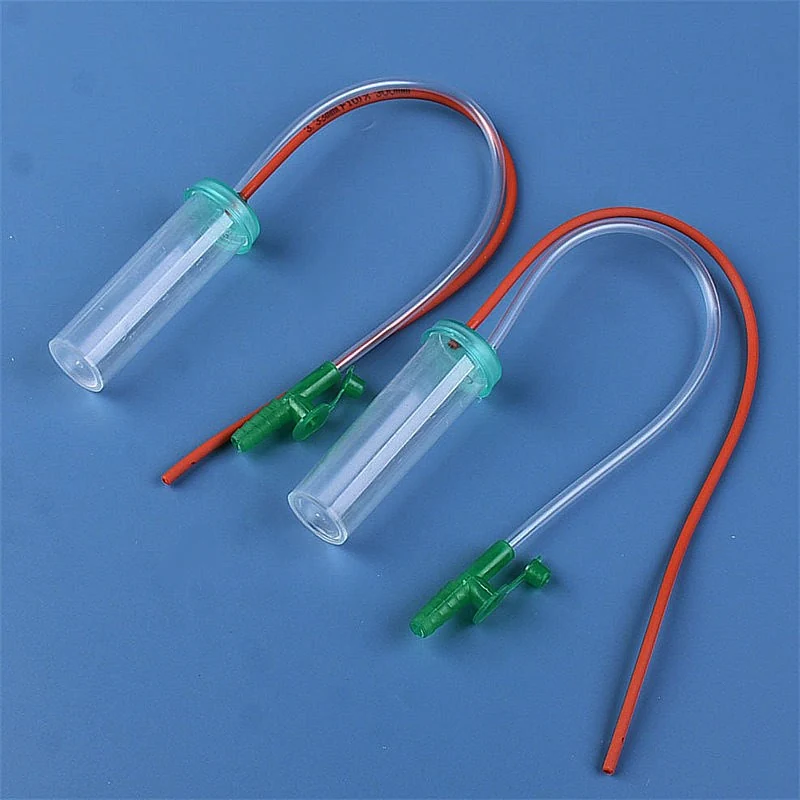
Suction in newborns and small infants needs a completely different approach from adults. Neonatal airways are extremely small, the mucosa is very delicate, and standard wall vacuum can generate pressures that collapse the neonatal nasopharynx.
The rubber bulb aspirator is the first-line device for nasal and oral suction of neonates and infants. It is simple: compress the bulb before introducing it, release to create the vacuum that aspirates secretions, and remove it to expel the content by compressing again outside the patient. Advantages: no external vacuum source, silent, very low pressures that don't injure the mucosa, and it can be operated by the caregiver at home. Limitations: suction capacity restricted to thin secretions and the superficial nasopharynx; not suitable for meconium amniotic fluid suction in the delivery room.
Portable electric aspirators: clinical applications
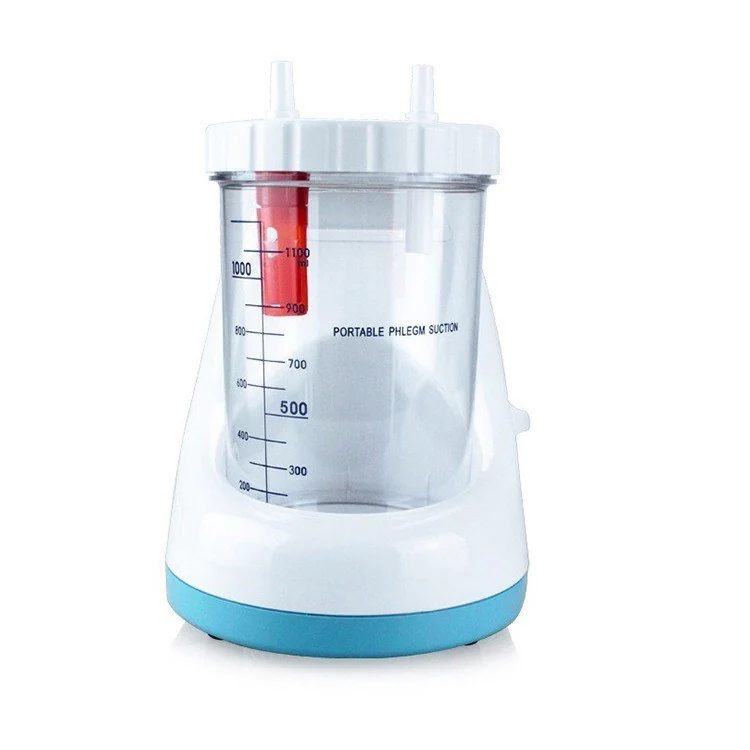
Portable electric aspirators are the solution where there's no wall vacuum: ambulances, private practices, clinics without a gas pipeline, home visits and field emergencies. A clinical-grade electric aspirator should have: minimum vacuum power of 60 L/min free flow to suction thick secretions without saturating; precise pressure regulation easy to adjust one-handed with gloves; a collection jar with a visible measurement scale and quick-release valve for emptying; low noise (diaphragm models are quieter than piston, preferable in paediatric settings); and an integrated rechargeable battery for prehospital use with at least 30–45 minutes of continuous suction autonomy.
High-power aspirator: for demanding procedures
In massive airway obstruction by vomit, massive haemoptysis, meconium aspiration in the delivery room or surgical procedures with abundant blood, the standard aspirator is not enough. The high-power aspirator has a flow capacity over 120 L/min and pressure up to 600 mmHg, with a large 2,000 mL collection jar for prolonged procedures without intermediate emptying. A dual jar in series protects the motor when jars fill quickly. A bacterial filter between jar and motor prevents internal contamination.
When choosing an electric aspirator for clinical use, verify it has medical CE Class IIa per MDR 2017/745 or FDA 510(k): industrial or domestic aspirators lack the pressure control, materials and filtration that patient use requires.
Electric aspirator maintenance
Correct maintenance is essential so the aspirator works when needed in emergencies. Daily: empty and disinfect the collection jar with 0.5% hypochlorite after each patient or at shift end; check the jar level before each use; visually inspect the extension tube and connections. Weekly: verify the maximum vacuum on the gauge (if it doesn't reach 120 mmHg it may indicate a saturated filter or worn seal); clean the exterior with intermediate-level disinfectant; check battery condition on portable models. Monthly or per the manufacturer: replace the motor's protective bacterial filter; check the jar's silicone fittings, which degrade with frequent hypochlorite disinfection; calibrate the gauge per medical certification. Record every maintenance in an equipment log for hospital accreditation.
Tracheal suction technique: a summary for staff
Recommended pressures: adults 80–120 mmHg; school-age children 60–100 mmHg; infants 40–80 mmHg; neonates and premature 40–60 mmHg; open surgical field 100–200 mmHg as needed.
Open tracheal suction technique in adults: pre-oxygenate with FiO₂ 100% for 30 seconds if ventilated; insert the catheter without vacuum until carina resistance, then withdraw 1–2 cm; apply vacuum with thumb control and begin a slow rotating withdrawal; the active pass should not exceed 10–15 seconds; repeat a maximum of 3 times per session with re-oxygenation between passes; at the end, aspirate saline to clear the lumen before discarding the catheter. Critical points: never advance the catheter with vacuum applied; always use a sterile glove on the hand managing the catheter; if the patient coughs or becomes agitated, stop and re-oxygenate; monitor oxygen saturation throughout. For diagnostic samples during suction, see our disposable mucus trap guide.
We manufacture suction catheters, complete kits and portable and hospital electric aspirators, with CE / ISO 13485 and lot traceability. Contact us on WhatsApp with the references and estimated volumes and we'll get you a quote.
Frequently Asked Questions
Can I use the same electric aspirator for adults and neonates?
Technically yes if the unit has a pressure regulator adjustable to the neonatal range of 40–60 mmHg. However, in services treating neonates frequently, it's preferable to have a dedicated aspirator calibrated for the paediatric/neonatal range, to avoid using adult pressures by oversight or urgency.
When should I empty the aspirator's collection jar?
Empty the jar before it reaches three-quarters full. If it fills completely, liquid can enter the vacuum tube and reach the motor, permanently damaging the unit. In high-secretion procedures such as haemoptysis or massive vomiting, monitor the jar level continuously.
Can suction catheters be reused if sterilised?
It is neither safe nor recommended. Disposable PVC catheters are made for single use: the material degrades with chemical sterilants and the internal lumen geometry doesn't guarantee complete decontamination in ultrasonic washes. Reuse risks cross-infection and mucosal trauma from changes in the material's mechanical properties.