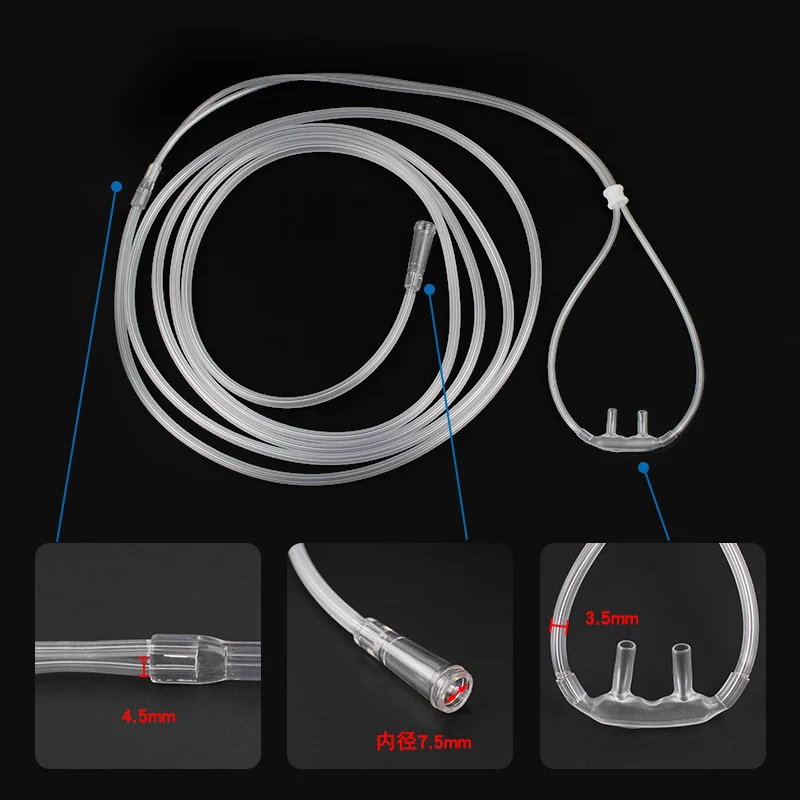
Low-flow oxygen therapy is the most frequent therapeutic intervention in modern medical practice. From the ER to general wards, ICU and home follow-up, the nasal oxygen cannula is the device that delivers supplemental O₂ comfortably, effectively and at low cost. But not all cannulas are equal: the market offers standard designs, three-way models with a humidifier outlet, headset and harness versions for prolonged use, medical-silicone variants for sensitive skin, and paediatric sizes. Each design has its own indications, advantages and limitations. This buying and selection guide covers what you need to know to choose or dispense the right nasal cannula.
How nasal cannula oxygen therapy works
The nasal cannula delivers oxygen to the patient's nasal passages, where it mixes with room air during inspiration. Unlike a mask, the cannula does not seal the airway, so the real inspired oxygen fraction (FiO₂) depends on the patient's breathing pattern. As a guide, each additional litre per minute raises FiO₂ by about 3–4% above the 21% of room air: 1 L/min ≈ FiO₂ 24–25%; 2 L/min ≈ 27–29%; 4 L/min ≈ 33–37%; 6 L/min ≈ 40–44%.
Flows above 6 L/min with a standard cannula don't significantly raise FiO₂ and instead cause mucosal dryness, epistaxis and discomfort. For FiO₂ above 44%, switch to a simple mask, reservoir mask or high-flow nasal therapy.
The nasal cannula is the first choice when the patient can breathe spontaneously, doesn't need a very high FiO₂ and can tolerate the device for prolonged periods.
Standard dual-prong cannula: uses and specifications
The standard nasal cannula is the most produced and used device in the world. Its design has two soft PVC prongs that sit shallowly in the nostrils (no more than 1 cm deep), connected to a flexible tube of about 210 cm.
Key specs:
- Material: medical PVC, latex-free.
- Length: standard 210 cm, with a 300 cm version for more mobility.
- Prong diameter: 3–4 mm for adult, 2–3 mm for paediatric.
- Sliding bolo to adjust the length at the cheeks and neck.
Main indications: hospitalised patients needing supplemental O₂ at low concentrations (24–44% FiO₂), ER patients during initial assessment, intra-hospital transfers, and home patients with COPD or heart failure. Recommended change: every 48 hours in hospital, or at any sign of material deterioration or visible contamination.
Three-way cannula with humidifier outlet
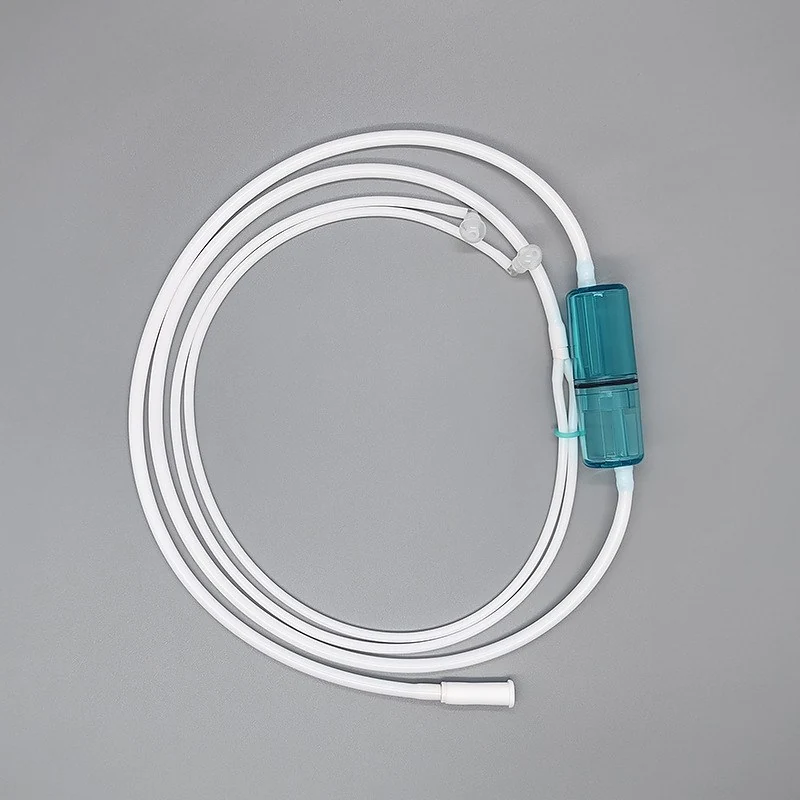
The three-way nasal cannula adds a third connection arm that lets you connect the oxygen source and a humidification system at the same time. Above 3–4 L/min, the dry oxygen from the wall supply exceeds the nasal mucosa's humidifying capacity and the patient develops dryness, crusting, bleeding and discomfort that limit adherence.
The three-way cannula connects a bubble humidifier in series so the O₂ passes through distilled water before reaching the patient. This raises the relative humidity of the gas to tolerable levels for flows up to 6 L/min, significantly improving tolerance to prolonged oxygen therapy. Especially indicated for patients needing more than 4 L/min continuously or overnight. Compatible with standard 22 mm bubble humidifier systems.
Headset and harness cannulas: for prolonged use
Headset and full-harness cannulas are designed for patients on oxygen therapy of more than 12 continuous hours who have tolerance problems with standard cannulas — especially skin injury behind the ears and on the cheekbones from tube pressure.
The headset design distributes the device's weight through a structure that goes around the head above the ears instead of behind them, eliminating the most problematic retro-auricular pressure point. Harness cannulas add a fixation system that reduces accidental disconnection in restless patients.
They are especially useful in chronic COPD with nocturnal home O₂, patients in respiratory rehabilitation exercising with supplemental O₂, and neonates where firm fixation is critical. Their main drawback is a unit cost 3–5 times higher than the standard cannula. For airway-clearance physiotherapy in these same respiratory patients, see our Flutter PEP device guide.
Medical silicone cannula: when it makes the difference
The medical-silicone nasal cannula is made of Class VI silicone per ISO 10993, a material substantially more biocompatible, hypoallergenic and softer than standard PVC. It is especially indicated in four situations.
- Patients allergic to PVC or with contact dermatitis: PVC can release plasticiser residues in contact with damp skin.
- Neonates and premature infants: the newborn's nasal mucosa is extremely delicate and soft silicone prongs cause considerably less trauma.
- Long-term home oxygen therapy of weeks or months: in COPD or pulmonary fibrosis patients using O₂ 16–24 h/day, silicone reduces pressure ulcers on the nasal septum.
- Oncology patients with oropharyngeal mucositis from chemo or radiotherapy, where any extra friction is painful.
Paediatric vs adult cannulas: critical differences
Paediatric cannulas are not simply smaller adult versions; there are design differences with real clinical implications.
- Prong diameter: 2–3 mm paediatric vs 3–4 mm adult. An adult prong in a neonate presses on the nasal vestibule walls, can deform the developing septum and adds airflow resistance that hinders spontaneous breathing.
- Prong length: 6–8 mm paediatric vs 10–12 mm adult. Prongs too long in small nostrils injure the turbinate mucosa.
- Total tube length: 150–180 cm paediatric vs 210 cm adult, to reduce the weight pulling on the device.
Manufacturers use sizes such as Neonate (under 3 kg), Infant (3–10 kg), Paediatric (10–20 kg) and Small Adult (20–40 kg), plus Adult and Large Adult.
Common mistakes in nasal cannula use
Despite being one of the simplest devices, the nasal cannula is often used incorrectly:
- Flows above 4 L/min without a humidifier, causing mucosal dryness, epistaxis and nasal pain that reduces adherence.
- Using an adult cannula on a paediatric patient, causing the pressure and length problems described above.
- Not checking the flow before placing it: before putting it on the patient, feel the prong outlet with the back of your hand to confirm gas is flowing.
- Not refitting it after meals in patients on continuous indication.
- Reuse between patients, which is absolutely prohibited even after disinfection.
- Incorrect positioning with the prongs aimed at the upper lip instead of the nostrils, which significantly reduces effectiveness.
Quality standards: what to require from the supplier
For clinics with significant cannula consumption, supplier quality directly impacts patient satisfaction and the rate of local complications:
- ISO 5367 compliance for compatibility with medical gas systems, and declared latex-free.
- Fully transparent tube to check for condensation or foreign bodies and visually confirm gas flow.
- Smooth sliding bolo that doesn't dig into the skin or come loose with movement.
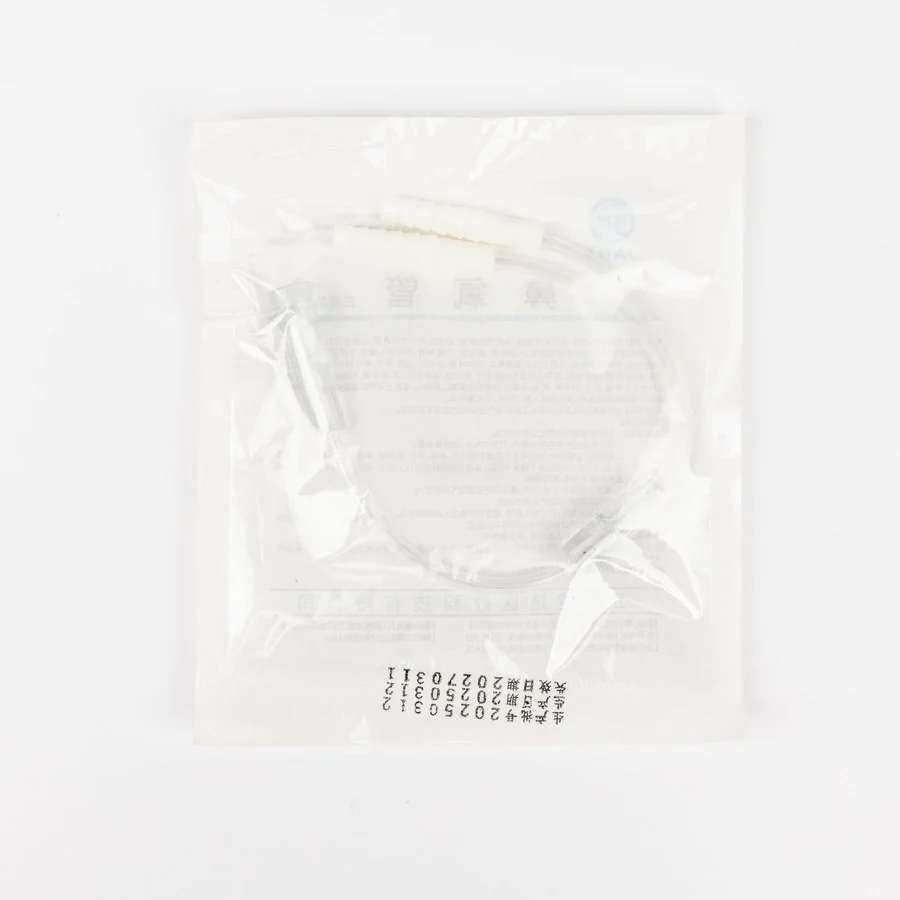
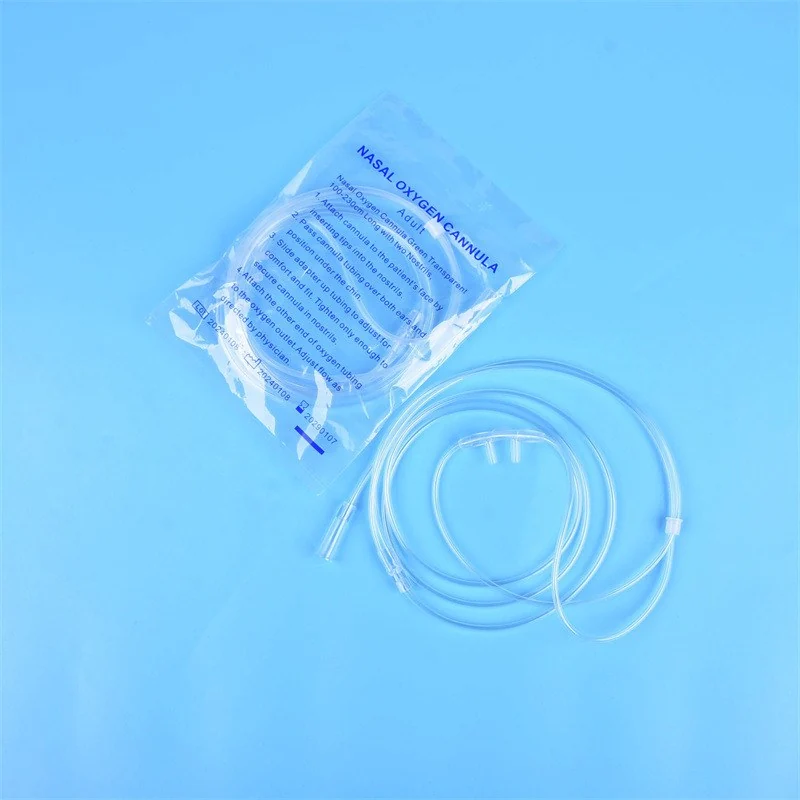
- Individual sealed packaging: although the cannula is technically a non-sterile device, it must be individually packed to guarantee product integrity; check the expiry date and that the pack is intact.
- Full range: standard, three-way, headset/harness, silicone and the paediatric sizes, so one supplier covers every patient.
- Documentation: datasheet with the declared ISO standard, for import and tenders.
We manufacture the full nasal oxygen cannula range — standard dual-prong, three-way with humidifier outlet, headset and harness, medical silicone, and the complete paediatric and adult size set — latex-free, ISO 5367-compliant, CE / ISO 13485. If you want to test quality before committing to a volume, message us on WhatsApp and we'll send samples.
Frequently Asked Questions
At what oxygen flow should I use a humidifier with the nasal cannula?
From 4 L/min, oxygen begins to significantly dry the nasal mucosa. For short treatments under 2–4 hours at 4 L/min, humidification may be omitted. For flows of 4 L/min or more continuously, especially overnight, always use a bubble humidifier with sterile distilled water, and change the water every 24 hours.
How long can a patient use the same nasal cannula?
In hospital, change it every 48 hours or at any sign of deterioration, contamination or reported discomfort. For home use, weekly replacement of the whole tube is recommended. The patient should always have two cannulas available to alternate during cleaning.
Can nasal cannulas deliver oxygen during feeding in neonates?
Yes, nasal cannulas are the device of choice for oxygen therapy during feeding in neonates, since they leave the mouth free and don't interfere with sucking. Check that the prongs aren't blocked by milk or secretions after each feed, especially in neonates who regurgitate frequently.
When should I choose a silicone cannula over PVC?
Choose medical silicone for patients allergic to PVC or with contact dermatitis, for neonates and premature infants, for long-term home oxygen (weeks/months, to prevent septal pressure ulcers), and for oncology patients with mucositis. Silicone is more biocompatible and softer; PVC is the economical choice for routine short-term use.