Disposable Soft Silicone Nasal Oxygen Cannula
SKU: XY421E | Cánula Nasal de Oxígeno de Silicona Blanda Desechable
Reference price. Contact our team for an exact quote.
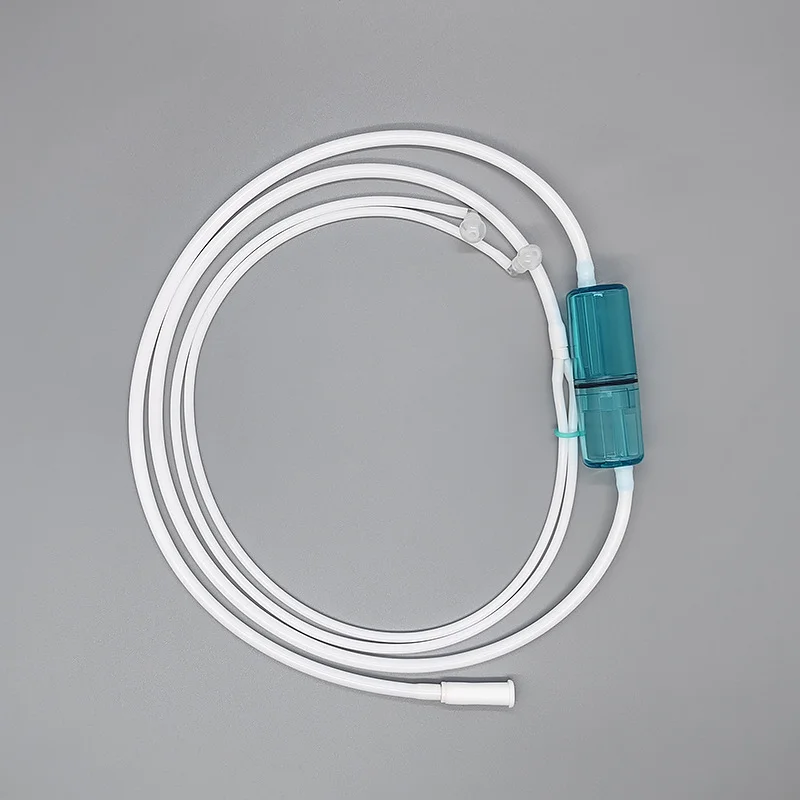
Nasal oxygen cannula made from ultra-soft pharmaceutical-grade medical silicone for greater comfort in prolonged oxygen therapy. Silicone is hypoallergenic, biocompatible and softer than conventional PVC, which lowers irritation in geriatric or sensitive-skin patients. Anatomical, atraumatic prongs; latex-free and BPA-free; universal connector compatible with all oxygen equipment. Single use.
Technical Specifications
Clinical Uses
- Prolonged oxygen therapy in older adults
- Patients with sensitive skin or PVC sensitivity
- COPD, chronic respiratory insufficiency and pulmonary rehabilitation
Silicone or PVC — decide by wear time, not by preference
| Silicone (XY421E — this part) | Standard PVC cannula | |
|---|---|---|
| Buy it for | Long-term, geriatric, home care — wear measured in weeks or months | Acute wards, short stays — wear measured in days |
| Why | Softer against skin and mucosa over long contact; fewer irritation complaints | Therapy is over before skin problems develop |
| Unit price | Higher | Lower — the volume line in any catalogue |
| Plasticiser | None needed — silicone is soft by nature | Soft PVC requires a plasticiser |
| DEHP-free tender clause | Answered by the material itself | Requires checking the formulation |
| Therapy & fit-up | 1–6 L/min, universal connector | 1–6 L/min, universal connector — identical |
The therapy is the same on both lines; only wear time decides. Split the catalogue by account type and both parts earn their place — apply one material to everything and you lose money on acute or patients on long-term.
Frequently Asked Questions — Disposable Soft Silicone Nasal Oxygen Cannula
What are the advantages of silicone over PVC nasal cannulas?
Medical silicone is softer, more biocompatible and less irritating than PVC. It reduces pressure and friction on the nasal mucosa during prolonged therapy, which is especially useful for geriatric or sensitive-skin patients.
Is the silicone cannula latex-free?
Yes. It is made entirely from medical silicone with no latex and no BPA, so it is safe for patients with a latex allergy.
Is it compatible with home oxygen concentrators?
Yes. The distal connector is universal and compatible with home concentrators (1–10 L/min), wall flowmeters and portable oxygen systems.
Silicone costs more than PVC — when is it actually worth it?
Ask how long the patient wears it. For a two- or three-day acute stay, a PVC cannula is the right commercial answer and silicone is money spent on a problem that never appears. The maths inverts on long-term therapy: a home-care or COPD patient wearing a cannula sixteen hours a day for months will eventually report soreness where it rests, and skin that breaks down means therapy gets interrupted, which is a far more expensive event than the unit-price gap. Buy PVC for acute wards by the case and silicone for the long-term and home-care accounts. Buyers who apply one material to both ends of their catalogue lose either way.
Does silicone help with DEHP-free or phthalate-free tender clauses?
Yes, and for a structural reason worth understanding. PVC is rigid on its own and needs a plasticiser added to make it soft — historically DEHP, which is what the tender clauses target. Silicone is inherently soft and needs no plasticiser at all, so the question does not arise for this cannula. If you are bidding into a tender with a DEHP-free or phthalate-free clause on respiratory consumables, this is the straightforward line to bid. Send us the tender text and we will confirm which of our documentation answers which clause.
Is it a drop-in replacement for the PVC cannula we already supply?
Yes on the equipment side, and that is the point. Same 1–6 L/min low-flow therapy, same FiO₂ range, same universal connector — it plugs into the concentrators and wall flowmeters your accounts already own, with no adapter and no change to how staff set the flow. The only thing that changes is what the patient's skin experiences. You can introduce it into an existing account as a comfort upgrade without touching anything else in their setup.
Request a Quote — Disposable Soft Silicone Nasal Oxygen Cannula
Reply within 24 business hours with FOB/CIF price, MOQ and lead time. SKU XY421E is already attached to your request — just add the quantity.
Request a Sample
Samples available for evaluation. Basic items: free sample. Higher-value items: a sample fee may apply. Shipping not included.
Full Description — Disposable Soft Silicone Nasal Oxygen Cannula
A nasal cannula is a comfortable device for about the first day. What decides whether a long-term patient stays on therapy is what the material does to their face over the weeks that follow — soreness above the lip, rawness in the nostrils, tenderness where the tubing rests on the cheek. Those complaints do not come from the oxygen. They come from the plastic. That is the entire reason this cannula exists, and it is the only reason to pay more for it.
Why the material changes the outcome
PVC is a rigid plastic that is made soft by adding a plasticiser. Silicone is soft to begin with. In practice that means medical silicone sits against the nostrils and cheeks with less pressure and less friction, and it is more biocompatible over long contact — which is why it is the material of choice for the patients who report irritation from a PVC cannula: older adults, fragile or sensitive skin, and anyone whose therapy is measured in months rather than days. Anatomical atraumatic prongs, hypoallergenic, latex-free and BPA-free.
When it is worth the money — and when it is not
Silicone costs more per unit, and pretending otherwise helps nobody. The honest rule is wear time. For a two- or three-day acute admission, the standard PVC cannula is the correct commercial choice — the skin problem never has time to appear and silicone is money spent on nothing. On long-term therapy the maths inverts completely: a home-care or COPD patient wearing a cannula sixteen hours a day will eventually break down where it rests, and interrupted therapy costs far more than the unit-price gap ever saved. So split the catalogue by account, not by preference. PVC by the case for acute wards; silicone for the long-term, geriatric and home-care accounts. Applying one material to both ends of the range loses money at one end or patients at the other.
The plasticiser question in tenders
This is where silicone quietly wins bids. Public tenders increasingly carry DEHP-free or phthalate-free clauses on respiratory consumables — and those clauses exist because soft PVC needs a plasticiser to be soft. Silicone needs none, so the clause is answered by the material itself rather than by a substitution. If you bid into tenders with that language, this is the clean line to bid; our DEHP-free and sustainable packaging guide covers how the requirement is written in the EU and what documentation answers it. Send us the tender text and we will map our documents to the clauses before you commit to the bid.
It drops into an account without changing anything else
Same 1–6 L/min low-flow therapy, same FiO₂ range of roughly 24–44%, same universal connector for home concentrators, wall flowmeters and portable systems. No adapter, no retraining, no change to how staff set the flow. That matters commercially: you can introduce silicone into an existing PVC account as a comfort upgrade for the patients who need it, without disturbing the rest of their supply.
If the material is not the actual problem
Comfort complaints get blamed on the material when the cause is elsewhere, and stocking the wrong fix wastes the order. If the cannula falls off an active or paediatric patient, softer plastic will not hold it on — the head-strap cannula will. If it is specifically the ears that hurt, the headset-frame cannula carries the load off them. If the nose is drying out rather than chafing — bleeding, crusting, higher flows — the fix is humidification, not silicone: see the cannula with humidifier bottle. And when a patient's requirement climbs past 6 L/min, no cannula material rescues it — the account needs high-flow nasal cannula (HFNC), which is a heated humidified system rather than a consumable swap. For day-to-day flow, FiO₂ and skin care on long-term therapy our nasal cannula oxygen therapy care guide and nasal oxygen cannula guide cover the ground.
Buying wholesale
Factory-direct, pharmaceutical-grade medical silicone, latex-free, BPA-free, no plasticisers, EO sterile, universal connector. ISO 13485 and CE documentation, lot traceability, OEM pouch print and samples available. Tell Alex which accounts this is for — long-term, geriatric, home care or a tender — and you get the case pack and FOB price on WhatsApp, usually within 24 h.
This page is for medical consumables sourcing and procurement information. Clinical suitability and oxygen-therapy decisions should be confirmed by qualified professionals and the buyer's local compliance process.