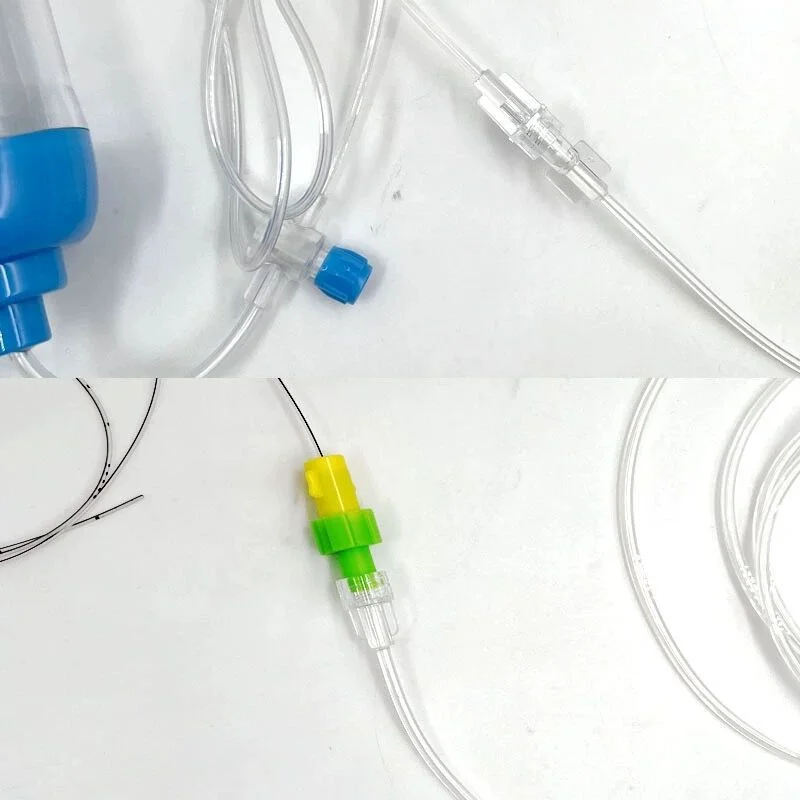
Selling disposable medical supplies in the European Union is no longer just about the CE mark. Two regulatory pressures are calling the shots: on one side, the restriction of phthalates like DEHP in devices under the MDR; on the other, the new packaging rules, the PPWR, pushing toward recyclable, lower-plastic packaging. For a European importer, finding a manufacturer that already has DEHP-free versions and more sustainable packaging is a competitive edge and, along the way, a way to protect the registration. Let's look at what the market asks for today and how to pick a supplier.
DEHP, and why the EU is leaving it behind
DEHP (di(2-ethylhexyl) phthalate) is the plasticizer that makes medical PVC flexible. The trouble is that it can migrate out of the plastic into the fluid or blood passing through the device, and it's classified as toxic for reproduction. So under the MDR (EU Regulation 2017/745), any device that contains CMR phthalates above 0.1 % has to justify and label it, and the pressure to replace it keeps growing.
Where it matters most is in two areas: sensitive populations, such as neonates, paediatrics, pregnant women or dialysis patients, and devices that spend a long time in contact with blood or lipids, like IV sets, lines or parenteral nutrition. The alternative is DEHP-free PVC, with plasticizers such as TOTM or DINCH, or PVC-free materials outright. For the lines that touch lipid emulsions, the DEHP-free version of the precision microdrip IV set and the IV extension line avoids that interaction.
And now packaging counts too (PPWR 2026)
The Packaging and Packaging Waste Regulation, the PPWR, starts to apply in 2026 and pushes all packaging, healthcare included, toward three goals: that it be recyclable, that it use less material, and that it include recycled content. For a medical supply, in practice, that means recyclable packaging that's clearly labelled for separation, less over-packaging and non-essential plastic, and traceability of the material.
The important nuance is that sterility and the sterile barrier are untouchable: the job is to make the packaging more sustainable without losing an ounce of protection. A manufacturer that's already adapting its packaging saves you compliance headaches further down the line.
What else the European buyer looks at
Beyond DEHP and packaging, the European importer checks a handful of things before committing: that the marking is CE under the MDR 2017/745, the current one and not the old MDD, with its Declaration of Conformity up to date; that the product is latex-free by default, for allergy risk; that ISO 10993 biocompatibility is documented; that the UDI and labelling comply, in the country's language; and that there's lot traceability and a technical file ready for the notified body.
The latex-free film examination gloves and the latex- and DEHP-free needle-free connector are two examples of references built for exactly these requirements.
Choosing a supplier for Europe, in short
If I had to boil it down to questions to ask the manufacturer before importing, they'd be these. Does it have a DEHP-free version in the blood- and lipid-contact lines and for neonatal and paediatric use? Is the marking CE under current MDR, with a Declaration of Conformity and technical file? Is its packaging moving toward the recyclability and reduced plastic the PPWR asks for? Does it hand over the full documentation (ISO 13485, ISO 10993, EO sterilization) for your registration? And does it offer private label with labelling in the country's language? The more "yes" answers, the less friction at customs and registration.
In our case we manufacture with CE (MDR 2017/745) and ISO 13485, latex-free material and DEHP-free versions on request for the sensitive lines; we hand over all that documentation, offer OEM with labelling in your language, and keep moving our packaging toward more sustainable formats. If you sell in Spain, Portugal, France, Germany or the rest of the EU, message us on WhatsApp and we'll get you a box price.
Frequently Asked Questions
What is DEHP and why avoid it in the EU?
DEHP is a phthalate used to give medical PVC flexibility, but it can migrate into the fluid or blood and is classified as toxic for reproduction. Under the MDR, devices with CMR phthalates above 0.1 % must be justified and labelled, and DEHP-free versions are preferred, especially in neonates, paediatrics and lipid contact.
What changes with PPWR 2026?
The EU Packaging and Packaging Waste Regulation pushes all packaging toward recyclability, material reduction and recycled content, including in healthcare, without compromising the sterile barrier. Buying from a manufacturer already adapting its packaging eases compliance.
Are your products DEHP-free and latex-free?
Our products are made of latex-free medical PVC, and we offer DEHP-free versions on request for lipid-contact lines and neonatal/paediatric use. Tell us the application and we'll confirm the right version and its documentation.
Do you provide CE documentation under MDR to register in Europe?
Yes. We provide CE marking under MDR 2017/745 with a Declaration of Conformity, plus ISO 13485, ISO 10993 biocompatibility, EO sterilization reports and data sheets, along with a private-label option and labelling in the country's language.