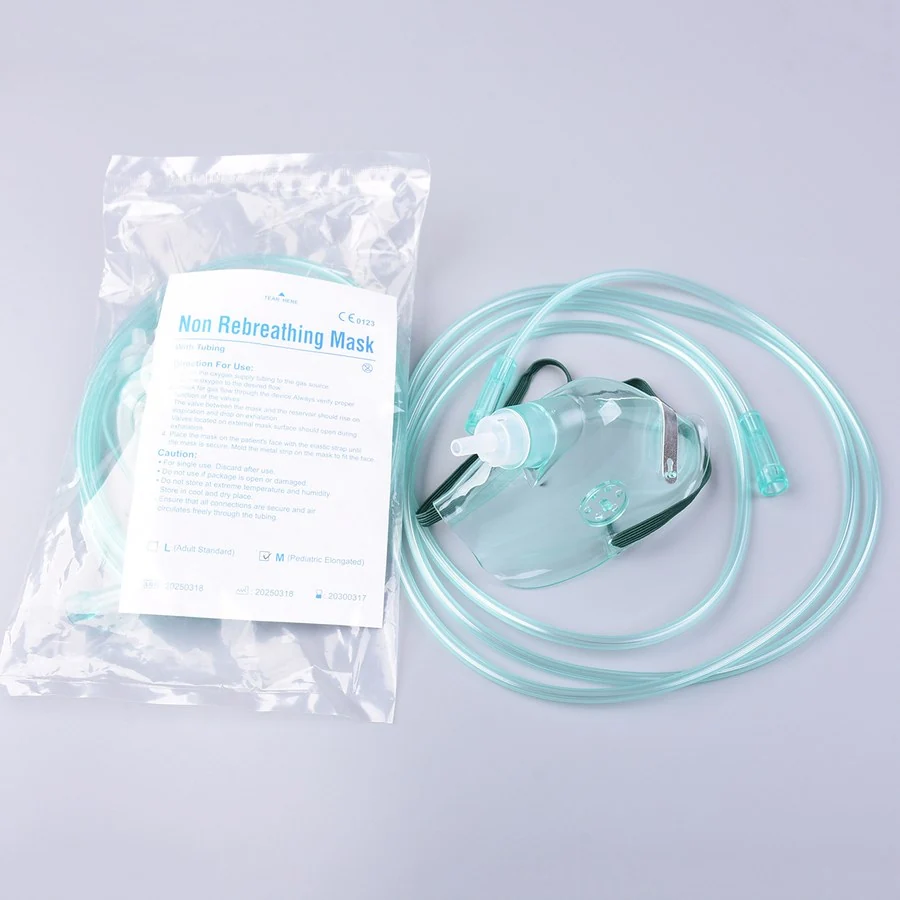
How much FiO₂ does each oxygen device deliver, and at what flow? This is the reference chart linking the system (nasal cannula, simple mask, Venturi mask and non-rebreather/reservoir mask), the flow in litres per minute and the approximate FiO₂, with when to use each. It complements our nasal cannula oxygen therapy guide and the complete nasal cannula guide.
FiO₂ by device and flow (chart)
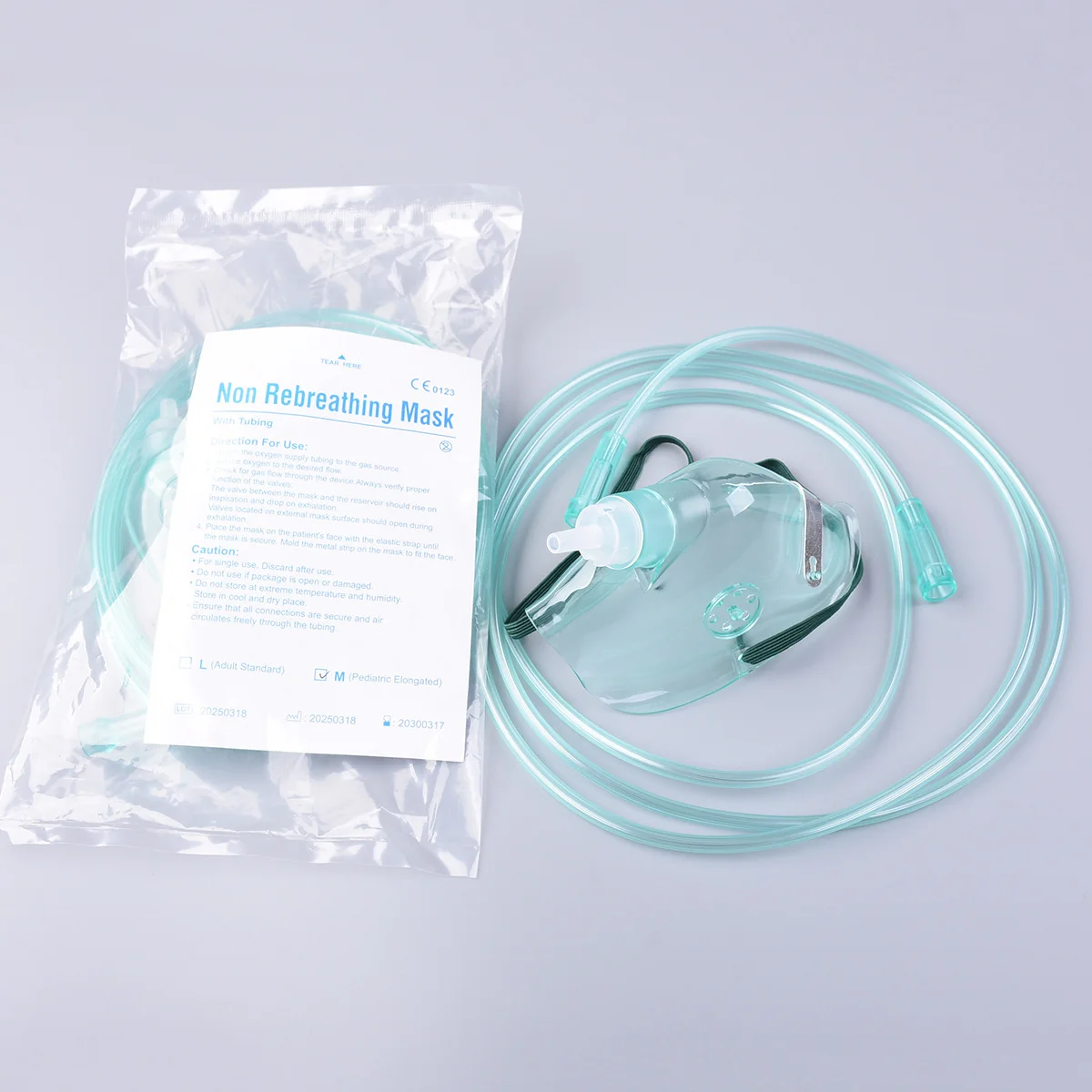
Devices split into low flow (FiO₂ depends on the patient's breathing pattern) and high flow / controlled FiO₂ (a more fixed FiO₂). Approximate values:
| Device | Flow (L/min) | Approx. FiO₂ | Type |
|---|---|---|---|
| Nasal cannula | 1–6 | 24–44 % | Low flow |
| Simple mask | 6–10 | 40–60 % | Low flow |
| Venturi mask | per adaptor | 24–60 % (fixed) | Fixed performance |
| Non-rebreather (reservoir) mask | 10–15 | 80–95 % (up to ~100 %) | High delivery |
| High-flow nasal cannula (HFNC) | up to 60 | 21–100 % (adjustable) | High flow |
Nasal cannula: each litre adds ≈4 % to the baseline FiO₂ (21 %). Above 6 L/min it adds no more and dries the mucosa.
Simple mask: needs a minimum of 5–6 L/min to flush exhaled CO₂ from inside the mask.
Venturi: uses colour-coded adaptors that fix the FiO₂ (e.g. 24, 28, 31, 35, 40, 50 %) at the flow marked on each adaptor. It is the best choice when an exact FiO₂ is needed, as in the COPD patient.
Reservoir (non-rebreather): the bag must stay inflated; flow (10–15 L/min) is set so it does not collapse on inspiration. It delivers the highest FiO₂ without high-flow equipment.
High-flow nasal cannula (HFNC): delivers heated, humidified air/oxygen at high flows (up to 60 L/min) with an adjustable FiO₂ from 21 to 100 %; it needs dedicated equipment (not the conventional cannula). Useful in hypoxaemic respiratory failure as a step before ventilation.
On the AIRVO 2, every high-flow patient uses two original consumables: the 900PT561 heated breathing tube and chamber kit and the Optiflow+ OPT944 nasal cannula. For other high-flow devices there is our XY-HF60 HFNC set, in sizes from neonate to adult.
When to use each device
- Nasal cannula: low oxygen needs, stable patient, home care; lets the patient eat and talk.
- Simple mask: moderate need when the cannula cannot reach the target saturation.
- Venturi mask: when a precise, constant FiO₂ is needed, especially in COPD and other patients in whom over-oxygenation should be avoided.
- Non-rebreather mask: emergencies and severe hypoxaemia requiring the highest possible FiO₂ while the next step is decided.
The usual target SpO₂ is 94–98 %, and 88–92 % in patients at risk of CO₂ retention. The device and flow are set by the prescription against that target.
In neonatology this chart does not apply as it stands. In a newborn on bubble CPAP the FiO₂ is set on the air/oxygen blender, and the pressure comes from the generator's water column at the end of a neonatal Bubble CPAP circuit, not from the device's flow.
The Venturi mask in detail: FiO₂ by adapter
The Venturi is the only low-flow mask that delivers a fixed, predictable FiO₂, because it mixes oxygen with room air in a constant ratio (the Venturi effect). Each adapter sets an FiO₂ and requires a minimum oxygen flow; below that flow the concentration is not guaranteed. The adapter colour depends on the manufacturer, so always go by the FiO₂ and flow printed on it:
| FiO₂ | Recommended O₂ flow |
|---|---|
| 24 % | 2 L/min |
| 28 % | 4 L/min |
| 31 % | 6 L/min |
| 35 % | 8 L/min |
| 40 % | 10 L/min |
| 50 % | 15 L/min |
It is the mask of choice when an exact, stable FiO₂ is needed, especially in the COPD patient at risk of CO₂ retention, where giving more oxygen than necessary is dangerous.
Choosing oxygen masks and cannulas for the hospital
Sizes come first: it helps to stock adult and paediatric across the whole family, from the simple mask to the non-rebreather, with a cushion or fit that won't mark the face over long treatments. The connector and tubing should be universal, compatible with the flowmeters, humidifier bottles and concentrators you already run; the tubing kink-resistant and the right length for a patient in bed versus one walking around.
On the non-rebreather mask, check that the one-way valve is intact and the bag holds enough volume to sustain a high FiO₂. The material, latex-free and transparent so you can watch for secretions.
We make them with CE, ISO 13485 and lot traceability; ask us for samples to validate the fit before you commit to a large order, and we'll quote on WhatsApp for your destination country. And when a unit needs a high FiO₂ held steady above what a non-rebreather can sustain, the line that answers it is high-flow nasal cannula: heated humidified gas up to 60 L/min at the FiO₂ you set, not the one the patient's own breathing dilutes it to.
Frequently Asked Questions
How much FiO₂ does each oxygen device deliver?
Approximately: nasal cannula 24–44 % (1–6 L/min), simple mask 40–60 % (6–10 L/min), Venturi mask 24–50 % at a fixed FiO₂ set by the adaptor, and non-rebreather mask 80–95 % (10–15 L/min). Low-flow devices give a FiO₂ that depends on the breathing pattern; the Venturi delivers a more exact FiO₂.
What is the minimum flow for a simple oxygen mask?
At least 5 to 6 L/min. Below that, exhaled CO₂ trapped inside the mask is not flushed and the patient rebreathes it. If little oxygen is needed, a nasal cannula is preferable.
When is a Venturi mask used?
When a precise, constant FiO₂ is needed, especially in COPD patients in whom giving more oxygen than necessary should be avoided. It uses colour-coded adaptors that fix the FiO₂ (for example 24, 28, 31, 35, 40 or 50 %) at the flow marked on each adaptor.
Which mask gives the most oxygen?
The non-rebreather (reservoir) mask, which at 10–15 L/min delivers a FiO₂ of 80–95 %. For it to work, the reservoir bag must stay inflated and not collapse during inspiration. It is used in emergencies and severe hypoxaemia.