The order of draw keeps the additive in one blood tube from carrying over into the next and ruining a laboratory result. This is the quick reference for the correct CLSI sequence, with the cap colour, additive, what each tube is for and how many inversions it needs. At the end: which phlebotomy supplies you need for a clean draw and what to check when buying them in bulk.
The order of draw at a glance (CLSI chart)
This is the standard sequence. The golden rule: blood cultures always first (the only sterile sample) and the EDTA tube near the end, because its carryover causes the most errors.
| Order | Cap colour | Additive | What it is for | Inversions |
|---|---|---|---|---|
| 1 | Blood culture bottle | Culture medium | Culture (first, sterile) | per manufacturer |
| 2 | Light blue | Sodium citrate | Coagulation (PT, aPTT) | 3–4 |
| 3 | Red / Gold (gel) | None / clot activator + gel | Chemistry, serology | 5 / 5–6 |
| 4 | Green | Heparin (lithium/sodium) | Stat chemistry, plasma | 8–10 |
| 5 | Lavender / Purple | EDTA | Haematology (CBC) | 8–10 |
| 6 | Grey | Fluoride / oxalate | Glucose, lactate | 8–10 |
Common mnemonic by colour: "yellow – blue – red – green – lavender – grey" (cultures first, then light blue, red, green, lavender and grey). If a yellow SPS tube is used (culture/microbiology), it is drawn with the blood cultures — before the citrate tube — because it must also stay sterile and free of interfering additives.
Why the order matters
Each tube carries a different additive. If the needle carries traces of one tube into the next, the "wrong" additive alters the result:
- Citrate (blue) goes before the strong anticoagulants so the blood-to-anticoagulant ratio for coagulation is exact.
- EDTA (lavender) goes near the end because carryover into a chemistry tube falsely raises or lowers potassium, calcium, iron and alkaline phosphatase.
- Blood cultures go first because they are the only sample that must stay sterile.
Invert, don't shake: after filling each additive tube, gently invert it the stated number of times to mix; vigorous shaking causes haemolysis and invalidates the sample. Plain (no-additive) tubes are not inverted.
Clean technique: what must not go wrong
An orderly draw starts before the first tube:
- Tourniquet: apply it 7–10 cm above the site, and release it in under 1 minute (ideally as soon as blood flows). A prolonged tourniquet causes haemoconcentration and falsely raises potassium, calcium and proteins. A single-use tourniquet avoids cross-infection.
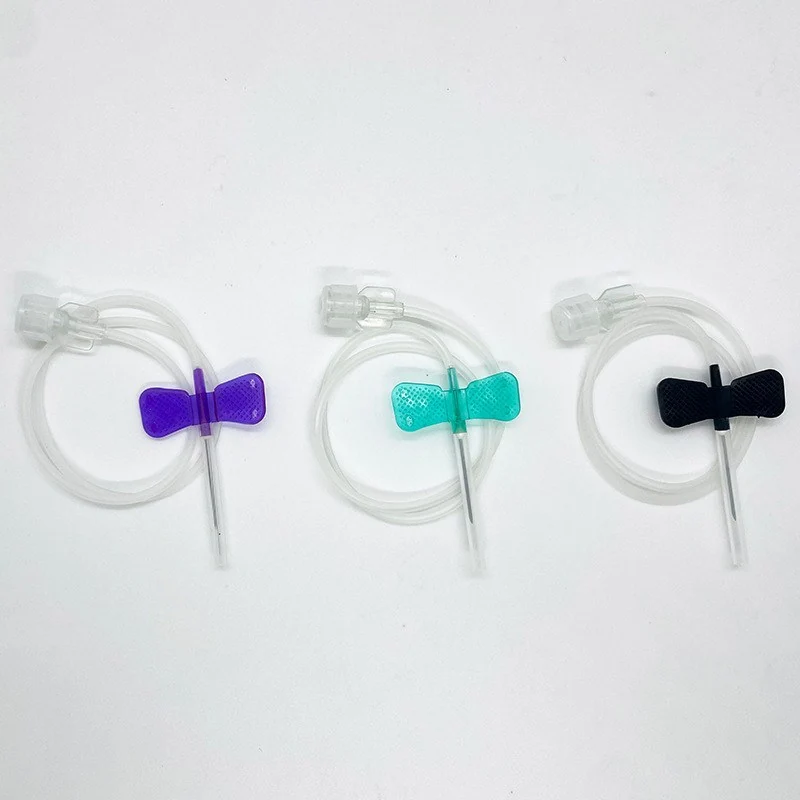
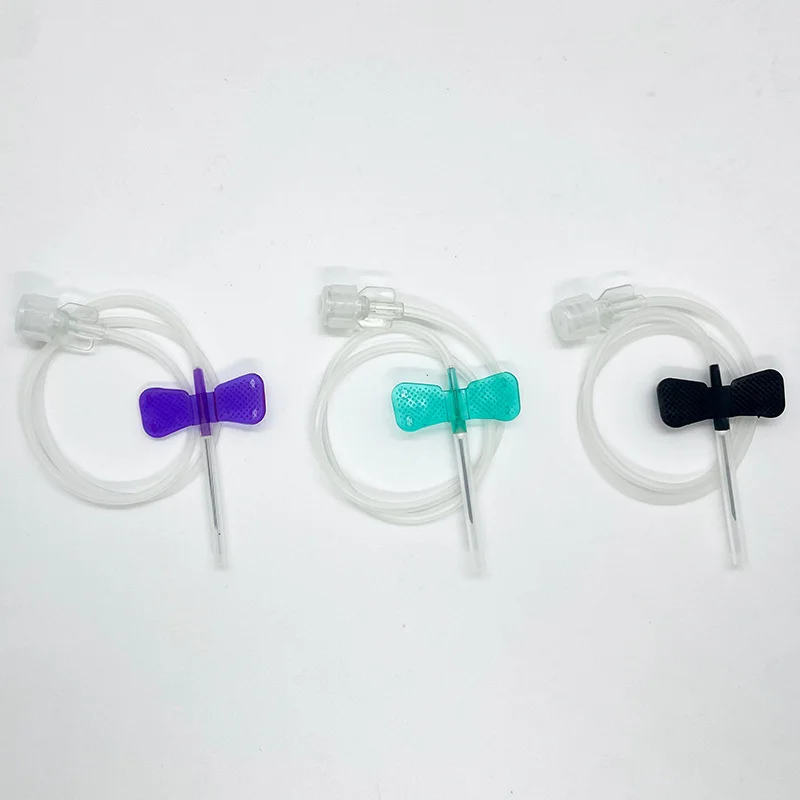
- Needle or butterfly (winged set): for difficult veins, neonates or geriatrics, a butterfly/scalp needle eases access; when using a winged set with a coagulation tube, draw a discard tube first to clear the air from the tubing.
- Correct fill: respect each tube's vacuum level; an under-filled tube changes the additive-to-blood ratio.
- Order and inversions: follow the chart and mix by inversion immediately.
- Labelling: label at the patient's side.
Choosing your phlebotomy supplies
For the tourniquet, the cleanest option is the single-use disposable (band or buckle type), soft TPE, non-slip and latex-free; it removes the cross-infection risk that reusable tourniquets carry. For the butterfly or scalp needle, look for a gauge range (18G to 27G) with colour coding, an atraumatic triple-bevel tip, fixation wings and a standard Luer connector, which handles difficult veins and paediatrics best; if you're unsure about the gauge, the IV needle and catheter gauge chart sorts it out. Round out the sample chain with sterile, traceable swabs and containers.
We make this line with CE, ISO 13485, EO sterilisation and lot traceability. Ask us for samples before quoting volume and we'll take it to WhatsApp.
Frequently Asked Questions
What is the correct order of draw for blood tubes?
Per CLSI: 1) blood culture bottles, 2) light-blue tube (citrate, coagulation), 3) red or gold tube (serum/chemistry), 4) green tube (heparin), 5) lavender/purple tube (EDTA, haematology) and 6) grey tube (fluoride, glucose). Blood cultures always come first because they must stay sterile, and EDTA goes near the end because of carryover risk.
Why does the lavender (EDTA) tube go near the end?
Because if EDTA carries over into a chemistry tube it falsifies results such as calcium, potassium, iron and alkaline phosphatase. That is why it is drawn after the coagulation, serum and heparin tubes, and only before the grey tube.
How many times should each tube be inverted?
The citrate (blue) tube 3–4 times; the serum gel tube 5–6; the heparin (green), EDTA (lavender) and fluoride (grey) tubes 8 to 10 times. Invert gently — do not shake: shaking causes haemolysis and invalidates the sample. Plain tubes with no additive are not inverted.
How long can the tourniquet stay on?
Under 1 minute — ideally release it as soon as blood begins to flow. A prolonged tourniquet causes haemoconcentration and alters values such as potassium, calcium and proteins. A disposable tourniquet is recommended to avoid cross-infection.