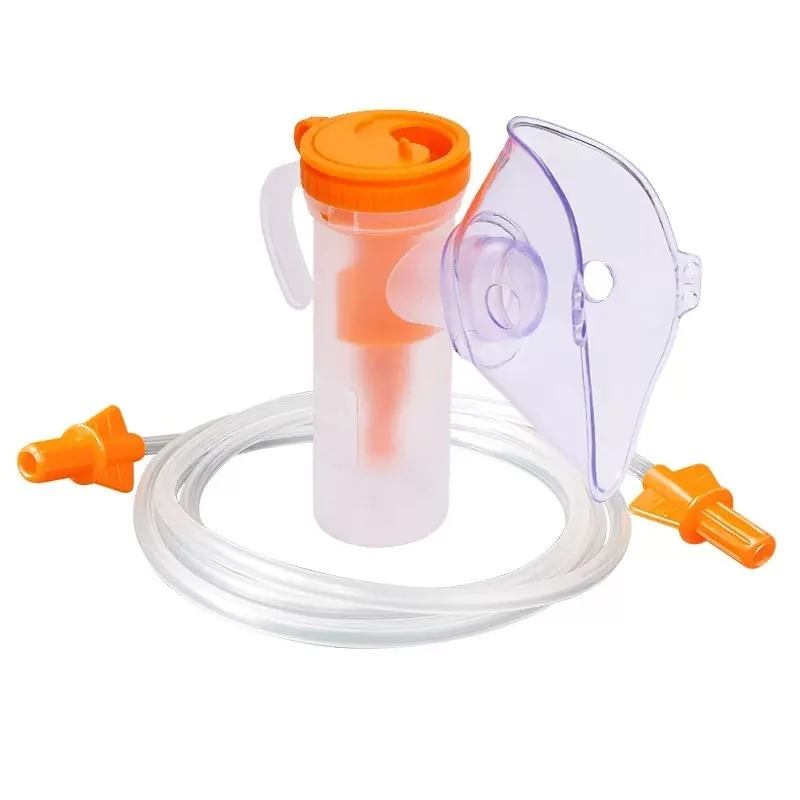
A nebulizer turns liquid medicine into a mist that is inhaled, widely used in asthma, COPD, bronchiolitis and home care. The most repeated questions are "how do I use it step by step?", "how long does each session last?", "how often do I change the mask and tubing?" and "how do I clean it so it doesn't get contaminated?". This guide answers all of that and explains what to check when buying nebulizer kits (mask, cup and tubing) and compressors wholesale for clinics, pharmacies and home-care distributors.
Parts of the nebulizer system
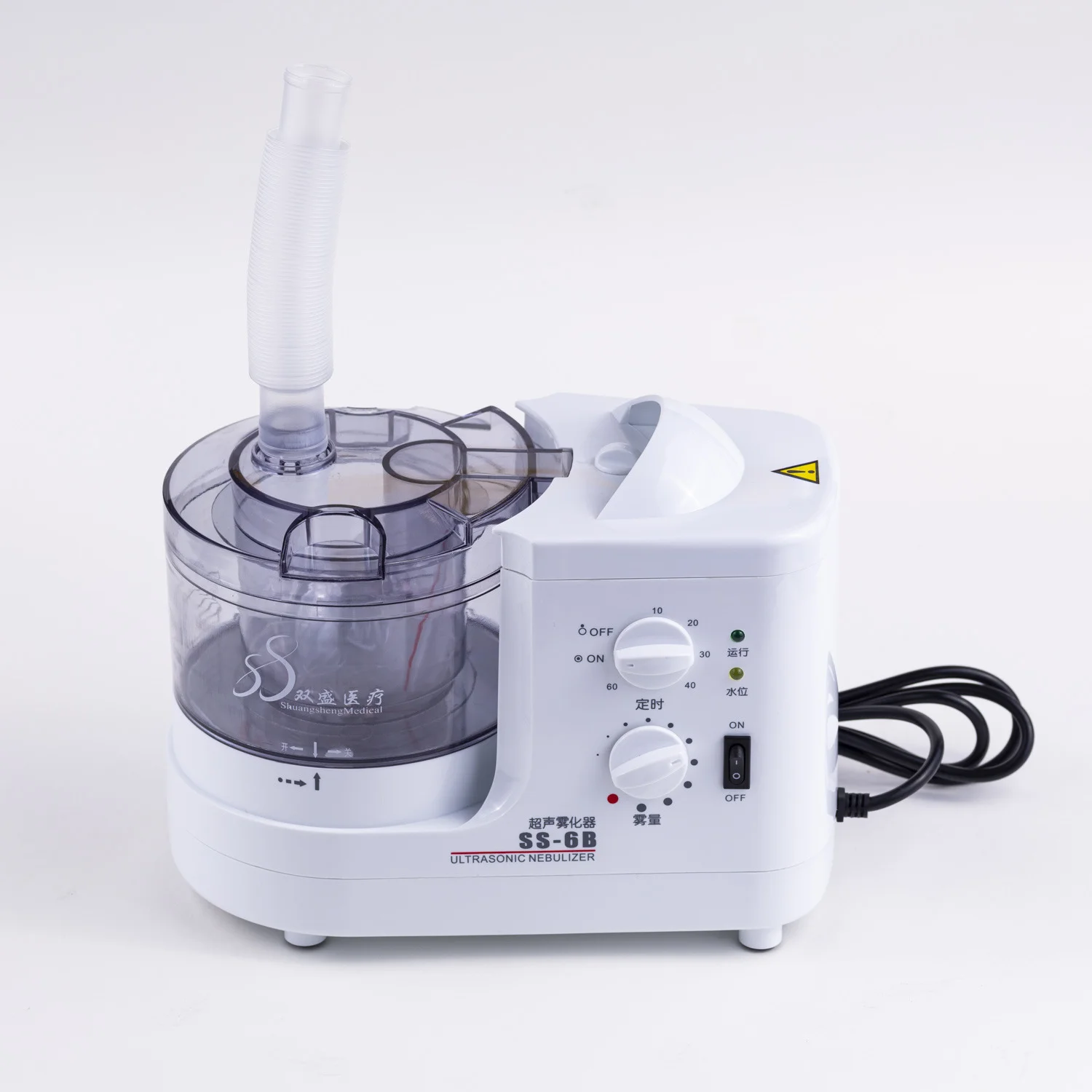
A compressor (jet) nebulizer system has these parts, worth knowing to use and to buy it well:
- Compressor: generates the airflow that nebulizes the liquid. It is the reusable unit.
- Connecting tubing: carries air from the compressor to the cup. It must not fill with water or kink.
- Cup / medication chamber: where the medicine is loaded; the mist forms inside.
- Mask or mouthpiece: the mouthpiece deposits more drug in the lung and is preferred for patients who cooperate; the mask is for small children, the elderly or patients who cannot hold the mouthpiece. Adult and paediatric sizes exist.
The mask + cup + tubing set is the disposable/consumable part that is replaced; the compressor lasts years with maintenance.
How to use the nebulizer step by step
- Hand hygiene and a clean surface.
- Load the medicine into the cup: the prescribed dose and, if indicated, saline up to the recommended volume (usually 3–4 ml total). Do not mix drugs unless instructed.
- Connect the cup to the tubing and the tubing to the compressor; fit the mask or mouthpiece.
- Sit upright or semi-upright, not lying down, so the drug reaches better.
- Turn on the compressor: visible mist should appear. With a mouthpiece, seal the lips and breathe through the mouth, slow and deep, with an occasional inspiratory pause. With a mask, it should cover nose and mouth snugly.
- Duration: the session lasts as long as there is mist, usually 5 to 15 minutes, until the cup "sputters" or stops nebulizing. Tapping the cup at the end helps use up the residue.
- When finished: turn off, rinse the mouth with water if the drug contains a corticosteroid (prevents oral thrush) and clean the equipment.
In infants with a mask, the "blow-by" technique (holding the mist near the face) is less effective; a well-fitted mask is better.
Cleaning and how often to change the parts
The wet cup and mask are an excellent culture medium: cleaning prevents respiratory infections.
After each use:
- Disassemble cup, mask/mouthpiece and rinse with warm water. Shake off and air-dry on a clean cloth.
Once a day:
- Wash the parts (except the tubing) with warm water and mild soap; rinse and air-dry.
Disinfect 1–2 times a week:
- Per manufacturer: soak in a water/white-vinegar solution (3:1) for 20–30 min, or water with disinfectant, or parts that can be boiled/dishwasher-cleaned. Rinse well and dry.
The tubing: it is not washed inside; if water gets in, run the compressor a few minutes to dry it. Replace it when it has persistent moisture or dirt.
How often to change parts (home use):
| Part | Approximate replacement |
|---|---|
| Cup / medication chamber | Every 3 to 6 months (or per manufacturer) |
| Mask / mouthpiece | Every 3 to 6 months, sooner if deformed |
| Connecting tubing | When it has moisture or dirt that won't clear |
| Compressor filter | Per manufacturer (when it looks grey) |
In hospital or clinic, the kit is single-patient and disposable.
Common mistakes
- Lying the patient down: reduces lung deposition. Better seated.
- Not drying the parts: retained moisture favours fungi and bacteria.
- Reusing between different people without disinfecting (or between patients in a clinic): spreads infection.
- Overfilling the cup: lengthens the session and wastes drug; respect the recommended volume.
- Not rinsing the mouth after inhaled corticosteroids: favours oral thrush.
- Kinked or water-filled tubing: stops nebulization; check before each use.
Choosing the nebulizer kit and compressor
On the consumable kit, the cup has to deliver a particle size suited to the lower airway, with a mask in adult and paediatric sizes, a mouthpiece included and tubing that won't kink; all latex-free, and in a sterile single-patient version for hospital. From the compressor you want it to nebulize in 5 to 10 minutes, with a tolerable noise level, a filter that's easy to swap and spares on hand. It helps if the connectors between cup, tubing and compressor are universal so you aren't tied to one brand.
We make the kits with CE, ISO 13485 and lot traceability; ask us for samples to check the mask fit and cup performance before buying volume, and we'll quote on WhatsApp for your destination.
Frequently Asked Questions
How long does a nebulizer session last?
Usually between 5 and 15 minutes, until the cup stops producing mist or starts to "sputter". The usual total volume is 3–4 ml (medicine plus saline if indicated). Tapping the cup at the end helps use up the residual liquid.
How often do you change the nebulizer mask and cup?
In home use, the cup and the mask or mouthpiece are changed every 3 to 6 months (or per manufacturer), sooner if they deform or crack. The tubing is changed when it retains moisture or dirt. In hospital or clinic the kit is single-patient and disposable.
How do you clean a nebulizer so it doesn't get contaminated?
After each use, rinse the cup and mask with warm water and air-dry. Once a day, wash with warm water and mild soap. Once or twice a week, disinfect per the manufacturer (for example soaking in a 3:1 water/white-vinegar solution for 20–30 min) and dry well. The tubing is not washed inside.
Mask or mouthpiece — which is better?
The mouthpiece deposits more medicine in the lung and is preferred for patients who cooperate and can hold it. The mask is the option for small children, the elderly or people who cannot keep the mouthpiece in place; it should fit well covering nose and mouth. Many kits include both.