Preparing the skin before surgery is one of the most effective and cheapest measures to prevent surgical site infection (SSI). Doing it wrong — shaving with a razor the night before, using the wrong antiseptic or not letting it dry — raises the infection risk instead of reducing it. The key questions are "should you shave or not?", "what do you shave with?" and "what antiseptic and how is it applied?". This guide sums up the current evidence on hair removal and step-by-step antisepsis, plus what to check when buying prep supplies wholesale for theatre and distributors.
Shave or not? What the evidence says
The current recommendation changed from the old practice:
- Do not remove hair routinely. If it does not interfere with the procedure, leave it.
- If it must be removed, use a clipper, not a razor. A razor (shaving blade) produces microcuts that get colonised by bacteria and increase SSI. WHO and CDC guidelines back this up: do not remove hair unless essential and, if you must, use a clipper only, never a razor; and use an alcohol-based chlorhexidine (CHG) antiseptic as the agent of choice, which is associated with fewer infections than povidone-iodine with alcohol.
- Do it just before surgery, not the night before: the shorter the time between hair removal and incision, the lower the risk. Never shave with a razor at home the night before.
- Outside the sterile theatre, so the cut hair does not contaminate the field.
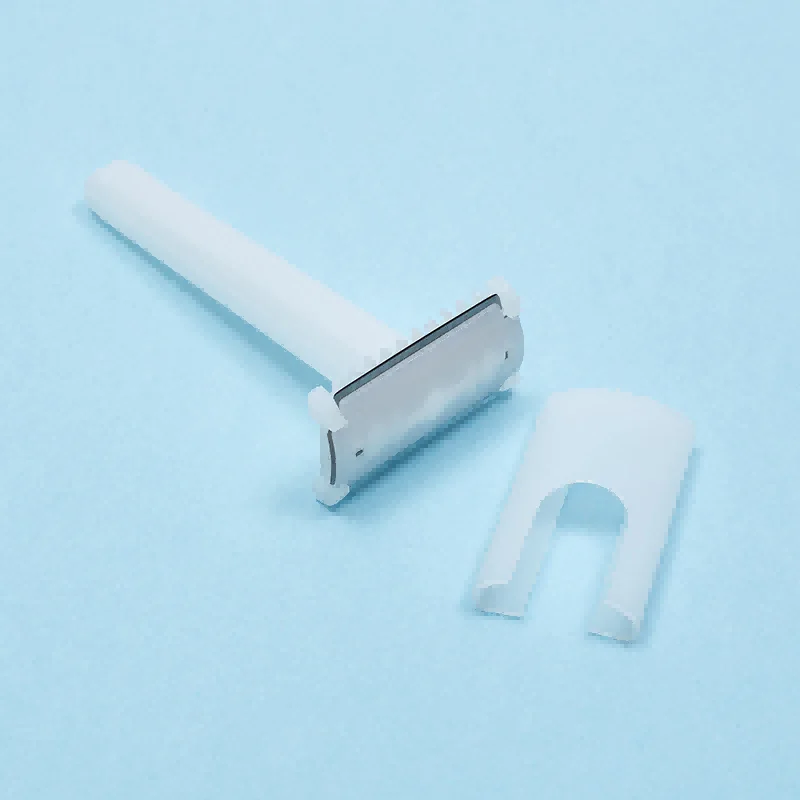
The single-use, clipper-type surgical prep razor is designed exactly for this: it removes hair without cutting the skin.
Skin antisepsis: which antiseptic and how
After removing hair (if needed) and with clean, dry skin, the antiseptic is applied:
| Antiseptic | Feature |
|---|---|
| Alcoholic chlorhexidine (>0.5%) | First choice in most surgery; fast action and prolonged residual |
| Povidone-iodine | Alternative, useful on mucosa and where chlorhexidine is contraindicated |
| Alcohol alone | Insufficient as the sole field antiseptic |
Application:
- Apply from the centre (incision area) outward, in concentric circles, without going back with the same gauze.
- Cover a wide area, larger than the planned incision.
- Let it dry completely (the antiseptic works as it dries; also, alcoholic solutions are flammable and must dry before using electrocautery).
- Place the sterile surgical drapes delimiting the area — see disposable surgical drape.
Other steps of surgical preparation
Besides hair removal and field antisepsis:
- Pre-surgical shower: a bath or shower with soap (or chlorhexidine wash per protocol) the night before and/or the morning of surgery, to reduce the skin's bacterial load.
- Team hand hygiene and PPE: surgical scrub, sterile gown and gloves, cap and mask — see how to put on and remove PPE.
- Protecting the table and area: sheets/drapes and a waterproof underpad to keep the area dry and clean.
- Normothermia and glycaemic control per protocol, which also influence SSI.
Preparation is a chain: correct shaving without good antisepsis, or vice versa, does not protect on its own.
Common mistakes
- Shaving with a razor: produces microcuts that increase infection; use a clipper.
- Shaving the night before: the more time passes before the incision, the higher the risk.
- Not letting the antiseptic dry: reduces its efficacy and, with alcohol, is a fire risk with electrocautery.
- Applying from outside in or going over with the same gauze: drags contamination toward the incision.
- An antisepsis area that is too small: it should exceed the size of the incision and the drapes.
- Removing hair inside the sterile theatre: the cut hair contaminates the field.
How to choose surgical-prep supplies
For a theatre or surgical centre, in the clipper what matters is that it's single-use, clipper-type that doesn't cut the skin, with a guarded head and a fixed blade so it isn't reused between patients. The surgical drapes, sterile and impermeable, with or without a fenestration and a perimeter adhesive per the procedure, of a weight that resists fluids; and the waterproof underpads to keep the work area dry. All sterile (EO), individually packed with an indicator, latex-free and with ISO 10993 biocompatibility.
We supply prep razors, surgical drapes and underpads with permanent stock and CE / ISO 13485; ask us for samples and, if it suits you, we make it under your brand. We'll sort it out on WhatsApp.
Frequently Asked Questions
Should you shave the area before surgery?
Not routinely. If the hair does not interfere with the procedure, leave it. When it must be removed, use a clipper, never a razor, and do it just before surgery, outside the sterile theatre. A razor produces microcuts that increase surgical site infection.
Why shouldn't you shave with a razor the night before?
Because the razor causes microcuts that get colonised by bacteria, and the more time passes between shaving and incision, the higher the infection risk. The evidence recommends clipping (not razor-shaving) and doing it as close as possible to the time of surgery.
What antiseptic is used to prep the skin?
Alcoholic chlorhexidine over 0.5% is the first choice in most surgery for its fast, residual action. Povidone-iodine is the alternative, useful on mucosa or when chlorhexidine is contraindicated. Alcohol alone is not enough as the sole field antiseptic.
How is the antiseptic applied to the skin?
From the centre (incision area) outward in concentric circles, without going back with the same gauze, covering an area larger than the planned incision. It must be left to dry completely: it works as it dries and, if alcoholic, must be dry before using electrocautery.