Double-J Ureteral Stent Set — 4 to 8 Fr, Standard & Hydrophilic
SKU: XY-DJS | Catéter Doble J — Set Ureteral 4 a 8 Fr, Estándar e Hidrofílico
Range per complete set (stent, pusher, wire and clamp) in the standard version; hydrophilic sits at the top of the range. The minimum order applies to the assortment total, not to each size and length combination. At full-assortment volume and on replenishment programmes the price falls below this range. The closed-open tip is quoted separately as OEM.
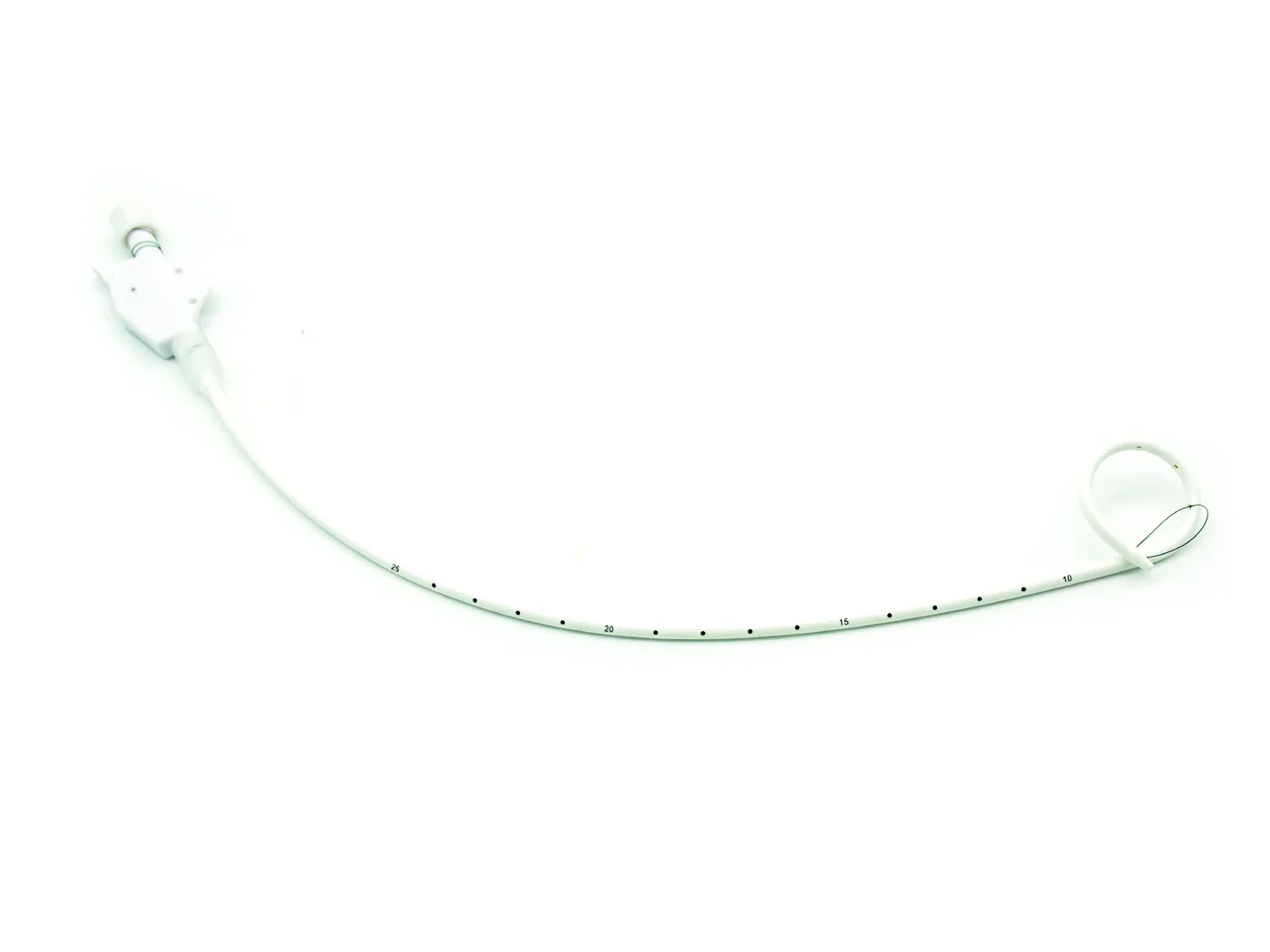
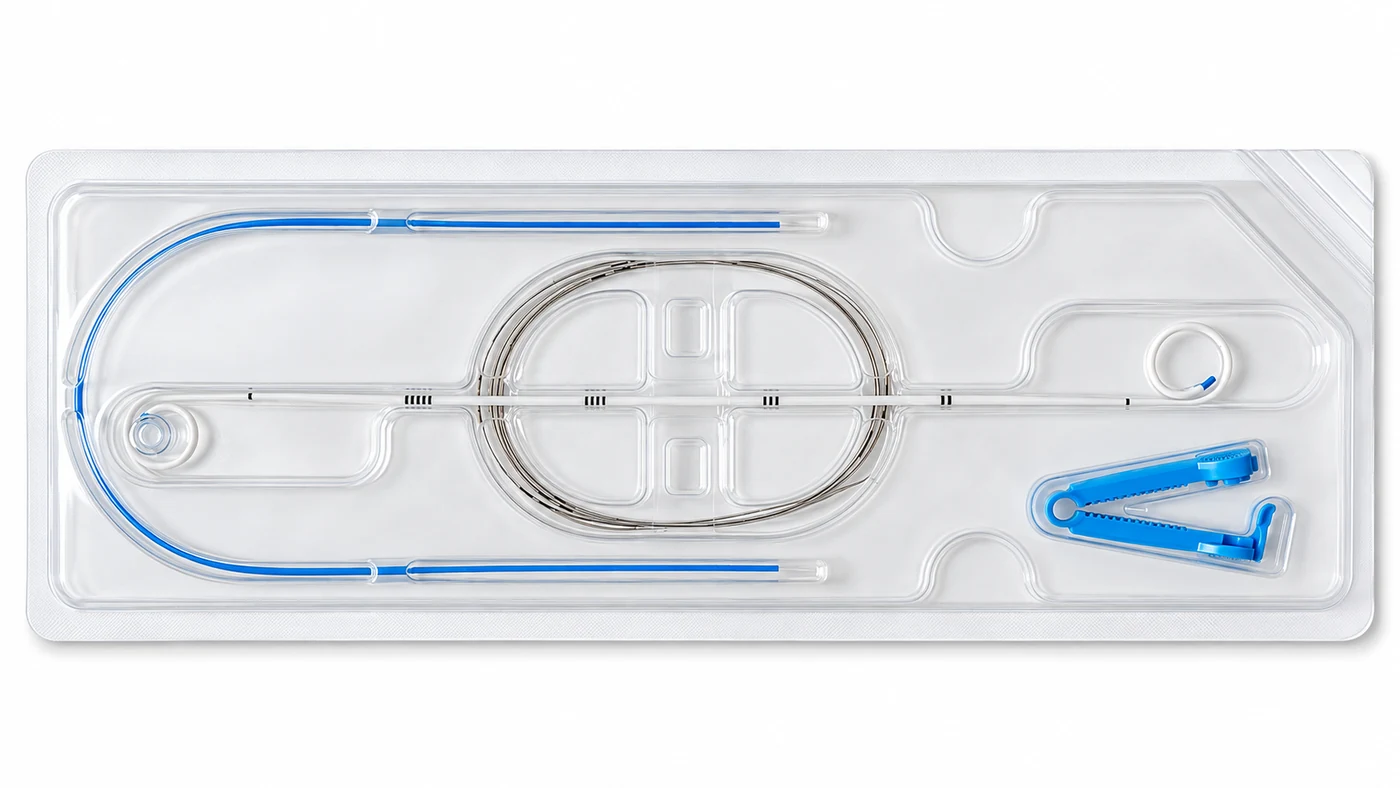
The double-J is the consumable that defines a urology supplier: consumed in every lithotripsy, every ureteroscopy and every obstruction, and bought as an assortment because length is chosen per patient. Our set carries the stent with its two J-curls — proximal in the renal pelvis, distal in the bladder — plus the pusher and placement wire. Sizes 4 to 8 Fr (including the usual 4.8 and 6 intermediates) and lengths 20 to 28 cm, in open-open configuration allowing over-wire placement and exchange. The hydrophilic version cuts friction in difficult placements and stone disease; the standard covers the volume. Radiopaque markers and urine-stable material for the indicated dwell time. The closed-open tip configuration is made as OEM. The MOQ applies to the assortment total — which is how a real unit buys: a bell curve centred on 4.8–6 Fr × 24–26 cm.
Technical Specifications
Clinical Uses
- Ureteral diversion after lithotripsy and ureteroscopy
- Ureteral obstruction by stone, stricture or compression
- Protective stenting after endourological surgery
- Replenishment assortments for urology units
A real unit's assortment
Length is chosen by patient height and anatomy; calibre by indication. No unit consumes a single combination — the correct order is the whole bell curve.
| Combination | Role in the assortment |
|---|---|
| 4.8–6 Fr × 24–26 cm | The centre of the bell — most of the volume |
| 4–4.8 Fr × 20–22 cm | Short patients and fine ureters |
| 6–7 Fr × 26–28 cm | Tall patients and stone-loaded dwells |
| 7–8 Fr | Large-calibre indications — smaller counts |
The MOQ applies to the assortment total, not to each combination. Hydrophilic and standard mix in the same order.
Frequently Asked Questions — Double-J Ureteral Stent Set — 4 to 8 Fr, Standard & Hydrophilic
Why is the double-J ordered as an assortment?
Because length is decided per patient — height and ureter anatomy — and calibre by indication. A real unit consumes a bell curve centred on 4.8–6 Fr × 24–26 cm with tails both ways. Ordering one combination guarantees running out of the right size mid-month. Our MOQ applies to the assortment total so the whole curve fits one order.
What does the open-open configuration add?
Both ends open allow over-wire placement start to finish and over-wire exchange without losing the track. It is the working standard. The closed-open tip — a closed point some units prefer for bladder comfort — is made as OEM with per-reference quantities.
Hydrophilic or standard?
Hydrophilic slides better in difficult placements, strictures and stone load; standard covers the volume at lower cost. The usual assortment is standard in volume with a hydrophilic fraction — both in the same order.
What documentation do you provide?
Technical file with the size chart, manufacturer ISO 13485 and per-batch sterilisation. The double-J is a dwelling device — classification is high in most markets and the distributor registers in destination.
How is double-J length chosen for a patient?
By height. The rule units use is approximate but it holds: around 22 cm below 1.50 m, 24 cm up to 1.75 m, 26 cm up to 1.90 m and 28 cm above, adjusted to the anatomy seen on imaging. A short stent leaves the distal curl inside the ureter; a long one leaves spare material in the bladder, which is what the patient feels. That is why length cannot be fixed at order time: it is fixed patient by patient, and the stockroom has to carry all of them.
How many millimetres are 4.8 Fr and 6 Fr?
Divide French by three for outer diameter in millimetres: 4 Fr is 1.3 mm, 4.8 Fr is 1.6 mm, 6 Fr is 2 mm, 7 Fr is 2.3 mm and 8 Fr is 2.7 mm. Worth keeping to hand, because some tender specifications are written in millimetres and others in French, and a 2 mm stent and a 6 Fr stent are the same product.
What exactly is in the set?
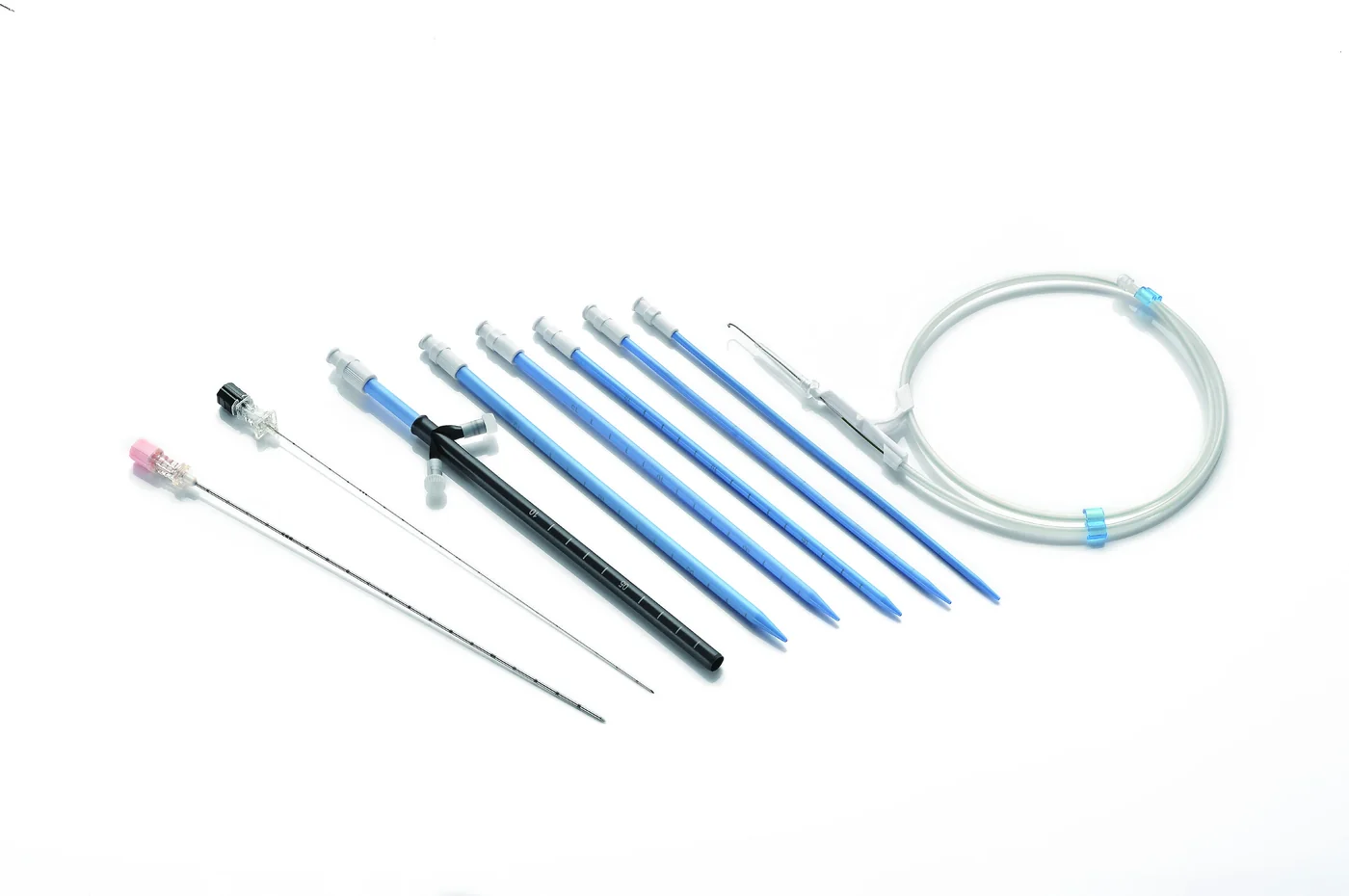
The stent with its two J-curls and depth marks along the shaft, the placement wire, the pusher and the clamp, in a sterile single-use tray. It is everything an over-wire placement needs; there is no second pack to open. The hydrophilic version carries the same contents with a coated stent.
How long can it stay in place?
The maximum is set by each version's data sheet and the actual time by the clinical indication within that limit. What matters for purchasing is that the stent has a removal or exchange date, and that a unit with stented patients has an exchange calendar on top of its per-procedure consumption. That calendar is demand that can be forecast and is worth including when sizing the order.
How does it differ from the pigtail drainage catheter?
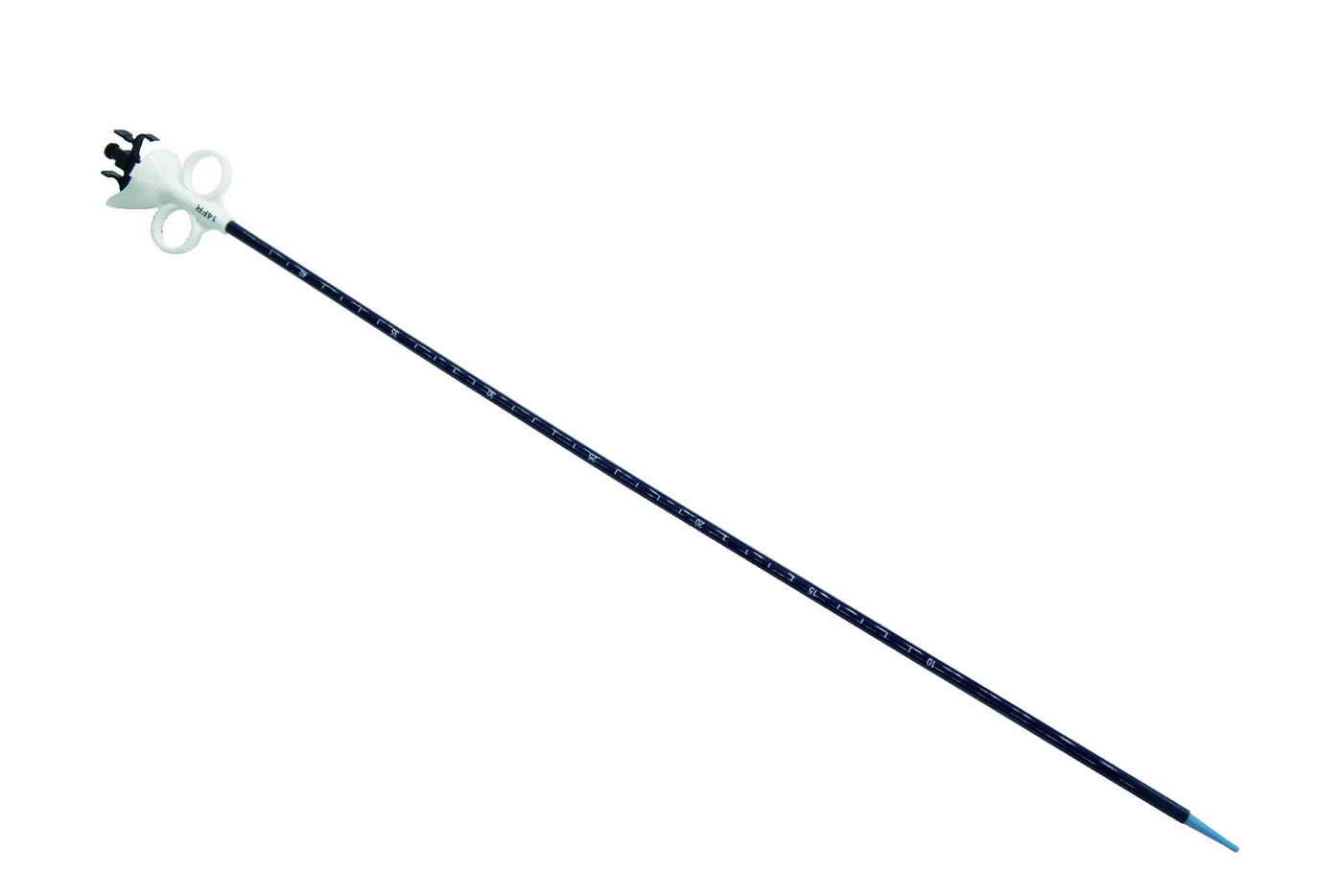
Both have a curl, and that is where the resemblance ends. The double-J is internal: it runs from kidney to bladder inside the ureter and never exits the body. The pigtail is external drainage, with a single curl and a locking thread, exiting through the skin to a bag; it is used when the ureter will not take a stent or diversion has to be percutaneous. They do not substitute for each other. A urology unit orders both, in different quantities.
What do you need in order to quote?
The assortment with quantities per size-and-length combination, or the customer's consumption history if they have one, which is better; the split between standard and hydrophilic; any interest in the closed-open tip as OEM, with volume; and the estimated monthly quantity. That is enough to price directly. If you want to trial placement first, ask for samples of both versions in the same message.
Request a Quote — Double-J Ureteral Stent Set — 4 to 8 Fr, Standard & Hydrophilic
Reply within 24 business hours with FOB/CIF price, MOQ and lead time. SKU XY-DJS is already attached to your request — just add the quantity.
Request a Sample
Samples available for evaluation. Basic items: free sample. Higher-value items: a sample fee may apply. Shipping not included.
Full Description — Double-J Ureteral Stent Set — 4 to 8 Fr, Standard & Hydrophilic
The double-J is the stent that keeps the ureter open between kidney and bladder: a fine tube with a curl at each end, the proximal one seated in the renal pelvis and the distal one in the bladder, so it cannot migrate in either direction. It is placed after lithotripsy or ureteroscopy, for obstruction by stone, stricture or compression, and as protection after endourological surgery. It is the fastest-turning consumable in a urology unit, and the one most often ordered wrong, because the right reference is not a product but a pair of measurements.
Size and length are two separate decisions
Size is in French and the indication decides it. The useful range is 4 to 8 Fr, with most consumption sitting at 4.8 and 6 Fr: enough lumen to drain without forcing a fine ureter. 7 and 8 Fr are for specific indications and are ordered in small counts. In millimetres, 4.8 Fr is 1.6 mm outer diameter and 6 Fr is 2 mm; the full conversion is in our French size chart.
Length is in centimetres and the patient decides it. It runs from 20 to 28 cm in steps of two, and the rule units use is height: around 22 cm below 1.50 m, 24 cm up to 1.75 m, 26 cm up to 1.90 m and 28 cm above. A short stent leaves the distal curl inside the ureter and does not do its job; a long one leaves spare material in the bladder, which is what the patient notices. That is why one unit consumes every length in the same week, and why an order of a single combination runs out of the right size mid-month. How that turns into an order is worked through in the guide to choosing double-J size and length.
What the set contains
The set arrives in a sterile tray with everything placement needs: the stent, with depth marks along the shaft for positioning under vision and radiopaque material to confirm position on imaging; the placement wire; the pusher, which carries the stent over the wire to its final position; and the clamp. Open-open configuration, which is the working one: it allows placement over the wire from start to finish and exchange over the wire without losing the track. The closed-open tip, which some units prefer for bladder comfort, is made to order as OEM.
Standard or hydrophilic
The hydrophilic coating cuts friction as the stent advances. It shows in difficult placements, in strictures and where there is stone load along the track; in a routine placement the difference is smaller. Standard covers the volume at lower cost. The usual assortment is standard for most units and a hydrophilic fraction, and both versions go on the same order without affecting the minimum.
Dwell and exchange
It is a dwelling device: it stays in for the time the indication calls for, within the maximum on the data sheet, and is then removed or exchanged. That has a purchasing consequence worth keeping in mind: beyond per-procedure consumption, a unit has a calendar of scheduled exchanges, and that calendar is recurring demand that can be forecast. A distributor who knows how many stented patients their customers carry can size the order better than one who only counts procedures.
How it is bought: the assortment
A real unit consumes a bell curve centred on 4.8 and 6 Fr by 24 and 26 cm, with tails toward 4 Fr by 20 and 22 cm for short patients and toward 7 Fr by 28 cm for tall patients and stone-loaded dwells. The minimum order applies to the assortment total, not to each combination, so the whole curve fits in one order. The table on this page gives the usual proportions; if your customer has a consumption history, send it and we fit the quantities to their curve instead of the generic one.
Registration and documentation
As a dwelling device in contact with the urinary tract, the risk classification is high in most markets and the distributor registers it in the destination country. We supply the technical data sheet with the size and length chart, the manufacturer's ISO 13485 certificate, per-batch ethylene oxide sterilisation records and lot traceability. Ask for it before the first order: for a device of this class the file takes longer than the shipment.
The rest of the upper-tract chain
The double-J is placed over a wire and, in ureteroscopy, through a sheath. The zebra and superstiff urological guidewires and the ureteral access sheath are the references the same unit orders alongside the stent. Where the ureter will not take the stent or diversion has to be percutaneous, drainage is handled by the locking pigtail drainage catheter or the percutaneous nephrostomy set. The five references make up the urology catalogue, and the urology consumables list for hospitals places them within the unit's full range.
Quoting
Send us the assortment with quantities per combination, or your customer's consumption history if you have it, the standard/hydrophilic split and the monthly volume. We price it on WhatsApp from that. If you would rather trial placement before committing to an assortment, ask for samples of both versions in the same message.
*Please confirm product specifications, regulatory requirements and intended use with your local regulatory authority before purchase.*