Can Fungal Nail Infection Be Cured Permanently? A Practical UK Guide
You noticed your big toenail had started to look cloudy after a week in Tenerife last summer. By December it was turning yellow, thickening up, and catching on your socks. Your GP said it was a fungal nail infection and suggested you wait and see whether it cleared on its own. A year later, it hasn't.
If that sounds familiar, you're not alone. Fungal nail infection — clinically called onychomycosis — affects an estimated 3% of the UK population at any one time, and the question of whether it can be permanently cured is more complicated than a yes or no answer.
What "Permanently Cured" Actually Means for Fungal Nail Infection
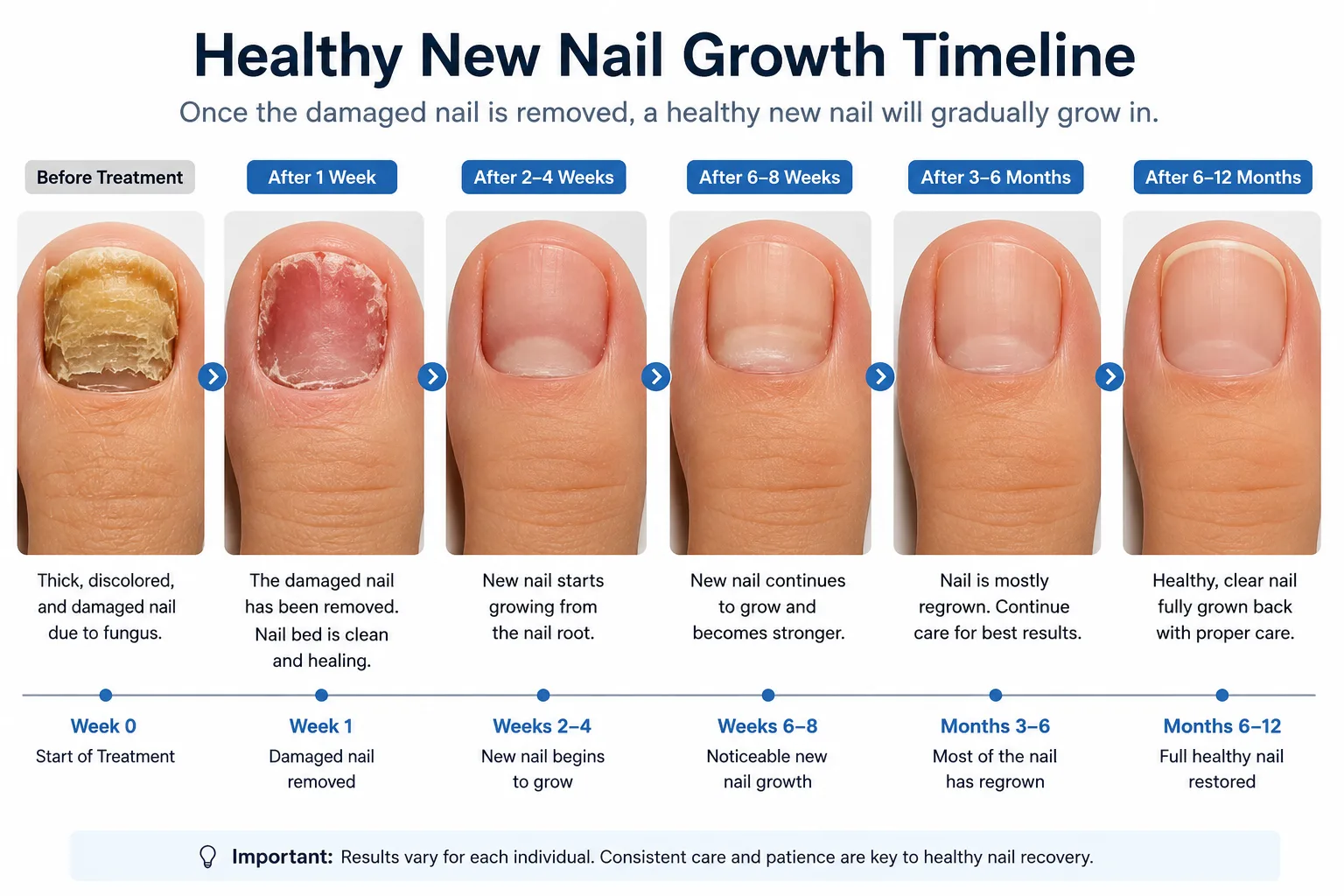
The short answer is: yes, fungal nail infection can clear up completely — but the definition of "cured" matters. The infection itself (the living fungus) can be eliminated. What takes much longer is the physical appearance of the nail returning to normal. Nail tissue that has already been damaged doesn't repair itself; it has to grow out and be replaced by new, healthy nail from the base.
So when people say "it didn't work," they often stopped treatment as soon as the infection cleared, before the damaged nail had grown out. That's the most common reason for apparent treatment failure in the UK — not the treatment itself, but the timeline.
Why NHS Treatment Timelines Are Long
Toenails grow at roughly 1.5mm per month. A full toenail is approximately 15–20mm long from base to tip. That means it takes 12 to 18 months for an entirely new toenail to grow through from base to the free edge — even under ideal conditions.
NHS guidance acknowledges this. Antifungal nail lacquer (such as amorolfine 5%) is typically prescribed for 6–12 months of daily or weekly application. Oral terbinafine is prescribed for 12 weeks for fingernails and 16–24 weeks for toenails, but the nail appearance may not normalise for many months after the course ends.
The NHS also notes that even after successful treatment, reinfection is common — particularly in people who are exposed to communal changing areas, swimming pools, or who have a history of athlete's foot.
The "Wait and See" Problem — Why GPs Often Don't Prescribe
If you've visited a GP in the UK about a nail that looks yellow or thickened, you may have encountered a cautious response. There are a few reasons for this:
- Not all discoloured nails are caused by fungal infection. Trauma, psoriasis, and other conditions can cause similar changes. A GP may want confirmation before prescribing systemic antifungals.
- Oral antifungals carry a small but real risk of liver side effects. Prescribing guidelines recommend a blood test for liver function before starting a course, particularly in older patients.
- Antifungal nail lacquer is available over the counter at Boots and most pharmacies, so GPs may direct patients there first.
- If the infection is mild and not causing symptoms, many GPs take the view that treatment is elective — especially when the waiting time and resource use of a laboratory nail sample test are factored in.
This leaves many people in a gap: the NHS isn't going to treat it urgently, the OTC lacquers require months of consistent daily use, and prescription tablets aren't easily accessible without going through the full diagnostic process. Meanwhile the nail is getting worse.
Treatment Options Compared
| Option | How it works | Requires prescription? | Typical duration | Notes |
|---|---|---|---|---|
| NHS antifungal lacquer | Topical amorolfine applied to nail surface | No (OTC) | 6–12 months | Must be applied consistently; results vary |
| GP-prescribed oral terbinafine | Systemic antifungal tablet | Yes | 12–24 weeks | Liver function test required; most effective option |
| Herbal external cream | Applied directly to nail + sealed with wrap | No | Ongoing daily routine | No systemic side effects; fills the gap for mild/moderate cases |
Why a Daily Herbal Routine Fills the Gap
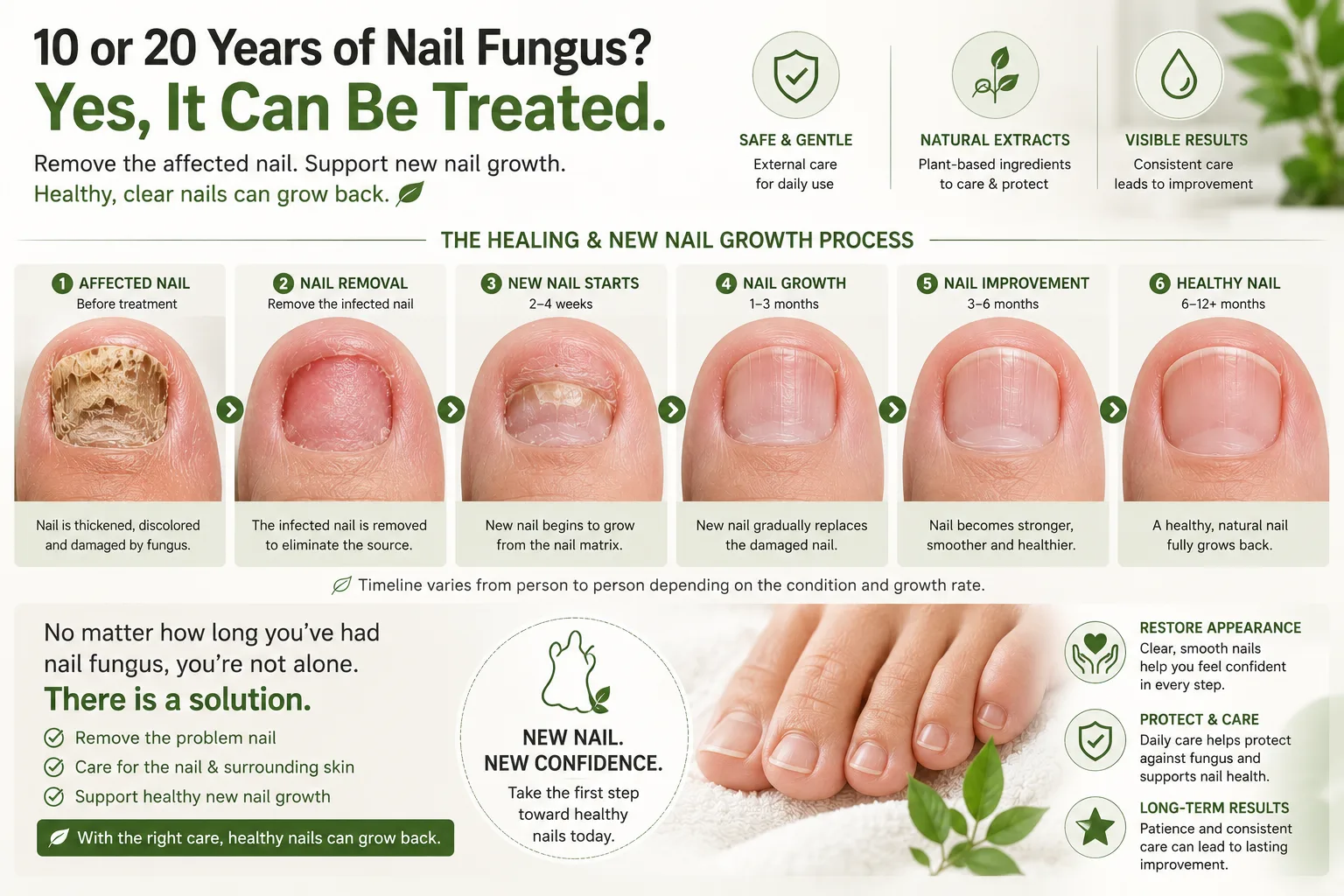
For people who can't get quick access to prescription treatment, or who want to complement their existing routine, a herbal external cream applied daily gives something practical to do while waiting for the nail to recover.
The key advantage is simplicity: apply a small amount of cream to the affected nail, cover with a breathable plaster or bandage to extend contact time, and repeat daily. There's no blood test required, no GP referral, and no systemic ingredient involved.
The three active botanical ingredients in this product — Sophora flavescens, Pseudolarix kaempferi, and Impatiens balsamina — have a long history in Chinese herbal medicine for skin and nail conditions. Impatiens balsamina in particular helps soften thickened nail, which improves penetration of the other active ingredients to the nail bed where the fungus lives.
This won't replace a course of oral terbinafine in severe cases. But for mild to moderate fungal nail infection — which is the majority of cases seen in UK GP surgeries — it's a practical, low-commitment daily habit.
Interested in the Herbal Nail Cream for the UK Market?
We supply UK wholesalers, retailers, and online sellers. Request a sample, ask about bulk pricing, or enquire about OEM packaging for your own brand.