Percutaneous Access Set — 22G Fine Needle & 0.018" Wire
SKU: XY-PAS | Set de Punción Percutánea — Aguja Fina 22G y Guía 0,018"
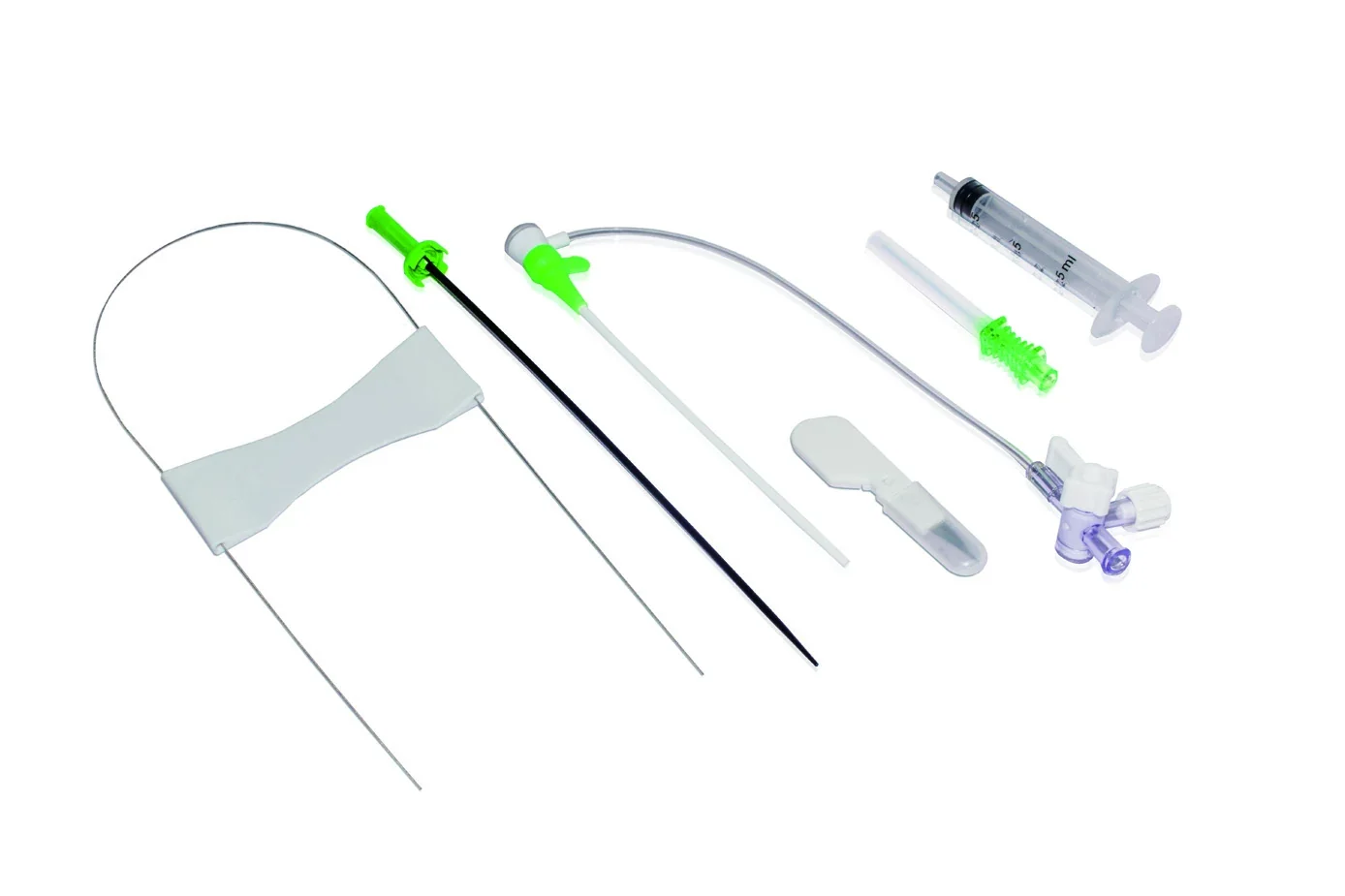
The percutaneous access set applies micropuncture logic: enter fine and convert by steps, instead of puncturing directly at working size. The 22G needle opens a track whose cross-section is a fraction of an 18G's — if the puncture fails or touches what it should not, the damage is proportionally smaller — and the 0.018" wire passes through it. The coaxial 4 Fr dilator converts that fine track to the calibre of the 6 Fr × 18 cm sheath, which stays as a stable working access. It is the technique of choice for at-risk access: difficult punctures, anticoagulated patients, delicate vessels, and every procedure where a failed stick costs dearly. The complete set — needle, wire, dilator, sheath — arrives sterile in one pack, the whole sequence solved without combining loose references.
Technical Specifications
Clinical Uses
- At-risk access: anticoagulated patients, delicate vessels
- Difficult punctures where an 18G failure would cost dearly
- Ultrasound-guided access with a fine needle
- Standardising micropuncture technique across the unit
Frequently Asked Questions — Percutaneous Access Set — 22G Fine Needle & 0.018" Wire
What does a 22G puncture gain over direct 18G?
Error margin. The section a 22G opens is a fraction of an 18G's: a failed stick, a touched back wall or a wrong vessel bleeds and hurts proportionally less. In anticoagulated patients or difficult access that margin is the difference between calmly re-trying and complicating the procedure. The set pays for itself with one avoided bad stick.
How does the fine track become a working access?
By coaxial steps: the 0.018" wire enters through the 22G needle; the 4 Fr dilator widens the track over it; the 6 Fr sheath enters over the assembly and stays as a stable 18 cm access. Each step bears on the previous one — calibre never jumps abruptly against tissue.
Does it replace the radial and femoral introducer sets?
No: it coexists with them. For routine access the standard set with its 18G needle is faster and cheaper. This set is the tool for access where risk rules — and many units also standardise it for ultrasound-guided sticks, where the fine needle is easier to control on image.
What is the minimum order?
Quoted by the box alongside the rest of the access family in the same order — the usual ratio is a fraction of standard-set volume. Documentation: technical file, ISO 13485 and per-batch sterilisation; destination registration by the distributor.
Request a Quote — Percutaneous Access Set — 22G Fine Needle & 0.018" Wire
Reply within 24 business hours with FOB/CIF price, MOQ and lead time. SKU XY-PAS is already attached to your request — just add the quantity.
Request a Sample
Samples available for evaluation. Basic items: free sample. Higher-value items: a sample fee may apply. Shipping not included.
Full Description — Percutaneous Access Set — 22G Fine Needle & 0.018" Wire
Enter fine, convert by steps
A 22G track is a fraction of an 18G's cross-section. A failed stick, a back-walled vessel, a wrong target — all bleed and hurt proportionally less, which is the entire argument in anticoagulated patients and delicate anatomy.
The coaxial ladder
Wire through needle, dilator over wire, sheath over the assembly. Each step bears on the last; calibre never jumps against tissue.
Where it sits next to the standard sets
It does not replace radial or femoral sets — routine access is faster and cheaper with an 18G. This is the tool for punctures where risk rules, and increasingly the standard for ultrasound-guided sticks, where the fine needle images better.
What to confirm before ordering
- Ratio against standard access sets (usually a fraction of their volume) - Documentation set for registration