PTCA Balloon Catheter — Semi-Compliant & Non-Compliant
SKU: XY-PTB | Catéter Balón PTCA — Semicompliante y No Compliante
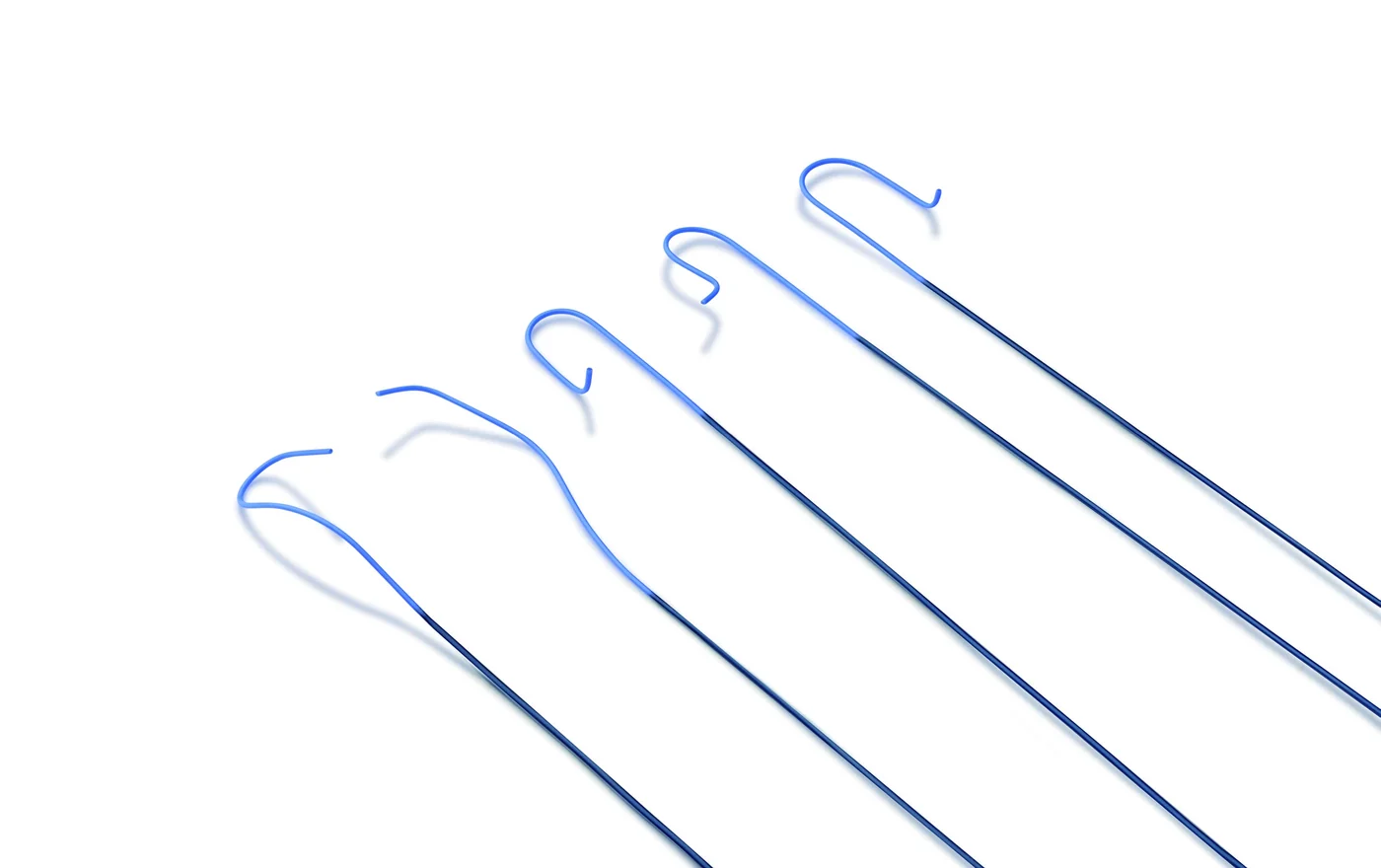
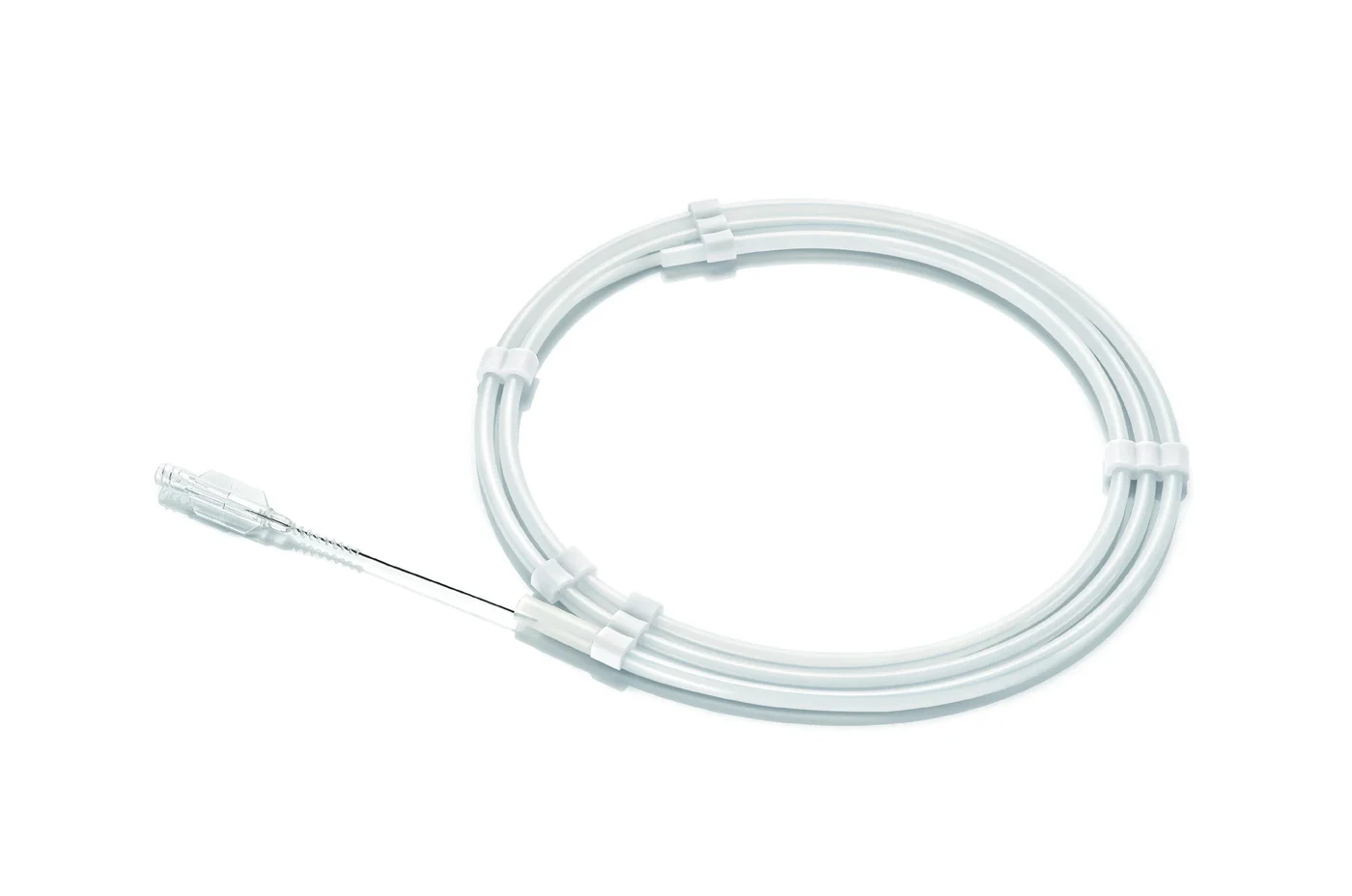
PTCA balloon catheter on a rapid-exchange (RX) platform over a 0.014" guidewire, with a PTFE-coated hypotube, hydrophilic coating on the distal segment and a soft 0.016" tapered tip for lesion crossing. It is made in the two families a cath lab consumes in parallel and which never substitute for each other. The semi-compliant (NP 8 atm, RBP 16 atm) grows with pressure and is the predilatation balloon: 1.0 to 6.0 mm diameters, 10 to 42 mm lengths, including the small sizes for lesions that first have to be opened. The non-compliant (NP 12 atm, RBP 20 atm) holds its nominal diameter at high pressure and is the postdilatation and plaque-preparation balloon: 1.75 to 5.0 mm by 6 to 30 mm. The 2.6/2.7 F to 1.8 F profile transition eases advancement through tortuous anatomy. Every unit ships sterile with its printed compliance chart. Supplied to distributors with ISO 13485 documentation; finished-device registration is handled by the distributor in the destination market.
Technical Specifications
Clinical Uses
- Coronary lesion predilatation (semi-compliant)
- High-pressure stent postdilatation (non-compliant)
- Calcified lesions requiring sustained pressure
- Cath-lab replenishment by size mix
Semi-compliant vs non-compliant: not interchangeable
| Semi-compliant (SC) | Non-compliant (NC) | |
|---|---|---|
| Nominal pressure (NP) | 8 atm | 12 atm |
| Rated burst pressure (RBP) | 16 atm | 20 atm |
| Behaviour under pressure | Diameter grows past nominal | Holds nominal diameter at high pressure |
| Diameters | 1.0 – 6.0 mm | 1.75 – 5.0 mm |
| Lengths | 10 – 42 mm | 6 – 30 mm |
| Role in the procedure | Predilatation and initial crossing | High-pressure postdilatation and plaque preparation |
A unit consumes both families in its own ratio; state the diameter × length mix when quoting. Each batch ships with its compliance chart in the pack.
Frequently Asked Questions — PTCA Balloon Catheter — Semi-Compliant & Non-Compliant
What is the practical difference between semi-compliant and non-compliant?
Behaviour under pressure. The semi-compliant grows past its nominal diameter as atmospheres rise: useful for predilating, dangerous for postdilating inside a stent. The non-compliant holds nominal up to its 20 atm RBP, which is exactly what seating a stent or preparing calcified plaque requires. Labs order both; they never substitute.
What do NP and RBP mean on the compliance chart?
NP (nominal pressure) is where the balloon reaches its labelled diameter. RBP (rated burst pressure) is the statistical safety limit: below it, 99.9% of balloons do not fail. Every batch ships with its printed chart — the document the operator reads at the table before inflating.
Will the profile cross tight lesions?
The 0.016" tapered tip, distal hydrophilic coating and 2.6/2.7 F to 1.8 F transition exist precisely for crossing. For lesions that admit nothing, the ladder starts at the 1.0 mm semi-compliant.
How is it ordered — by single reference or by mix?
By mix. Send the diameter × length × family matrix with quantities per cell — that is how a real lab consumes — and we quote the set as a single order with tiered pricing on total volume.
What documentation do you provide for registration?
Full technical file with compliance tables, manufacturer ISO 13485 certificate and per-batch sterilisation records. This is a high-class device in every market: the distributor registers the finished device in the destination country, and lead times run longer than for general consumables — plan for it.
Request a Quote — PTCA Balloon Catheter — Semi-Compliant & Non-Compliant
Reply within 24 business hours with FOB/CIF price, MOQ and lead time. SKU XY-PTB is already attached to your request — just add the quantity.
Request a Sample
Samples available for evaluation. Basic items: free sample. Higher-value items: a sample fee may apply. Shipping not included.
Full Description — PTCA Balloon Catheter — Semi-Compliant & Non-Compliant
Two families, one platform
Every lab runs both balloons. The semi-compliant opens the lesion; the non-compliant seats the stent. The mistake to avoid at purchase is treating them as one product line with two names — the compliance behaviour is opposite, and the operator chooses by chart, not by habit.
What the compliance chart is for
NP is where the balloon reaches its labelled diameter; RBP is the statistical safety limit below which 99.9% of balloons survive. The chart ships printed with every unit because it is consulted at the table, mid-procedure.
Ordering by matrix
A real lab consumes a diameter × length × family matrix, heavy in the workhorse sizes. Send the matrix with quantities per cell and we quote it as one order with volume pricing on the total.
What to confirm before ordering
- SC/NC split and the size matrix - Registration lead time in your market — high-class device, plan ahead - Guide catheter and wire the lab runs, so we verify the chain