Peelable Introducer (Peel-Away) — 5 to 10 F
SKU: XY-PIS | Introductor Pelable (Peel-Away) — 5 a 10 F
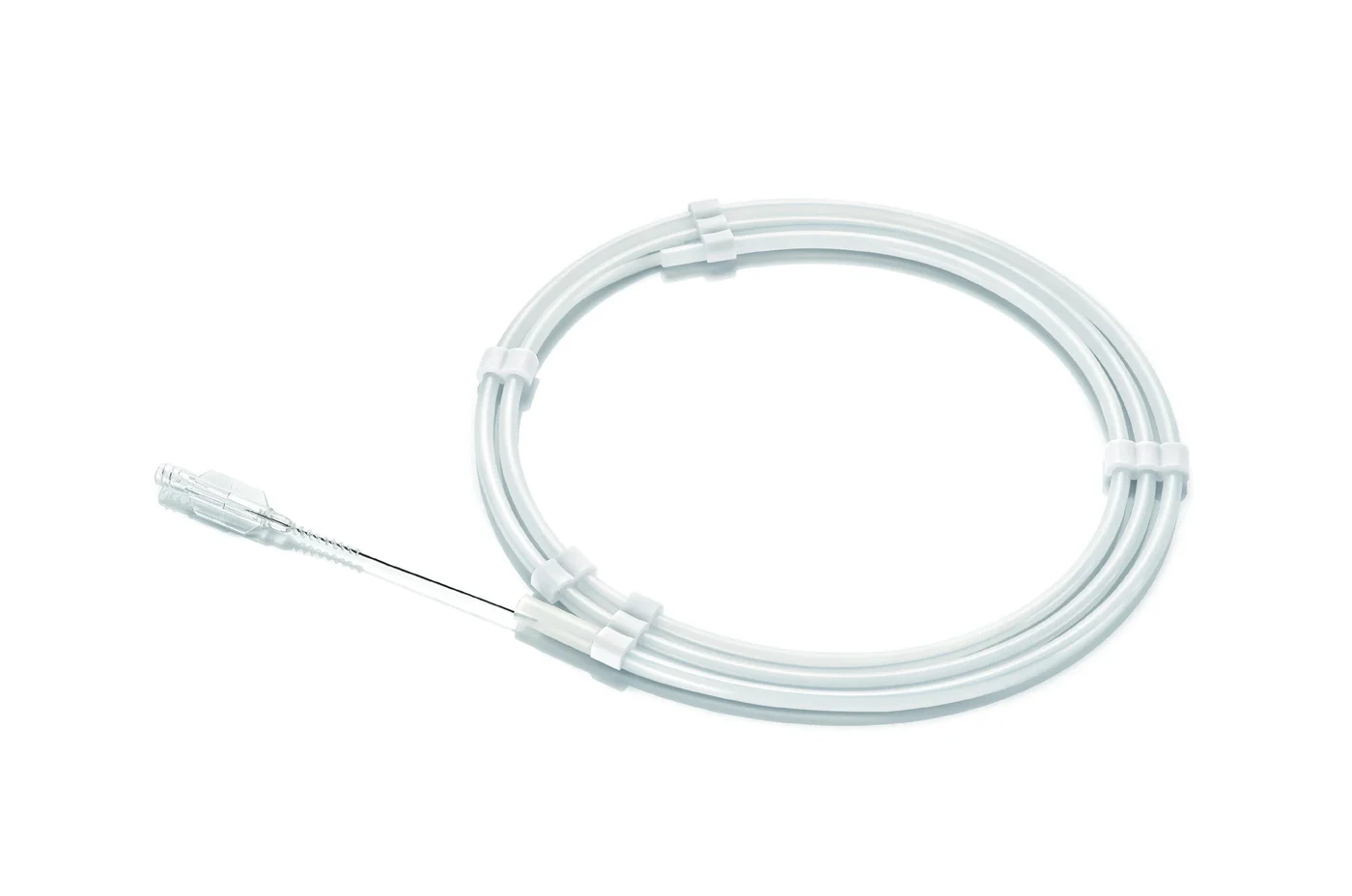
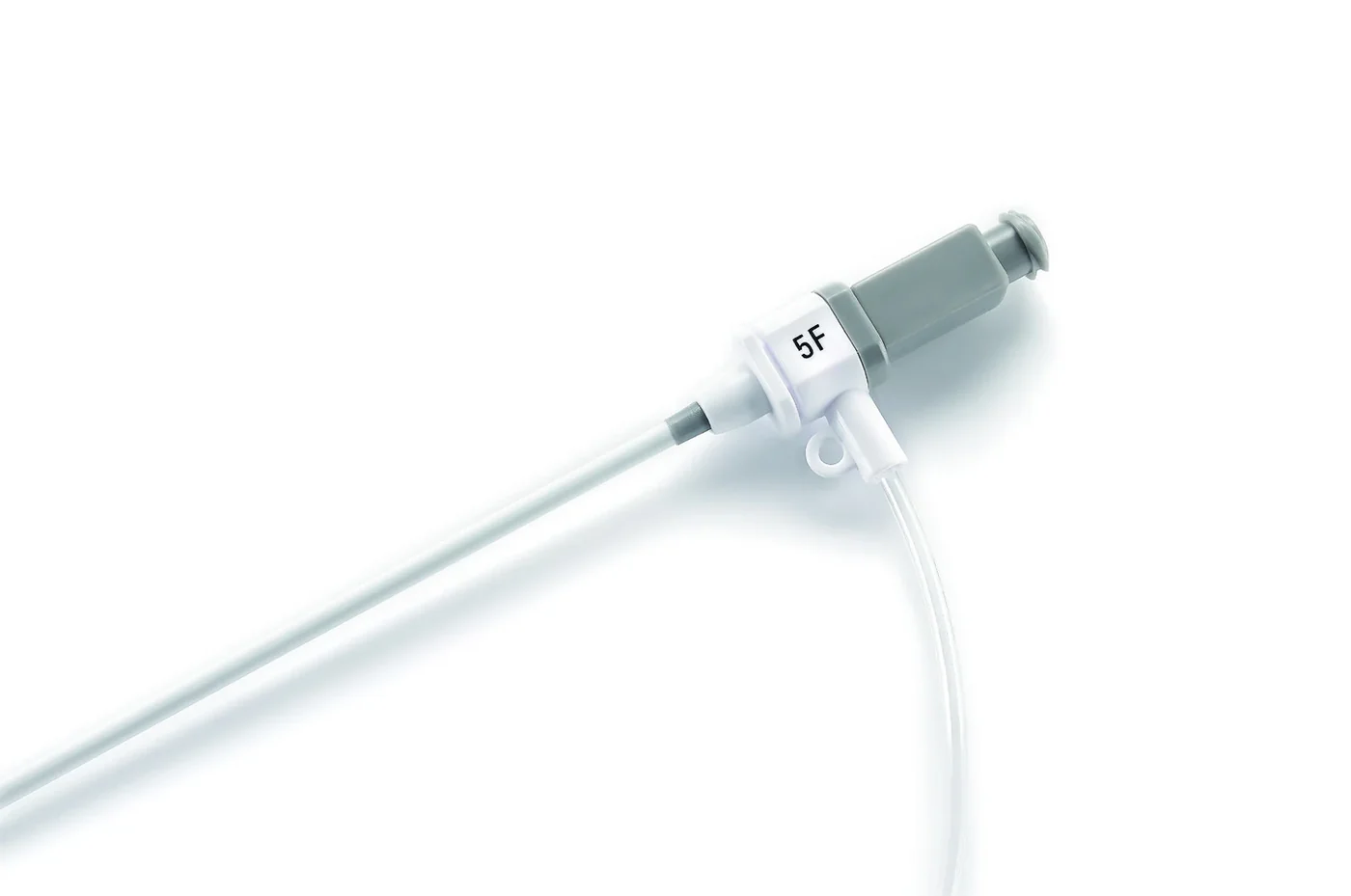
The peelable introducer solves a geometric problem no classic introducer can: how to remove the sheath when the catheter just placed ends in a hub wider than the sheath itself. A normal sheath only leaves by sliding off the catheter's end — impossible with a PICC, a tunnelled catheter, a pacing lead or a moulded-hub drain. The peelable splits instead: two wings on the hub, a quarter-turn to break the joint, and the sheath divides into two longitudinal halves that exit sideways while the catheter stays motionless in position. Made in 5 to 10 F with a 14 cm sheath and continuous-transition dilator. The wall is pre-scored to split cleanly along its length — never off-line — and the wings give both hands purchase while a thumb pins the catheter. A consumption reference for PICC placement in ICU and oncology, electrophysiology, and interventional drainage.
Technical Specifications
Clinical Uses
- PICC placement in ICU and oncology
- Tunnelled and chronic dialysis catheters
- Pacing leads and electrophysiology
- Moulded-hub drains that no classic sheath admits
Frequently Asked Questions — Peelable Introducer (Peel-Away) — 5 to 10 F
When is peel-away needed instead of a classic introducer?
Whenever the catheter ends in something wider than the sheath: a PICC hub, a tunnelled catheter's cuff, a lead pin. The classic sheath only leaves by sliding off the end — geometrically impossible in those cases. The peelable leaves sideways in two halves and the problem disappears. If the catheter is smooth end to end, the classic introducer is cheaper.
Is the split reliable or does it wander?
The wall is pre-scored longitudinally: the fracture runs along the score, lengthwise, never diagonally. The gesture is a quarter-turn of the wings to break the hub joint, then peeling with both hands while a thumb pins the catheter. Staff master it by the second unit.
Why only 14 cm of sheath?
Because its job is creating the entry tunnel, not navigating: the definitive catheter does the travelling. 14 cm crosses skin, tissue and vessel wall with margin in any usual PICC or lead access, and a longer sheath would only add material that then has to be peeled.
How is the size chosen?
By the catheter that will pass: the peelable sheath should exceed the catheter by 0.5–1 F so it slides without friction. Usual 4–5 F PICCs take 5–6 F peelables; tunnelled catheters and leads climb the scale to 10 F. Send your unit's catheter mix and we propose the split.
Request a Quote — Peelable Introducer (Peel-Away) — 5 to 10 F
Reply within 24 business hours with FOB/CIF price, MOQ and lead time. SKU XY-PIS is already attached to your request — just add the quantity.
Request a Sample
Samples available for evaluation. Basic items: free sample. Higher-value items: a sample fee may apply. Shipping not included.
Full Description — Peelable Introducer (Peel-Away) — 5 to 10 F
A geometry problem, solved by splitting
A sheath can only slide off over the catheter's end. When the end is a hub, a cuff or a lead pin, sliding off is impossible — so the sheath must leave sideways, in two halves. That is the whole product.
The split is engineered, not improvised
Pre-scored wall, quarter-turn wings, fracture that runs lengthwise along the score and nowhere else. Staff master the gesture by the second unit.
Why 14 cm
Its job is the entry tunnel, not navigation — the definitive catheter does the travelling. 14 cm crosses skin, tissue and vessel wall with margin in any usual PICC or lead access.
What to confirm before ordering
- Catheter mix to size against (sheath 0.5–1 F over the catheter) - Volume split across 5–10 F