Femoral Introducer Set — 4 to 10 F, Three Builds
SKU: XY-FIS | Set Introductor Femoral — 4 a 10 F, Tres Construcciones
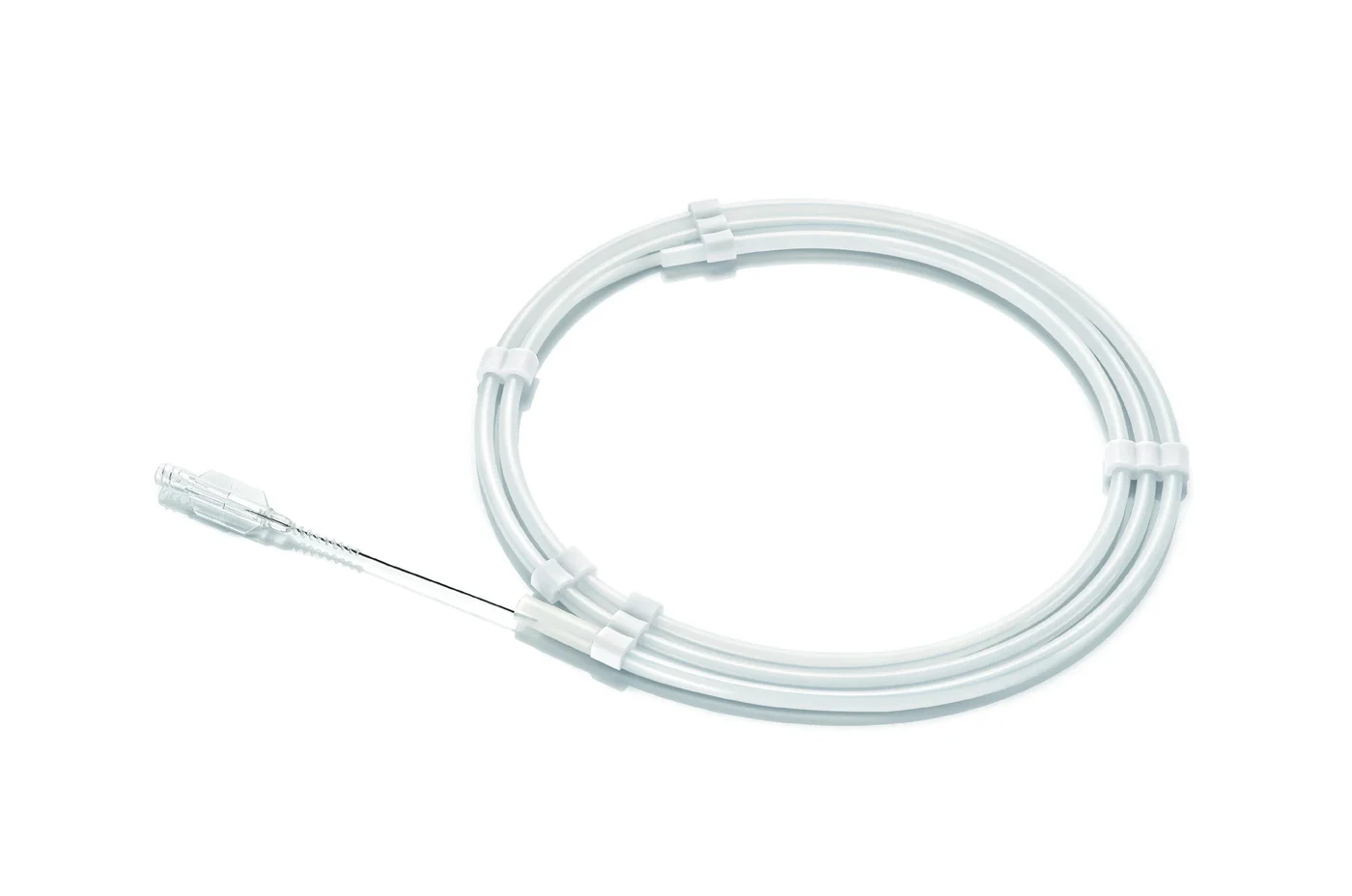
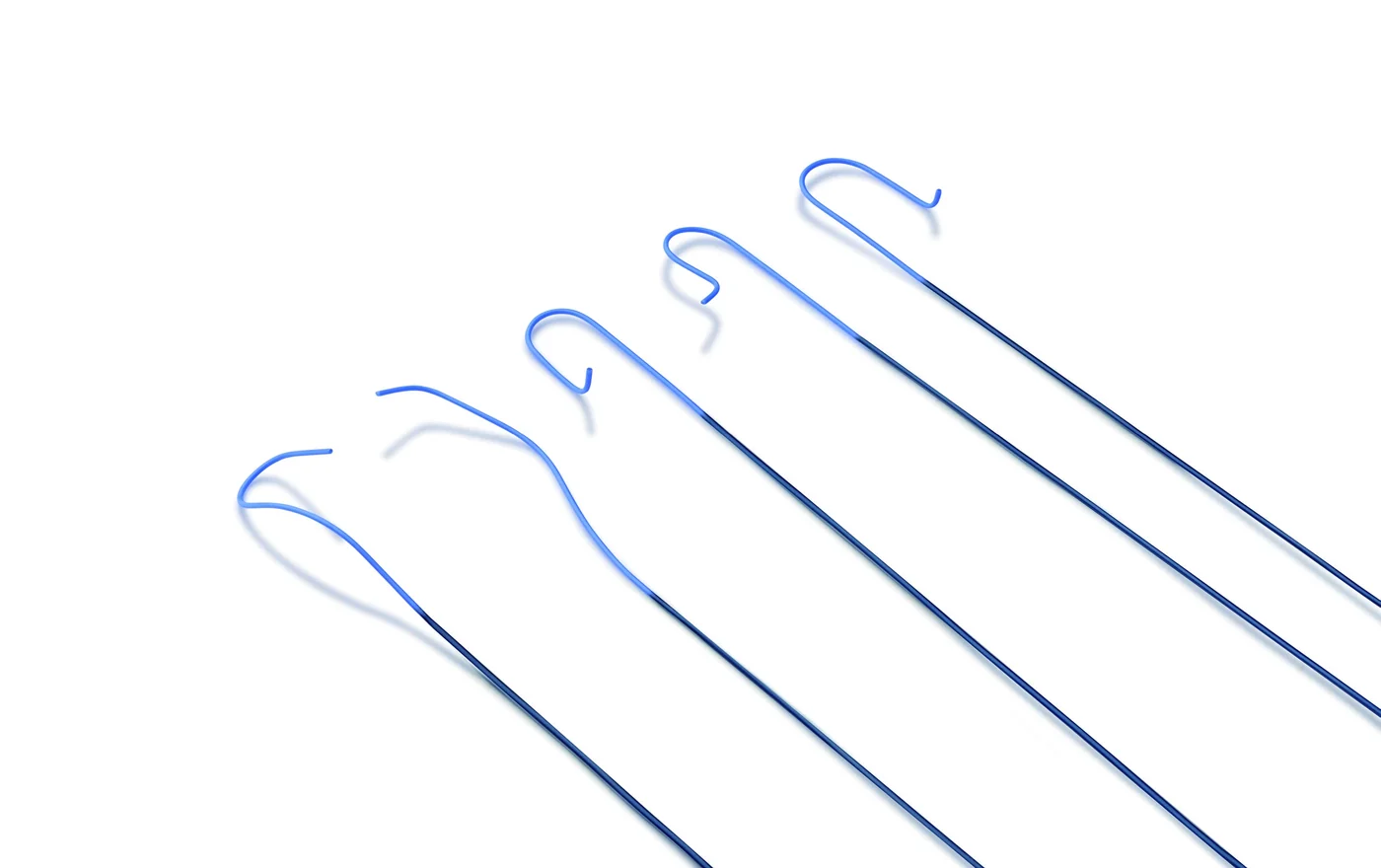
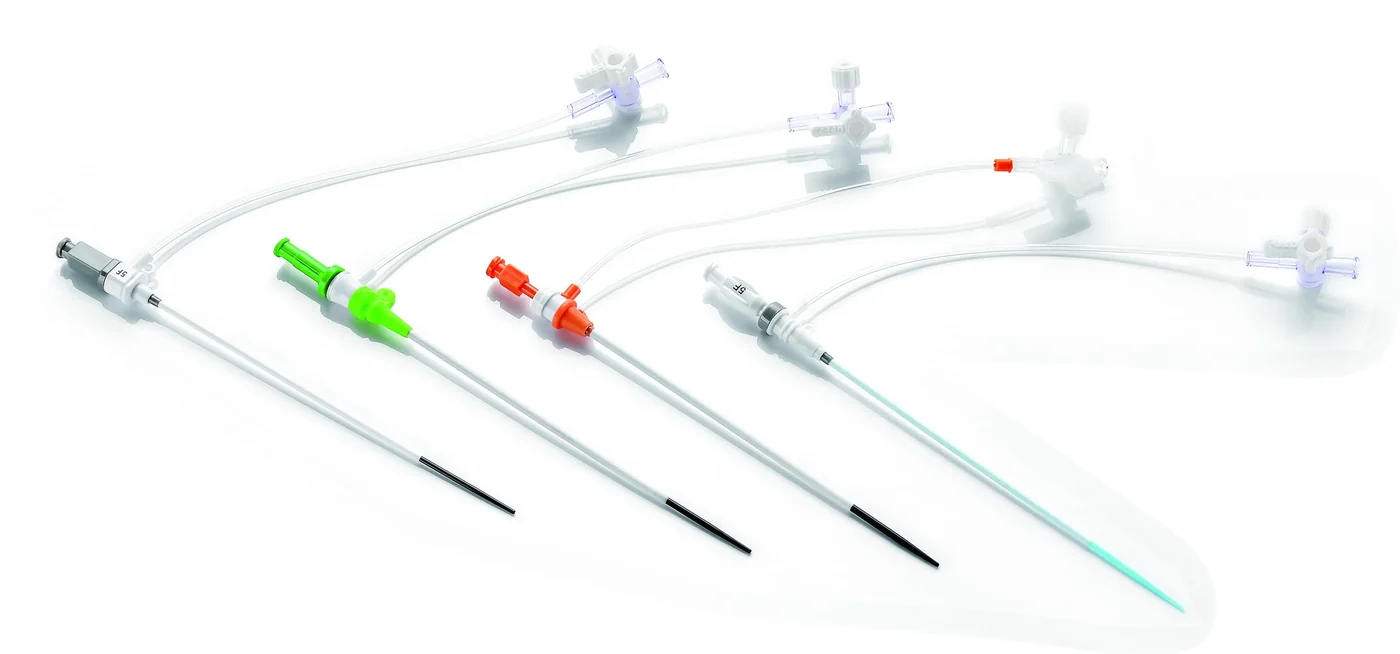
Introducer set for femoral arterial access — the mandatory route when the procedure demands calibre (structural, complex peripheral, circulatory support) and the classic alternative when radial is not viable. Covers 4 to 10 F with sheath lengths of 9, 11, 19 and 23 cm: short for simple access, the 19–23 cm lengths to straighten tortuous iliacs and support the catheter. Three valve builds (two threaded closures with different bodies, one click valve), all with a thin-wall kink-resistant sheath and continuous-transition dilator. The set ships with the J wire — 0.038" × 45/60 cm in standard sizes, 0.021" × 45 cm in the fine ones — an 18 G × 6.5 cm or 20 G × 3.8 cm puncture needle by version, syringe, and scalpel in the configurations that include it. A complete set: from puncture to catheter without opening a second pack.
Technical Specifications
Clinical Uses
- Femoral access in coronary and peripheral intervention
- Procedures demanding 7–10 F calibre
- Tortuous iliac anatomy with 19–23 cm long sheaths
- Access alternative when radial is not viable
Size and length guide
Size follows the device that will pass; length follows iliac anatomy. At large sizes the 23 cm length is the default choice for support.
| Size | Lengths | Usual use |
|---|---|---|
| 4–5 F | 9 · 11 cm | Diagnostics and peripheral angiography |
| 6 F | 9 · 11 · 19 · 23 cm | Standard coronary and peripheral intervention |
| 7–8 F | 11 · 19 · 23 cm | Larger-profile devices, complex technique |
| 9–10 F | 11 · 23 cm | Structural and support — confirm version availability |
The 19–23 cm lengths add support and straighten iliac tortuosity. State valve-build preference when quoting; all three cover the whole chart.
Frequently Asked Questions — Femoral Introducer Set — 4 to 10 F, Three Builds
When are the 19 and 23 cm long sheaths ordered?
When the iliac is tortuous or calcified and a short sheath leaves the catheter without support: the long sheath straightens the run and transmits push. From 7 F upward many units order them by default. The price differs little from short; the criterion is anatomical, not economic.
Which wire does the set ship?
J-tip, the femoral standard: 0.038" × 45 or 60 cm from 5 F upward, 0.021" × 45 cm in fine sizes. The J tip protects the vessel wall during the initial blind advance. If your protocol runs straight wire, say so and we configure the set.
How do the three builds differ?
In valve and body: two threaded-closure versions with different body geometries (two design schools — every market has its own) and one click valve. Hemostatic performance is equivalent; the choice is operator habit. State which your unit runs, or sample all three.
What is the minimum order?
By build, with the size × length mix consolidated into one order. The usual split loads on 6 F. Documentation: technical file, ISO 13485 and per-batch sterilisation; destination registration by the distributor.
Request a Quote — Femoral Introducer Set — 4 to 10 F, Three Builds
Reply within 24 business hours with FOB/CIF price, MOQ and lead time. SKU XY-FIS is already attached to your request — just add the quantity.
Request a Sample
Samples available for evaluation. Basic items: free sample. Higher-value items: a sample fee may apply. Shipping not included.
Full Description — Femoral Introducer Set — 4 to 10 F, Three Builds
Where femoral still rules
Radial took the volume; femoral kept the calibre. Structural work, circulatory support and large-profile devices come through the groin, which is why the chart runs to 10 F while the radial one stops at 8.
Long sheaths are an anatomy decision
A tortuous or calcified iliac robs the catheter of support; the 19–23 cm sheath straightens the road and transmits push. From 7 F upward many units default to it — the price differs little, the criterion is anatomical.
Three builds, one chart
Two threaded-valve bodies (two design schools; every market has its own) and one click valve, hemostatically equivalent. Choice is operator habit — sample all three if unsure.
What to confirm before ordering
- Size × length mix (6 F carries the volume) - Valve build the unit runs - J or straight wire configuration