Nitinol & Stainless Guidewires — 0.018" to 0.050", 10 to 300 cm
SKU: XY-NGW | Guías de Nitinol y Acero — 0,018" a 0,050", 10 a 300 cm
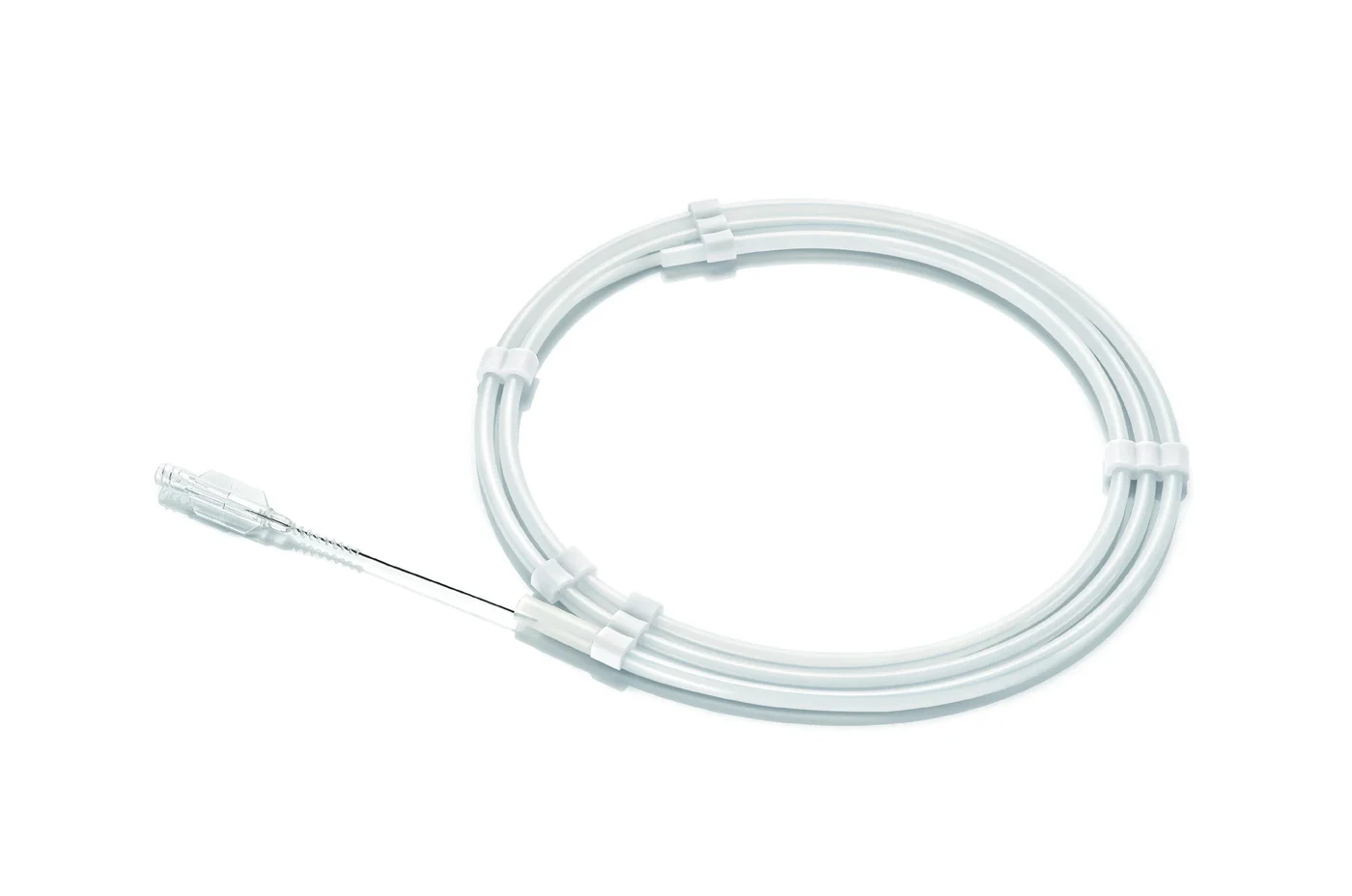
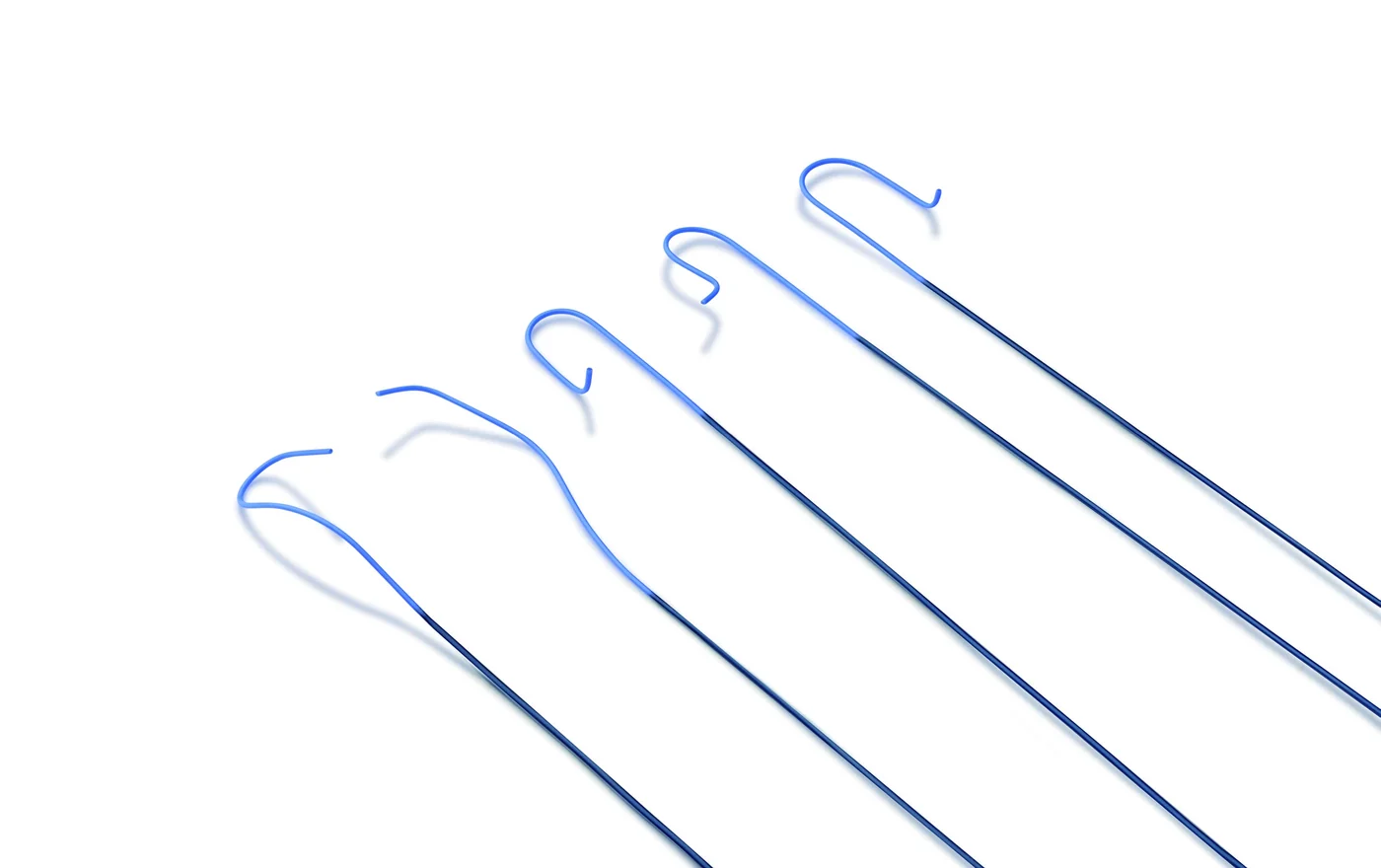
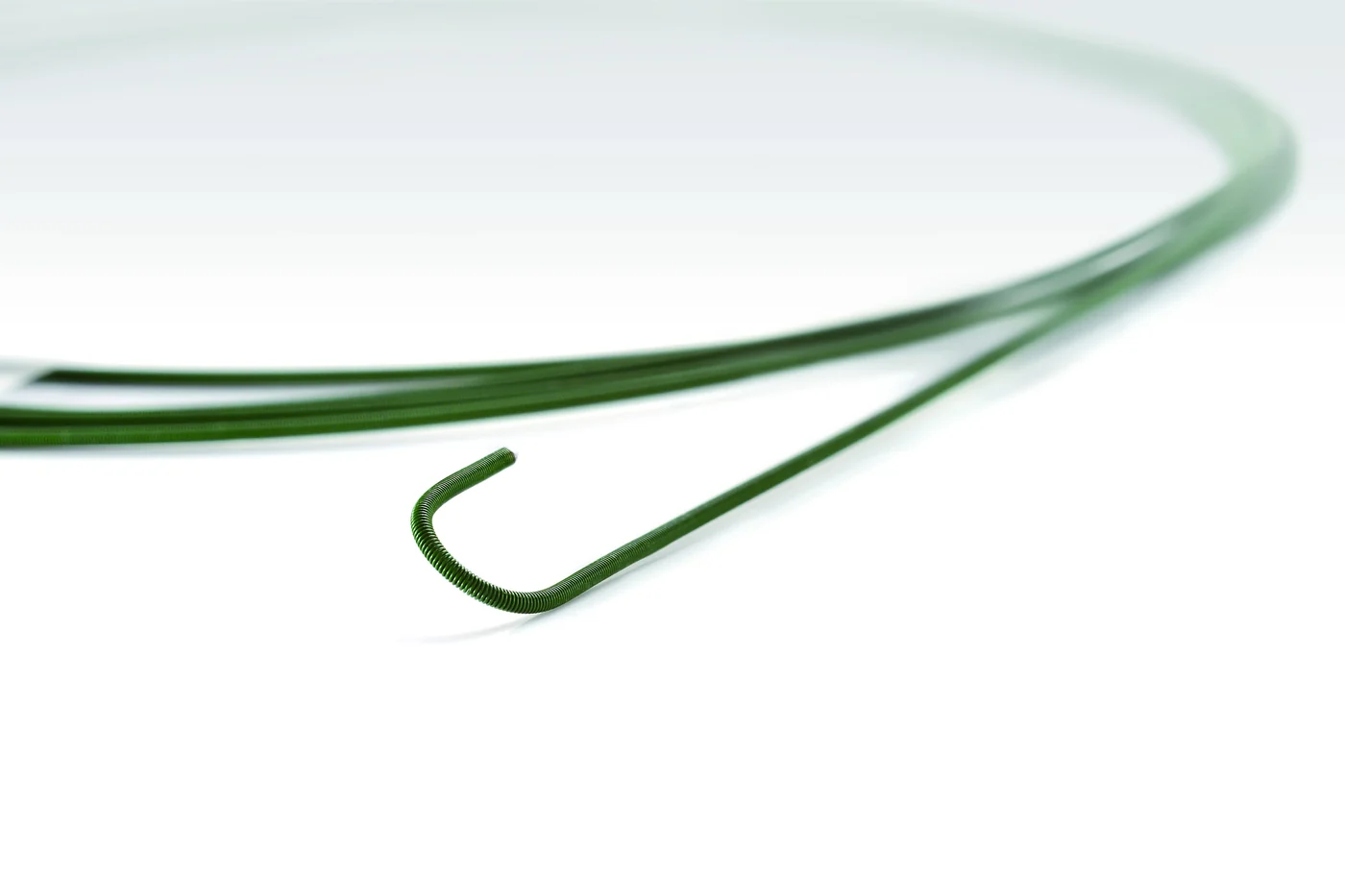
A metallic guidewire programme covering the full range outside the specialties: diameters from 0.018" to 0.050" and lengths from 10 to 300 cm, in the two metallurgies that divide the market. Nitinol has shape memory — bent, it returns to line rather than kinking — and is the choice wherever the wire suffers: difficult access, puncture kits where one kink ruins the procedure, the short lengths inside sets. Stainless steel gives more column support per diameter at lower cost: the high-volume working wire. Lengths run from the 10 cm mini-wires of micropuncture kits to 300 cm exchange wires. This page serves two different buyers: the hospital replenishing loose wires by specification, and the kit manufacturer needing the wire as a component — for the latter, the OEM line offers non-sterile bulk with neutral packaging.
Technical Specifications
Clinical Uses
- Hospital replenishment of access wires by specification
- Component for puncture and drainage kits (10–45 cm mini-wires)
- 260–300 cm exchange wires
- OEM bulk for set manufacturers
Frequently Asked Questions — Nitinol & Stainless Guidewires — 0.018" to 0.050", 10 to 300 cm
Nitinol or steel?
By kink risk and by support. Nitinol returns to shape after bending — where a kinked wire ruins the kit or the procedure, it is mandatory. Steel gives more column per diameter at lower cost: for daily volume without hostile anatomy it wins on economy. Most buyers carry both in proportion.
Do you make the short kit lengths?
Yes, from 10 cm: the mini-wires of puncture, drainage and venous access kits. Set manufacturers get them non-sterile in bulk with neutral packaging through the OEM line; hospitals get sterile individual packs.
How does this page differ from the PTCA, PTFE and hydrophilic wires?
Those are specialties with their own construction (PTCA tip loads, coatings). This is the base metallic wire programme by specification — diameter, length, tip, metallurgy — covering general replenishment and kit components. For coronary or navigation needs, use the specialty pages.
How is it quoted?
By metallurgy × diameter × length × tip matrix. Hospital: sterile presentation, price per box. Assembler: OEM bulk, price per thousand. State which you are and we quote in that format.
Request a Quote — Nitinol & Stainless Guidewires — 0.018" to 0.050", 10 to 300 cm
Reply within 24 business hours with FOB/CIF price, MOQ and lead time. SKU XY-NGW is already attached to your request — just add the quantity.
Request a Sample
Samples available for evaluation. Basic items: free sample. Higher-value items: a sample fee may apply. Shipping not included.
Full Description — Nitinol & Stainless Guidewires — 0.018" to 0.050", 10 to 300 cm
Two metallurgies, one decision rule
Where a kinked wire ruins the kit or the procedure, nitinol. Where daily volume meets friendly anatomy, steel wins on economy and column support. Most buyers carry both in proportion.
The short end of the range
10–45 cm mini-wires live inside puncture, drainage and venous access kits — a component business served in OEM bulk with neutral packaging.
How this page relates to the specialty wires
PTCA, PTFE, hydrophilic and ERCP wires have their own constructions and pages. This is the base programme ordered by bare specification: metallurgy, diameter, length, tip.
What to confirm before ordering
- Hospital (sterile, per box) or assembler (bulk, per thousand) - Metallurgy × diameter × length × tip matrix