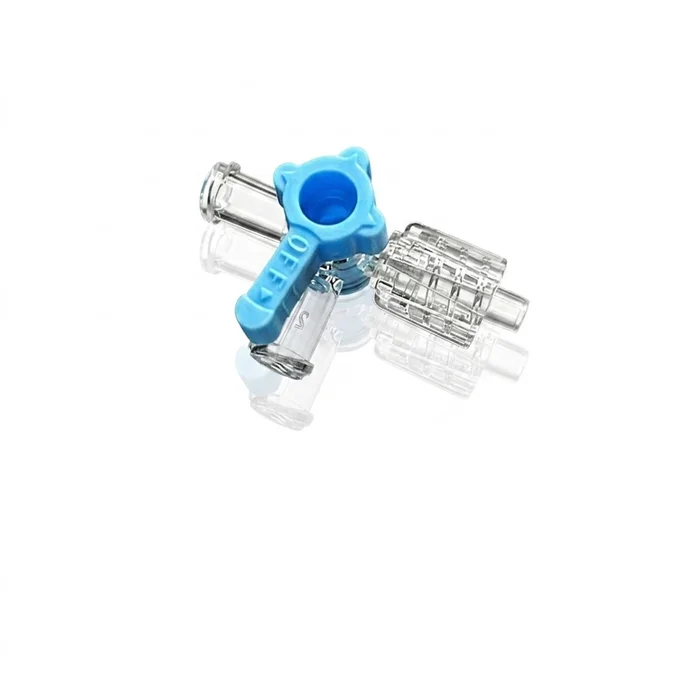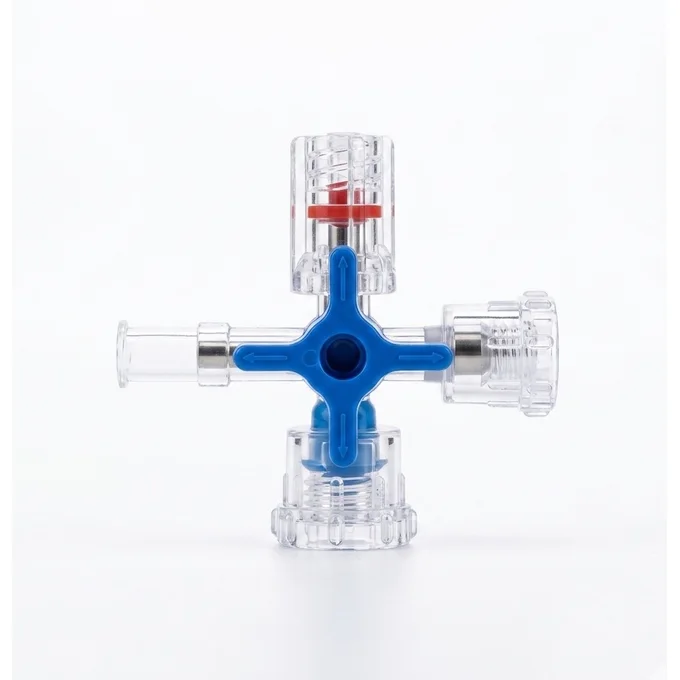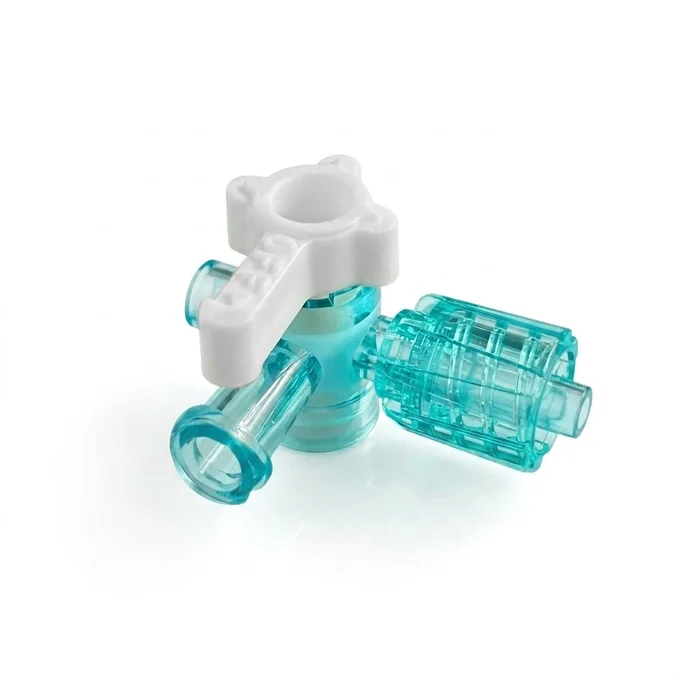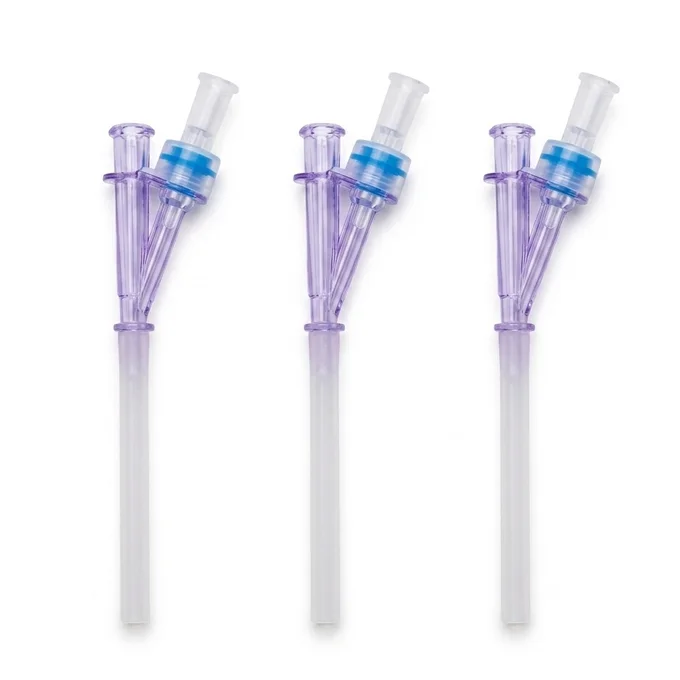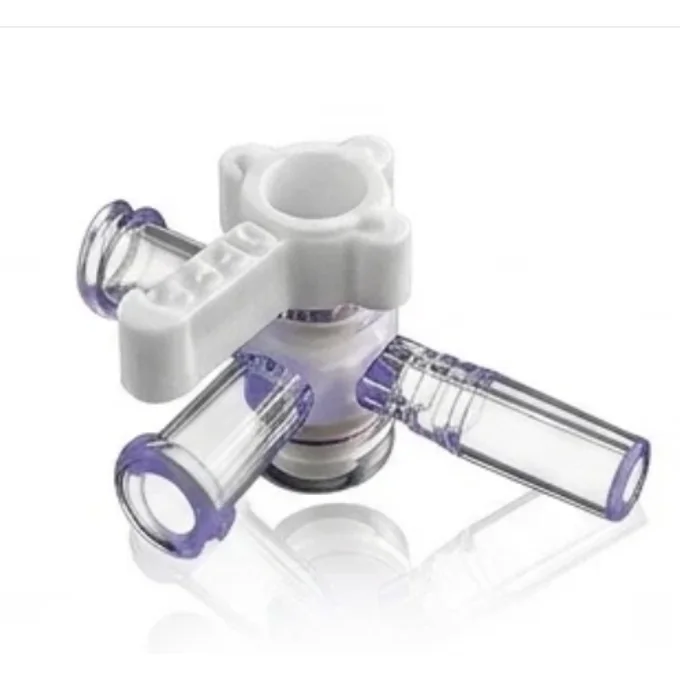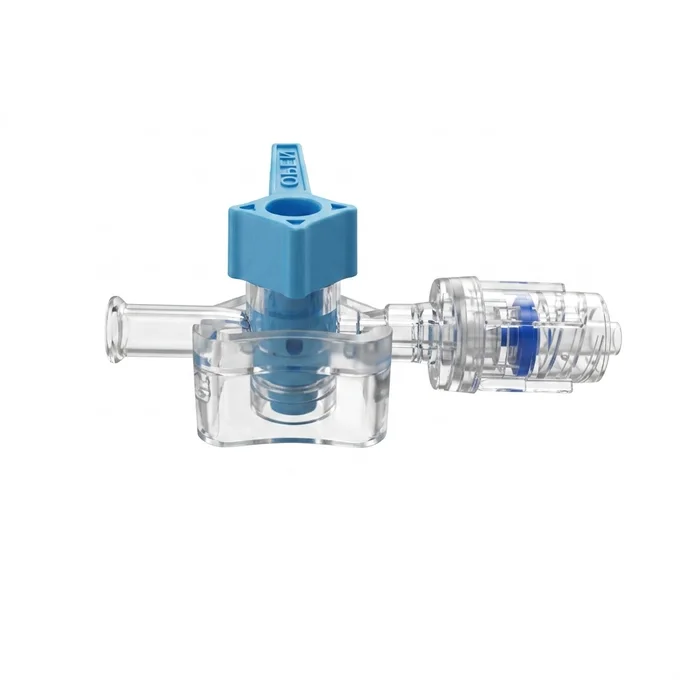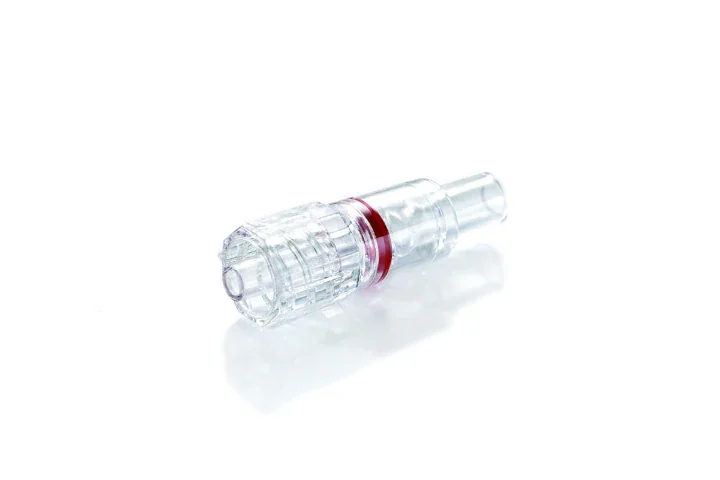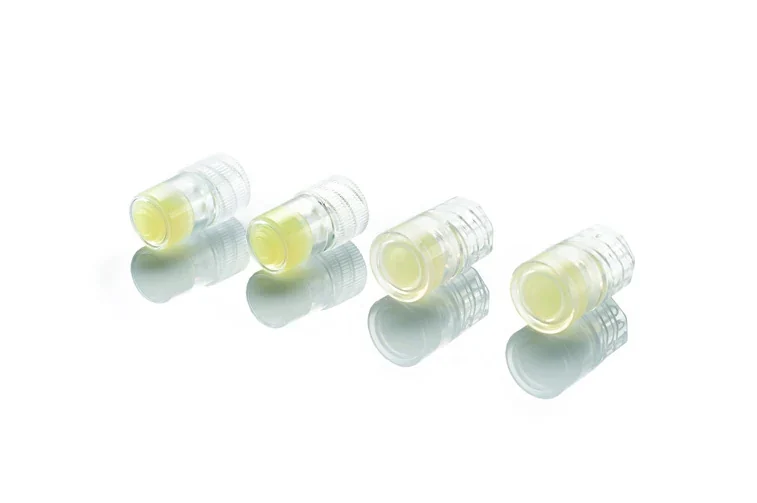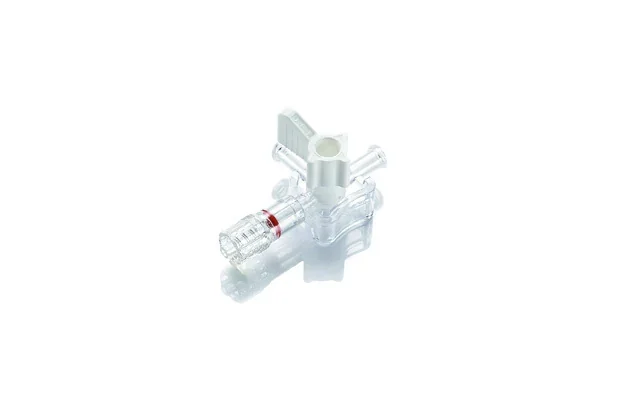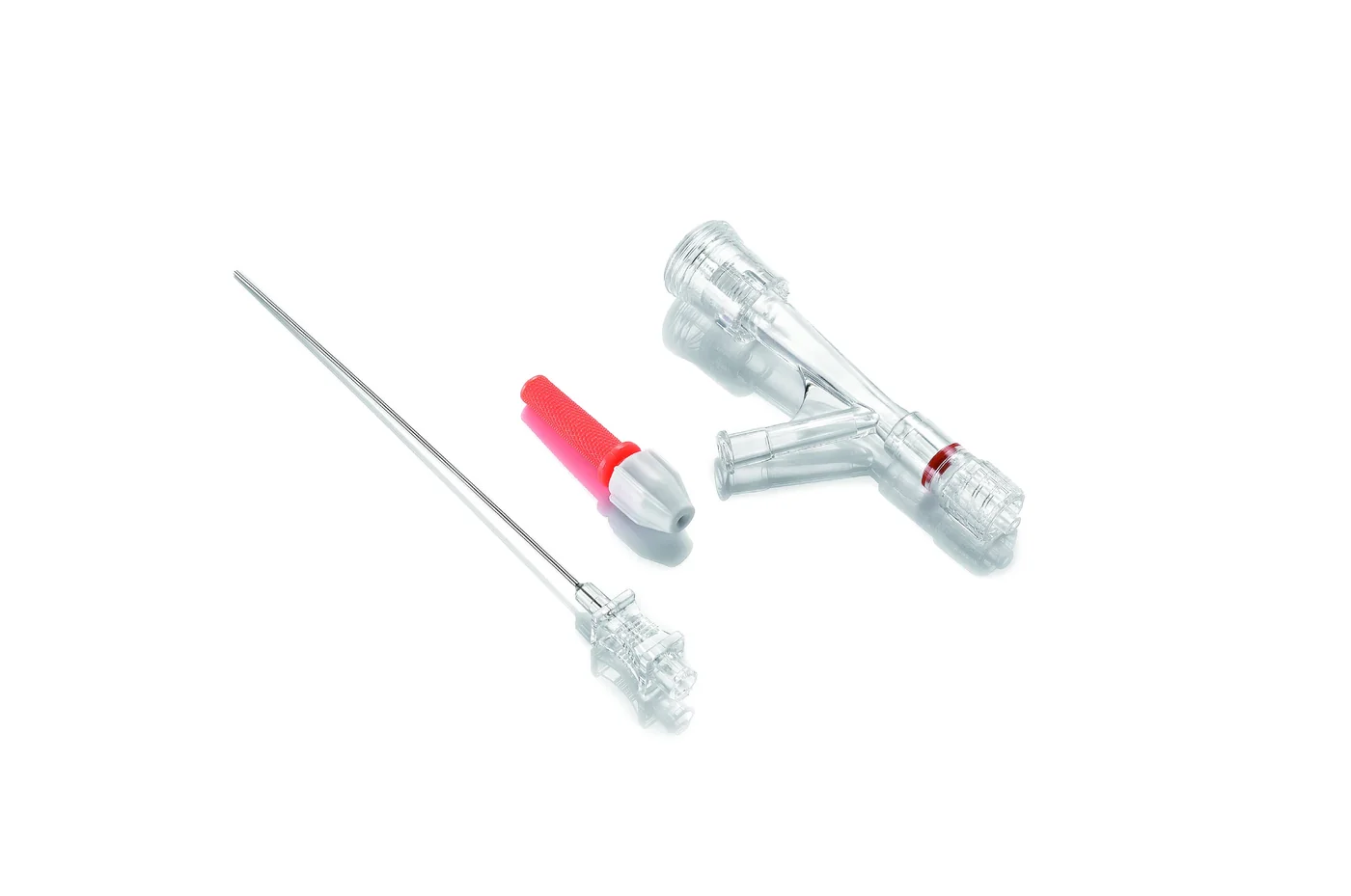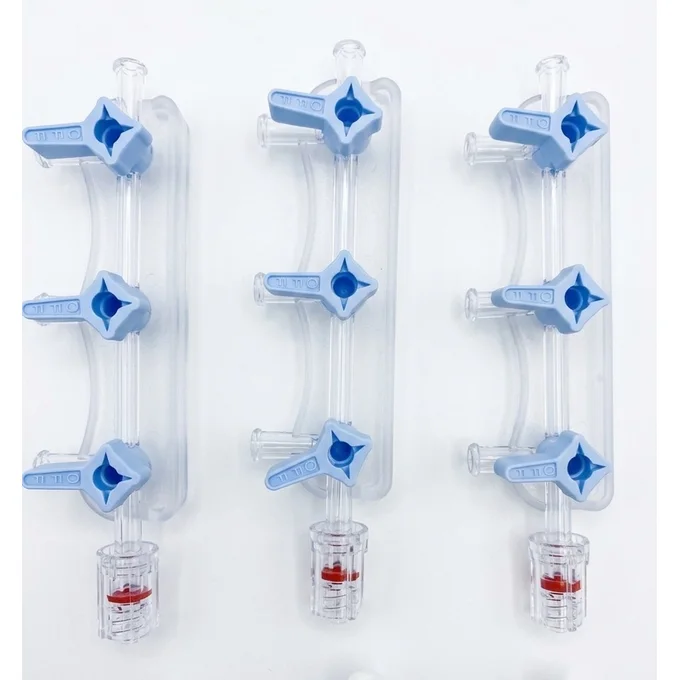
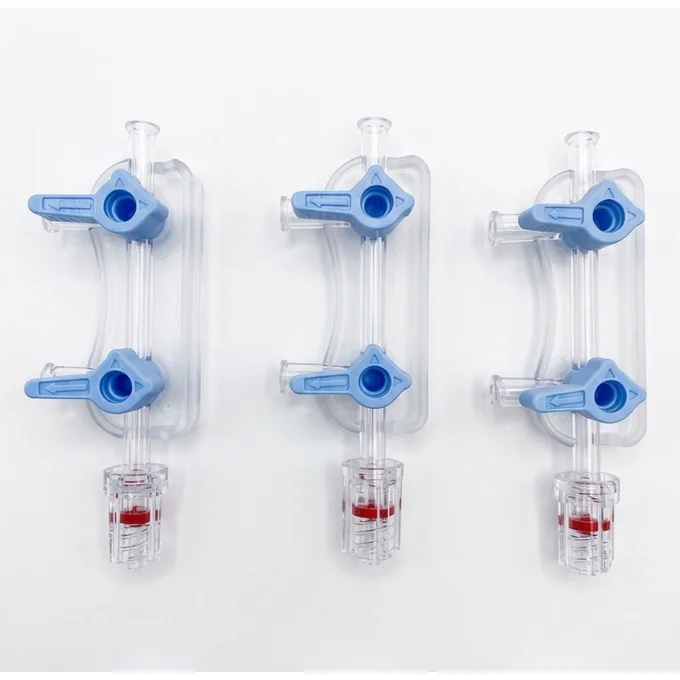
Angiographic & Hemodynamic Manifold (2–5 Gang)
Cath-lab manifold combining 2–5 three-way stopcocks in one body. Available as a hemodynamic pressure-monitoring manifold (with flush) or a high-pressure angiographic manifold for contrast power injection. OEM, EO sterile to order, MOQ from 2,000.
Overview
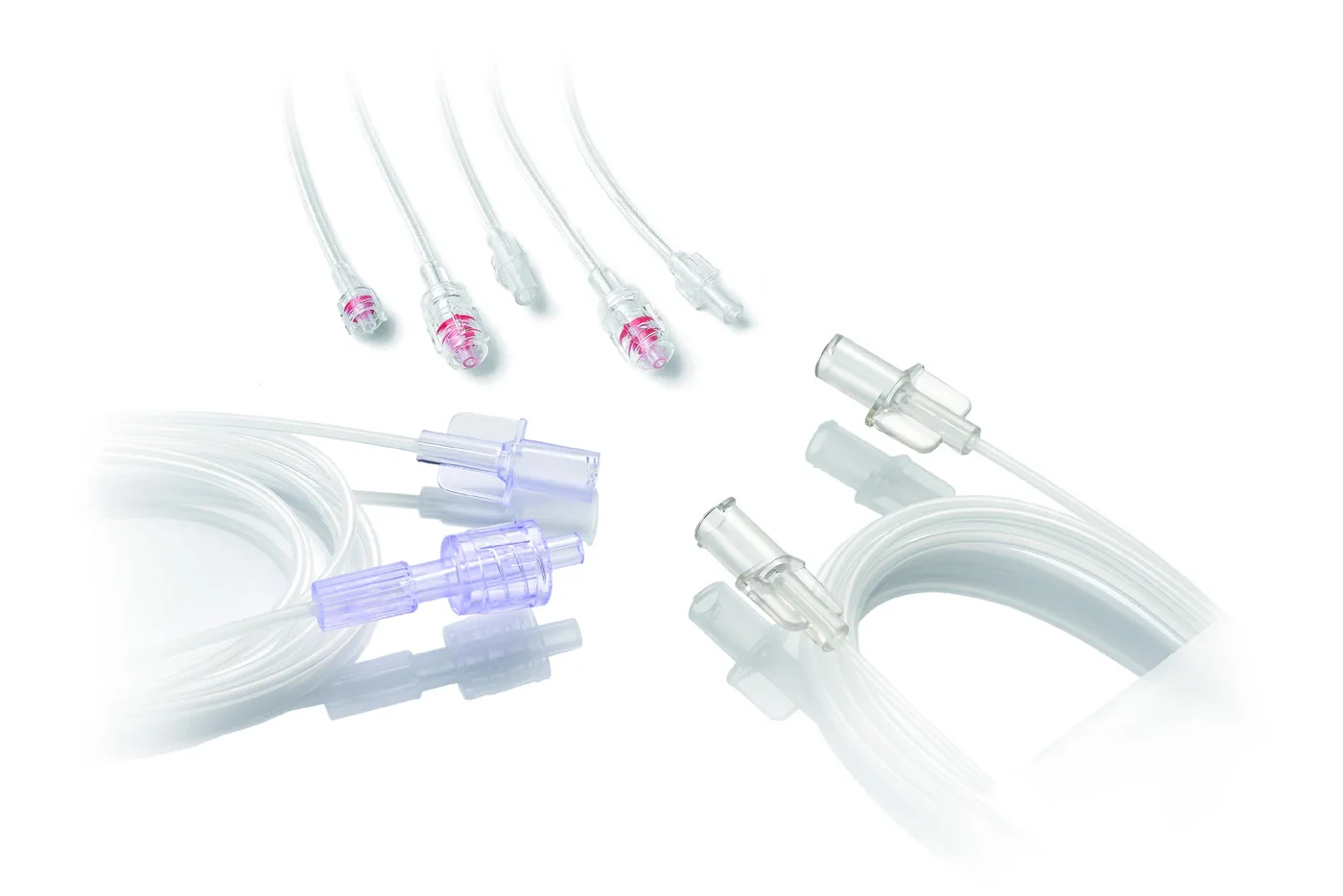
A manifold combines several three-way stopcocks into one body so the cath-lab team controls multiple lines from a single device. We make two families: a hemodynamic monitoring manifold — used with arterial pressure-monitoring lines and a flush device — and a high-pressure angiographic manifold rated for contrast-media power injection. Both come in 2, 3 or 5 gang configurations with colour-coded handles and a clear body for flow visibility. Supplied to distributors as an OEM component; an extension / flush line is not fitted as standard but can be added to order.
Specifications
Drawings, material certificates and sterilisation validation supplied on request for your file.
Typical uses
- Hemodynamic pressure monitoring (arterial lines) in ICU and cath lab
- Contrast-media power injection in angiography (high-pressure version)
- Controlling multiple lines from one manifold in interventional procedures
- OEM cath-lab manifold for interventional-device distributors
Manifold configurations we mould
| Configuration | Typical use | Pressure | Flush device |
|---|---|---|---|
| 2-gang monitoring | Simple arterial monitoring line | Monitoring | Usually fitted |
| 3-gang monitoring | Standard ICU / hemodynamic line | Monitoring | Usually fitted |
| 2–3-gang high-pressure | Contrast injection, smaller setups | Up to ~1,200 psi | Not required |
| 5-gang high-pressure | Complex multi-line angiography | Up to ~1,200 psi | Not required |
Two manifold families from one moulding line
Most buyers know they need a manifold but aren't sure which one. The two families look alike in a photo and behave very differently in use. The hemodynamic monitoring manifold sits on an arterial pressure line — usually paired with a flush device — and runs at monitoring pressures. The high-pressure angiographic manifold is built for contrast-media power injection and holds the pressures an injector produces. We mould both, so a distributor serving mixed cath labs can source the whole requirement from one factory.
Getting the gang count right
"Gang" is the number of three-way stopcocks built into the body. A 2-gang covers simple setups; the 3-gang is the everyday workhorse; the 5-gang is for complex, multi-line procedures. The right answer is the one that matches your customers' procedure mix — a higher gang count only adds cost and dead space if it isn't used.
Pressure is the spec that decides everything
This is where a wrong order becomes an expensive one. A monitoring manifold placed on a power injector can leak or fail; an angiographic version is rated for the injector's peak. Tell us the peak pressure of the procedure and we match the build to it rather than leaving it to chance.
Sterilisation and packaging for your market
We supply EO-sterile or non-sterile to your market's requirement, individually pouch-packed or bulk, and pack it under your own brand — your pouch print, your carton, your colour-coded handles.
What we need to quote
- Family: monitoring or high-pressure angiographic
- Gang count: 2, 3 or 5
- Peak pressure rating
- Sterile or non-sterile
- Connector standard and whether a flush / extension line is needed
- Quantity and destination port
Questions distributors ask
Do you make both the monitoring and the high-pressure manifold?
Yes — both families come off our own moulding line. The monitoring manifold runs with a flush device at monitoring pressures; the high-pressure angiographic manifold is rated for contrast power injection. Tell us which (or both) and the gang count you need.
Which gang count is most common?
The 3-gang is the everyday workhorse for most cath-lab and ICU procedures. We also make 2-gang and 5-gang — match it to your customers' procedure mix rather than over-specifying.
Is a flush device included?
On monitoring builds it is usually fitted; on high-pressure injection builds it isn't required. An extension / flush line is not standard on the base part but can be added to order.
What pressure can you provide for power injection?
High-pressure versions are commonly rated up to about 1,200 psi, matched to the injector's peak. We confirm the exact rating per configuration before you order.