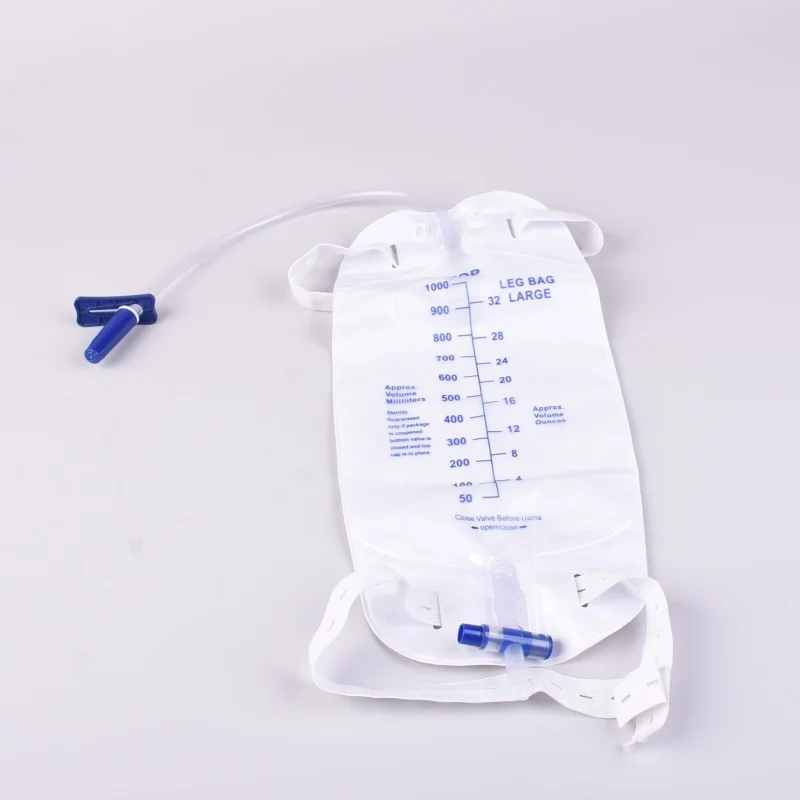
A urinary leg bag is a small, wearable urine collection bag connected to a urinary catheter and strapped to the thigh or calf. Unlike bedside drainage bags (2,000 ml), leg bags are designed for daytime mobility — allowing patients to walk, sit and carry out daily activities while maintaining continuous urinary drainage. This guide explains how urinary leg bags work, how to choose between 750 ml and 1000 ml capacity, and what to look for when buying in bulk for hospitals, home care providers or distributors.
How Does a Urinary Leg Bag Work?
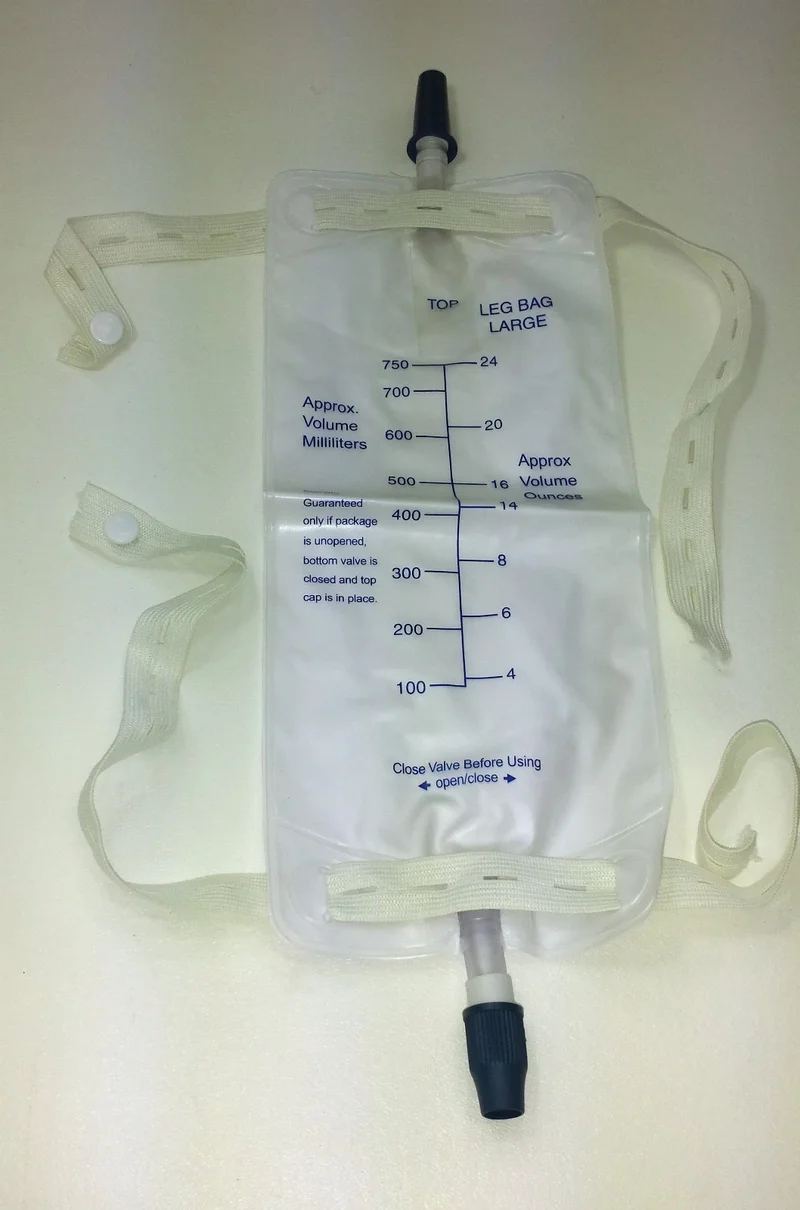
A urinary leg bag connects directly to the outlet of a Foley (urethral) catheter via a flexible inlet tube. Urine drains continuously from the bladder through the catheter and into the graduated bag chamber by gravity. The bag rests against the inner thigh or calf and is held in place with two adjustable elastic leg straps — one near the top of the bag and one near the bottom. When the bag reaches approximately two-thirds of its capacity, the user (or caregiver) opens the bottom drainage valve, empties the bag into a toilet, then closes the valve again — without disconnecting the catheter. This closed system minimises the risk of catheter-associated urinary tract infection (CAUTI).
The inlet connector at the top of the bag accepts standard Foley catheter tubing (F12–F20). An optional extension tube can be added between the catheter and the bag to improve comfort during movement. The graduated volume scale printed on the bag allows accurate monitoring of urine output — an important clinical indicator in post-operative and long-term care settings.
Urinary Leg Bag Components — Illustrated Overview
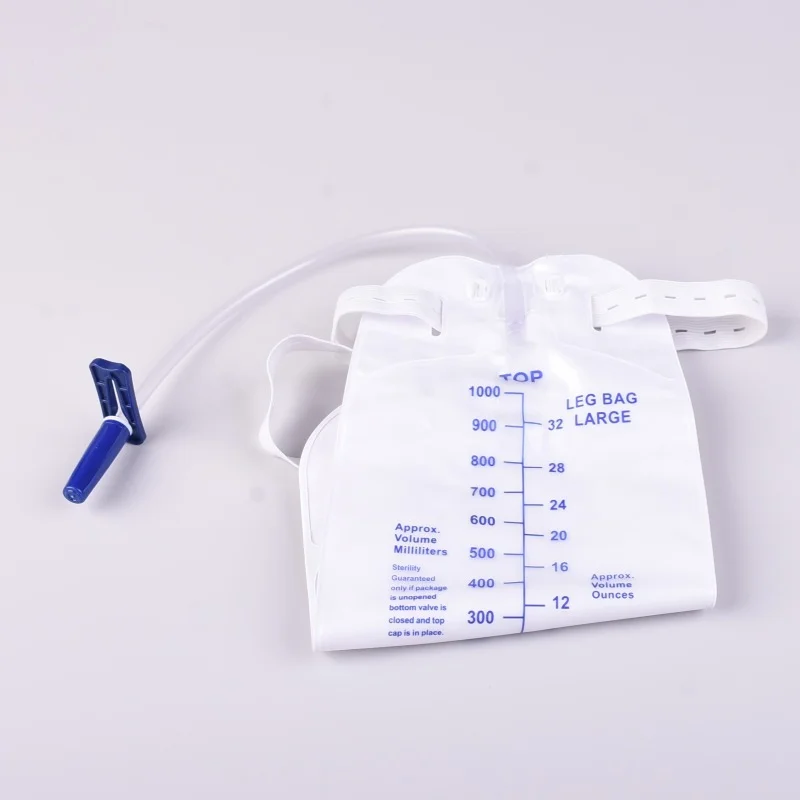
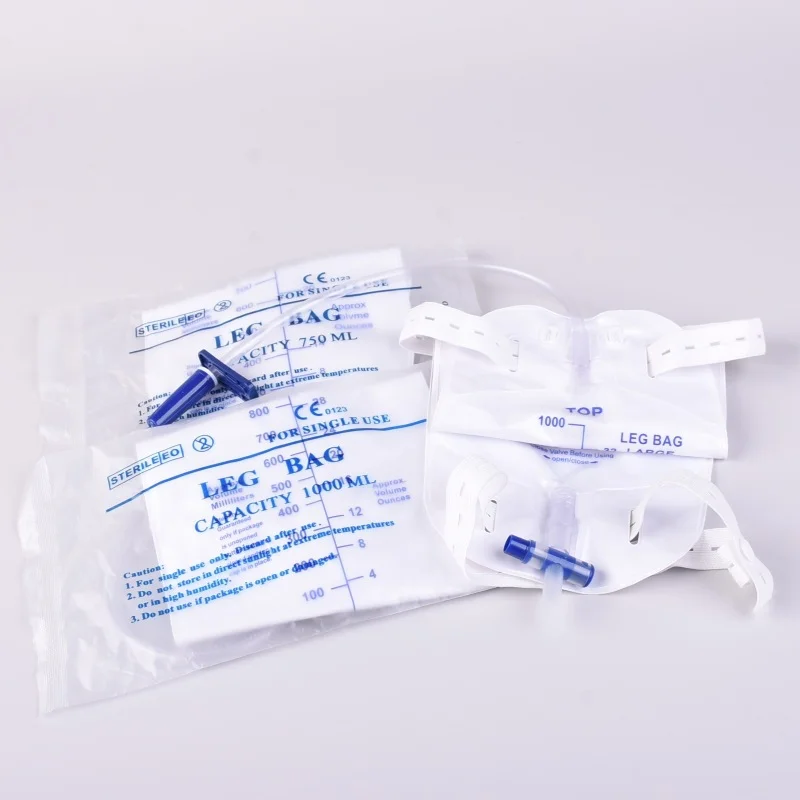
Understanding each component helps buyers evaluate product quality and verify what is included in the unit price:
- Bag body — medical-grade PVC, transparent or milky white. Transparent PVC allows visual inspection of urine colour (haematuria, cloudiness). Wall thickness affects durability; thicker walls resist puncture and leakage.
- Volume graduation scale — printed in millilitres and approximate ounces. Critical for clinical monitoring of fluid balance.
- Inlet connector — the top port where catheter tubing connects. Should be a secure, leak-proof fit compatible with standard connectors.
- Flexible connecting tube — the tube between inlet and bag chamber. Some models include an anti-kink design.
- Bottom drainage valve — the most important component for daily use. A reliable twist or push-pull valve must open smoothly, close completely and resist accidental opening during normal activity. Valve failure is the leading cause of user complaints.
- Outlet port with cap — protects the valve outlet from contamination when the bag is not being emptied.
- Leg straps (×2) — elastic fabric straps with multi-hole adjustment. Distributed weight prevents pressure marks. Width and softness of the strap material directly affects comfort during prolonged wear.
- Connector cap — the inlet cap that seals the bag before connection to the catheter.
750 ml vs 1000 ml Urinary Leg Bag — Which to Choose?
Both capacities serve the same clinical function; the choice depends on the patient profile and care setting:
750 ml urinary leg bag
- Lighter and more discreet under clothing
- Narrower profile — less visible under trousers or skirts
- Preferred for active, ambulatory users
- Requires emptying every 3–5 hours for average urine output
- Most popular capacity for home care and active users
- Lower unit weight reduces strap pressure on the leg
1000 ml urinary leg bag
- Higher collection capacity — fewer emptying events per day
- Preferred for patients with lower mobility (nursing homes, rehabilitation)
- Standard capacity in hospitals for daytime ambulation
- Suitable for patients with higher urine output or limited caregiver availability
- Chosen for longer transport or outings where emptying is inconvenient
- Most sold capacity globally for institutional procurement
For distributors placing bulk orders: if you can only stock one capacity, the 1000 ml is the safer choice for institutional buyers (hospitals, nursing homes). If serving home care or ambulatory patients, stock both capacities. The 1000 ml accounts for roughly 60–65% of global urinary leg bag sales volume.
Clinical Applications of Urinary Leg Bags
Urinary leg bags are used across a wide range of clinical and home care settings:
- Post-operative urology — prostatectomy, cystectomy, bladder surgery. Early mobilisation reduces pneumonia risk; leg bags enable ambulation while catheter drainage continues.
- Long-term catheter users — spinal cord injury, neurogenic bladder, multiple sclerosis, benign prostatic hyperplasia (BPH). Leg bags are the standard daytime collection device.
- Home care — elderly patients or those with chronic urinary retention managed at home with an indwelling catheter use a leg bag during the day and a larger bedside drainage bag at night.
- Nursing homes and long-term care — residents with indwelling catheters use leg bags to allow movement in wheelchairs and between communal areas.
- Rehabilitation centres — patients recovering from stroke, orthopaedic surgery or neurological conditions who require catheterisation during rehabilitation.
- Hospital wards (daytime) — transition from 2000 ml bedside bag to leg bag when a patient begins ambulating.
Urinary Leg Bag Buyer Guide — What to Check Before Ordering
For hospitals, distributors and procurement teams evaluating urinary leg bags, these are the key specifications to compare:
- Drainage valve type and reliability — test the valve before placing a large order. It must close completely under filled-bag pressure without leaking. Twist valves and push-pull valves are the two common designs; both work if quality-made.
- Material thickness and puncture resistance — a bag that leaks or punctures in the first day of use generates immediate clinical complaints. Ask for wall thickness specifications.
- Strap quality and width — narrow, rough straps cause skin pressure marks during prolonged wear. Wider, soft elastic straps are clinically superior.
- Graduation accuracy — check if the printed scale is accurate. For fluid balance monitoring in clinical settings, the scale must reflect actual volume within ±10%.
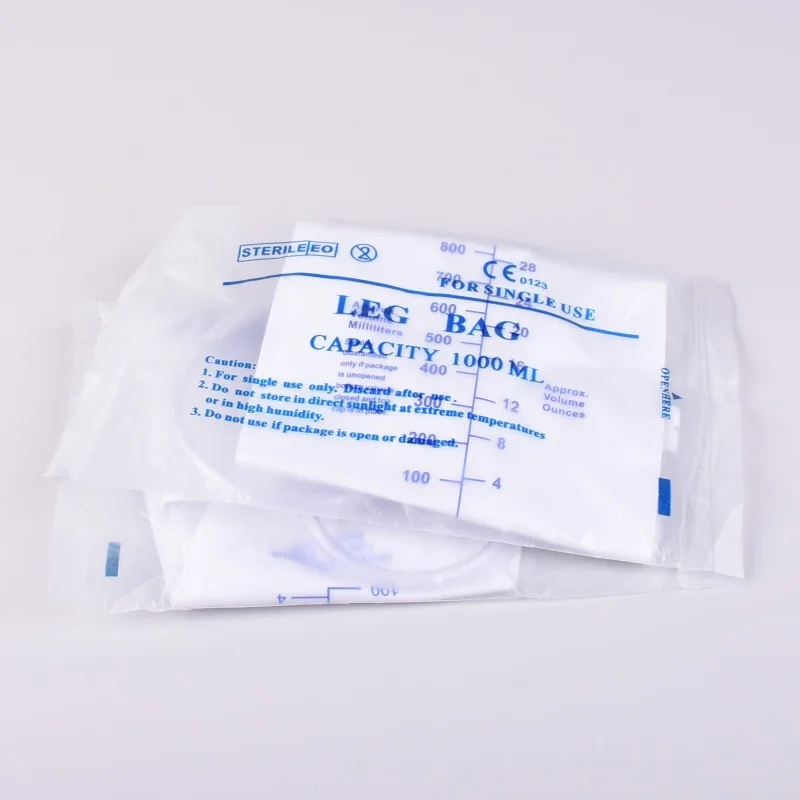
- Packaging options — individual poly bag (non-sterile) for institutional settings with own protocol; EO sterile pouch for clinical settings requiring sterile packaging.
- Regulatory documentation — CE marking, ISO 13485 certificate, Free Sale Certificate, English-language technical data sheet.
- OEM and private label options — important for distributors who want to market under their own brand.
Edaochi Medical's XY-ULB urinary leg bag is available in both 750 ml and 1000 ml, in standard and sterile packaging, with full CE and ISO 13485 documentation. OEM and private label available from 10,000 units. Sample lead time: 7–14 business days.
Preguntas Frecuentes
What is a urinary leg bag?
A urinary leg bag is a small, disposable urine collection bag that connects to a urinary catheter (usually a Foley catheter) and is worn strapped to the thigh or calf. It allows patients with catheters to move freely during the day while maintaining continuous urinary drainage through a closed system.
How often should a urinary leg bag be emptied?
The bag should be emptied when it reaches approximately two-thirds of its capacity — typically every 3–6 hours depending on the patient's urine output. Allowing the bag to fill completely increases the risk of back-pressure on the bladder and catheter disconnection.
How often should a urinary leg bag be replaced?
As a single-use device, the leg bag should be replaced every 24 hours to minimise the risk of catheter-associated urinary tract infection (CAUTI). Some clinical protocols allow up to 48 hours if no signs of contamination are present, but daily replacement is the standard recommendation.
Can a urinary leg bag be worn under clothing?
Yes. The 750 ml capacity in particular is designed for discreet wear under trousers or skirts. The bag lies flat against the leg when attached correctly with the elastic straps, and its low profile is generally not visible through normal clothing.
What is the difference between a urinary leg bag and a bedside drainage bag?
A urinary leg bag (750 ml or 1000 ml) is designed for daytime mobility and is worn on the leg. A bedside drainage bag (2,000 ml) is designed for overnight or bed-bound use and hangs from the bed frame or wheelchair. Most catheterised patients use both: a leg bag during the day and a bedside bag at night.
Is the urinary leg bag compatible with Foley catheters?
Yes. The XY-ULB urinary leg bag is compatible with standard PVC and silicone Foley catheters in sizes F12 to F20. The inlet connector accepts the standard catheter outlet tubing and most extension tubes available on the market.