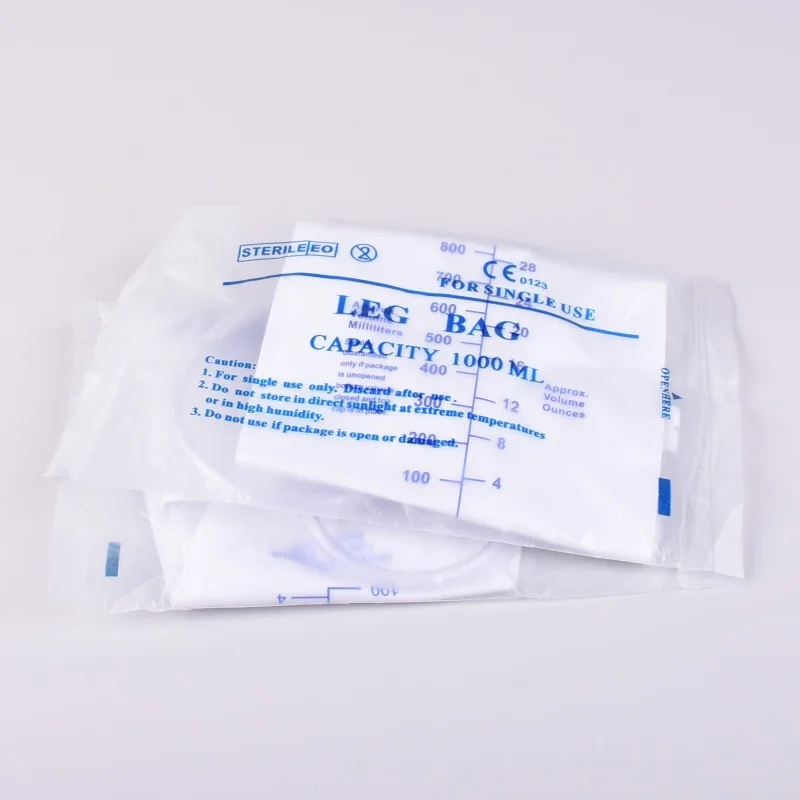
For medical distributors, hospital procurement teams and home care suppliers, the urinary leg bag is one of the highest-volume disposable items in the urology consumables category. Choosing the right capacity, packaging and supplier specification is not trivial: a wrong decision impacts patient comfort, CAUTI rates and your inventory cost structure. This guide breaks down the 750 ml vs 1000 ml decision, explains what specifications matter for institutional buyers, and outlines the documentation required for CE market importation.
Global Market Context: Urinary Leg Bag Demand by Setting
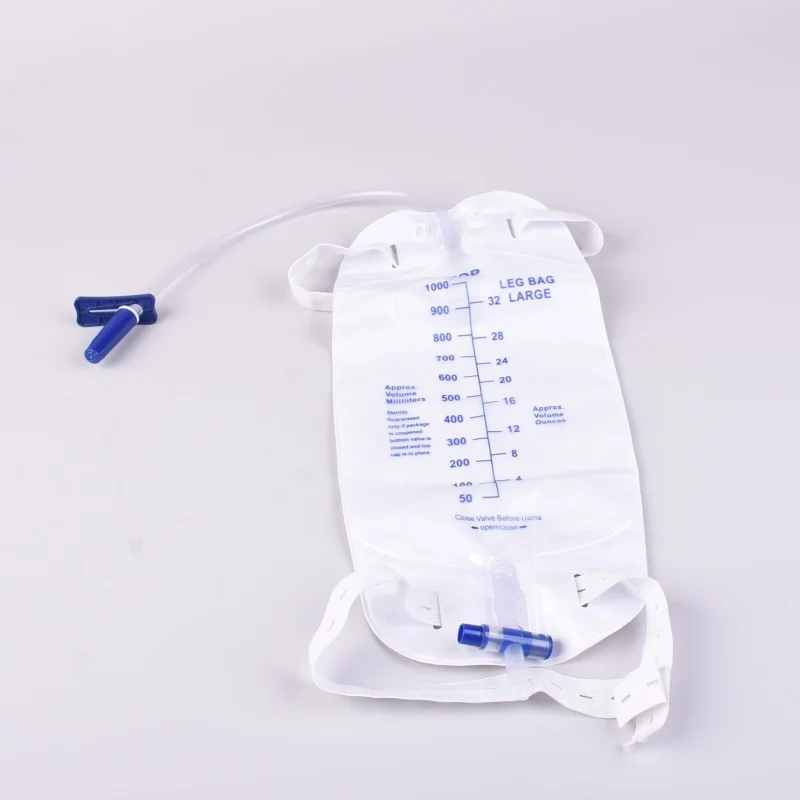
Urinary leg bags are consumed in four main care settings, each with different volume and specification preferences:
Hospitals favour the 1000 ml capacity because nursing staff prioritise fewer interruptions for emptying during shift changes. Sterile packaging (EO sterilised pouch) is preferred for catheter insertion wards and post-operative units. Transparent PVC is standard for clinical monitoring.
Nursing homes and long-term care are the largest volume segment globally. The 1000 ml capacity dominates because residents often have limited caregiver availability. Non-sterile packaging is common as catheters are already in situ. Milky white PVC is sometimes preferred for patient dignity.
Home care is the fastest-growing segment, driven by ageing populations and the shift toward ambulatory and community-based healthcare. The 750 ml capacity is significantly more popular in home care because users value discretion and lighter weight. Both standard and sterile packaging are used.
Rehabilitation centres primarily use 750 ml for active patients and 1000 ml for patients with limited mobility. The capacity split is roughly 50/50 in this setting.
Technical Specification Comparison: 750 ml vs 1000 ml
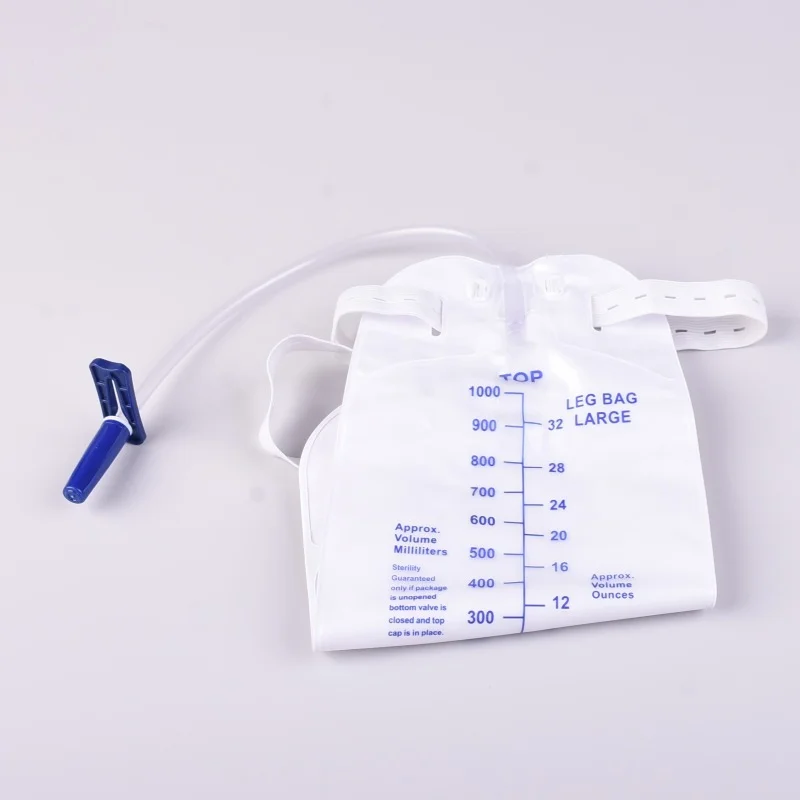
The following specifications differ between the two capacities:
Dimensions — A 750 ml bag is typically narrower and shorter than a 1000 ml bag. Exact dimensions vary by manufacturer, but expect the 750 ml to be approximately 15–18 cm wide × 20–24 cm tall, and the 1000 ml approximately 17–20 cm wide × 24–28 cm tall.
Weight when full — 750 ml ≈ 750 g + bag weight (~25 g) = ~775 g maximum leg load. 1000 ml ≈ 1000 g + bag = ~1025 g maximum leg load. The additional 250 g in the 1000 ml is clinically relevant for fragile, elderly or post-surgical patients.
Emptying frequency — For an adult with average urine output of 1,500 ml/day (daytime: ~1,000 ml over 12 hours), the 750 ml requires emptying approximately 2–3 times per day; the 1000 ml approximately 1–2 times. For high-output patients (polyuria, diabetes insipidus), both require more frequent emptying.
Strap load — The heavier 1000 ml bag at capacity creates greater strap pressure. In elderly patients or those with fragile skin, this can cause pressure marks or skin breakdown. Strap quality is more critical for the 1000 ml application.
SKU management — For distributors: stocking both capacities doubles your SKU count but reduces stockout risk. If budget forces a single SKU, the 1000 ml serves both hospital and home care with broader applicability.
Sterile vs Non-Sterile Packaging: What Buyers Need to Know
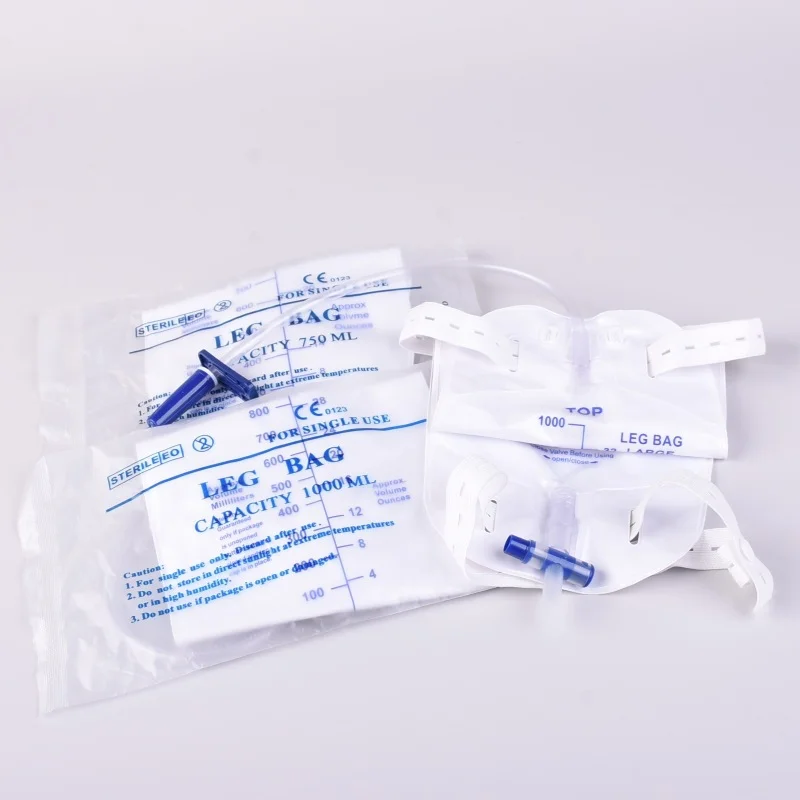
The packaging decision is driven by the point of use, not the product itself:
Non-sterile (individual poly bag) — appropriate when the catheter is already in situ and the leg bag is being connected to an existing drainage system. The connection must be made using aseptic technique, but the bag itself does not need to be sterile since it is downstream of the catheter. Lower cost per unit. Suitable for the majority of nursing home, home care and hospital ward applications.
EO sterile (ethylene oxide sterilised peel pouch) — required when the leg bag will be connected at the time of catheter insertion in a sterile field, or when institutional protocols mandate sterile packaging for all catheter-adjacent products. Higher cost. Preferred in surgical and procedural settings.
Buyer recommendation — for an initial trial order, specify EO sterile packaging to satisfy the most demanding institutional requirements. Once the product is approved and established, you can introduce non-sterile packaging for cost reduction in appropriate settings.
CE & ISO Documentation Checklist for Importing Urinary Leg Bags
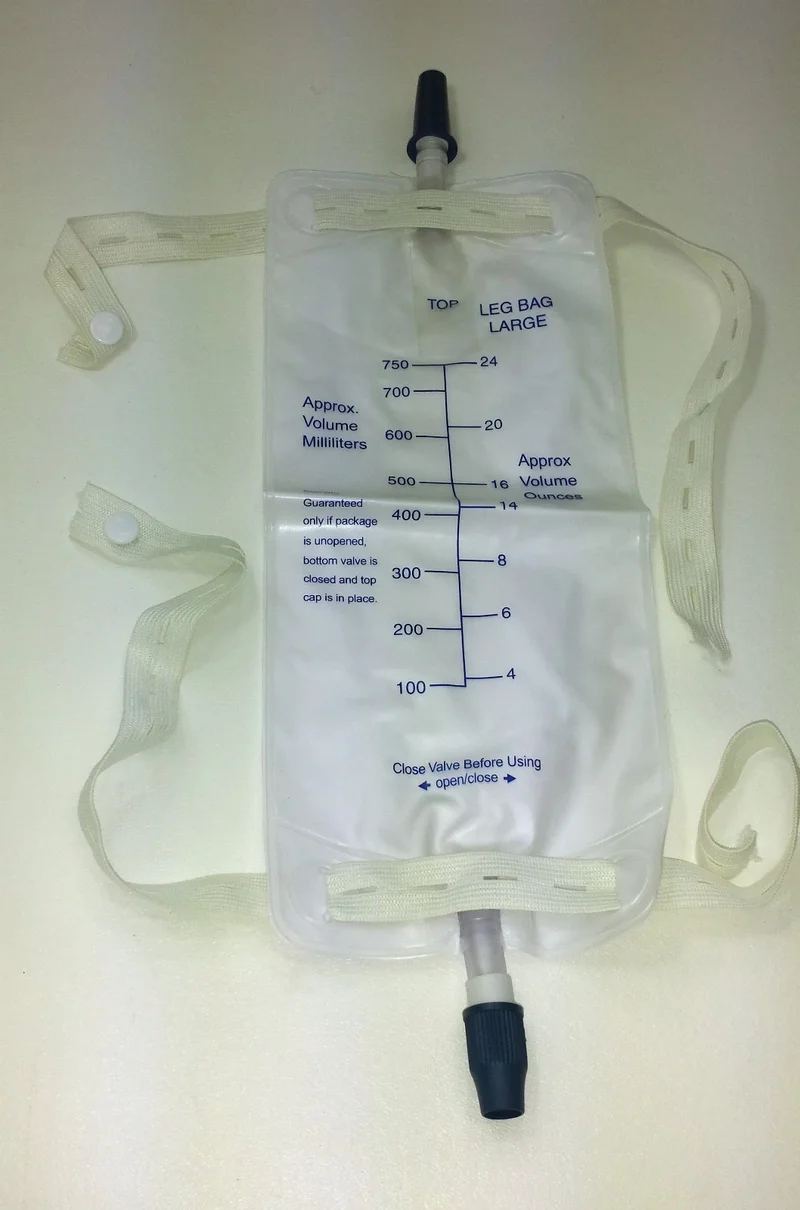
Importing urinary leg bags into the EU, UK or other regulated markets requires the following documentation from your supplier:
- CE Declaration of Conformity — confirms the product meets EU MDR 2017/745 or MDD 93/42/EEC requirements. Urinary collection bags are Class I or Class IIa under EU MDR depending on configuration.
- ISO 13485:2016 Certificate — quality management system certificate from an accredited certification body (not self-declaration).
- Free Sale Certificate — issued by NMPA (China) or equivalent regulatory authority confirming the product is legally sold in the country of manufacture.
- Technical Data Sheet (English) — specifying material, dimensions, sterilisation method, shelf life, storage conditions and intended use.
- Biocompatibility summary — ISO 10993 compliance for skin-contacting components (straps, bag surface).
- Labelling samples — showing CE mark, lot number, expiry date, single-use symbol, manufacturer details.
- GSPR (General Safety and Performance Requirements) — for EU MDR compliance, particularly for Class IIa products.
Edaochi Medical provides all of the above documents for the XY-ULB urinary leg bag. Documents available in English. Additional regulatory packages (ANVISA Brazil, COFEPRIS Mexico, INVIMA Colombia) available upon request.
OEM and Private Label Urinary Leg Bags
The urinary leg bag is one of the most suitable products for private label and OEM branding in the medical disposables category. The product is well understood by end users, has consistent demand, and the per-unit value is high enough to justify custom packaging investment.
Custom logo printing — your logo and product information can be printed directly on the PVC bag body using medical-grade ink that remains legible throughout the shelf life. Minimum: 10,000 units per capacity/variant.
Custom packaging — the outer poly bag or peel pouch can be designed with your brand identity, including logo, product name, regulatory markings and barcode. We provide artwork templates and a pre-production colour proof.
Capacity range available — both 750 ml and 1000 ml available for OEM/private label. Mixed container orders (750 ml + 1000 ml) with shared branding accepted.
Lead times — first-time OEM order: 45–60 days including artwork approval and production. Repeat orders: 25–35 days.
Pricing — OEM unit pricing is comparable to standard pricing for orders above 10,000 units. The additional cost is in the tooling for printing (one-time, typically USD 300–600 per artwork) and packaging design (absorbed for orders above 20,000 units).
Contact us via WhatsApp with your logo and packaging requirements for a detailed OEM quotation.
Preguntas Frecuentes
What is the minimum order quantity (MOQ) for urinary leg bags?
The standard MOQ is 1 carton (100 units) for non-sterile standard packaging. For EO sterile packaging, MOQ is typically 500 units. For OEM/private label, MOQ is 10,000 units per capacity/variant. Trial sample orders of 5–20 units are available before placing the first bulk order.
What is the reference price for urinary leg bags?
Reference price is USD 3.00–5.00 per unit. The exact price depends on: capacity (750 ml or 1000 ml), packaging type (standard poly bag vs. EO sterile pouch), OEM printing, tube length options and order quantity. Volume discounts apply from 1,000 units. Request a WhatsApp quotation for your specific configuration.
How long is the shelf life of a urinary leg bag?
3–5 years from the date of manufacture when stored in the original sealed packaging at room temperature (15–30°C), away from direct sunlight and humidity. EO sterile pouches have the same shelf life provided the seal integrity is maintained.
Can the urinary leg bag be connected to a 2-way and 3-way Foley catheter?
Yes. The inlet connector of the XY-ULB is compatible with both 2-way and 3-way Foley catheters (F12–F20). For 3-way catheters used for bladder irrigation, only the urine drainage lumen connects to the leg bag; the irrigation lumen connects separately to the irrigation solution.
What drainage valve designs are available?
The XY-ULB is available with a twist-valve (rotate to open/close) or a push-pull valve design. Both provide reliable closure. Specify your preferred valve type when ordering. The twist valve is generally preferred in institutional settings for its positive tactile feedback; the push-pull is faster for users with limited hand dexterity.