Disposable Fecal Collector
SKU: XY053 | Recolector de Heces Desechable
Reference price. Contact our team for an exact quote.
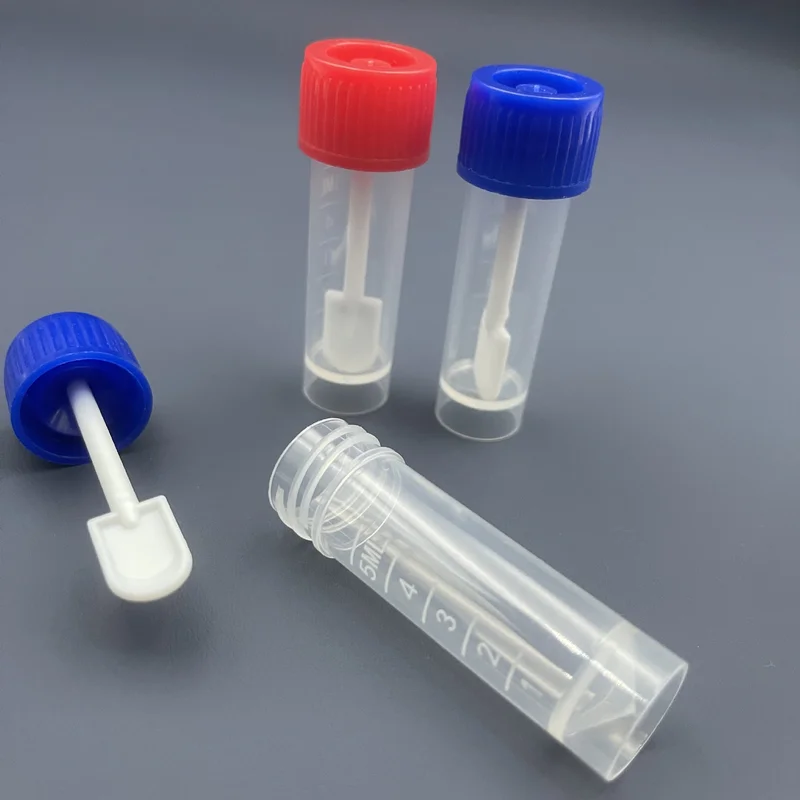
Single-use fecal collector for taking and transporting stool samples to the lab. Made of clear polypropylene with a snap cap and a collection scoop built into the inside of the cap. Available in 5, 10, 20, 25, 30, 40, 50 and 60 ml. Labelled or unlabelled to order. Airtight closure for safe transport.
Technical Specifications
Clinical Uses
- Stool analysis in the laboratory
- Parasite detection
- Stool culture (coproculture)
- Faecal occult blood testing
Match the container to the test
| This container (unpreserved) | Preserved / transport-media vial | |
|---|---|---|
| Faecal occult blood | Correct part | Not required |
| Routine analysis & transport | Correct part | Not required |
| Ova & parasite (O&P) | Collection step only — check the lab's SOP | Required where the protocol calls for fixative vials filled to a line |
| Stool culture | Collection step only — check the lab's SOP | Required where the protocol calls for transport media |
| What's inside | Clear PP, scoop in cap, nothing else | Pre-filled fixative or transport media |
Tell us the test menu your customers run and we confirm which part you actually need before you order — a container that fails the receiving lab's SOP is a total loss, not a discount.
Frequently Asked Questions — Disposable Fecal Collector
Does the stool collector include a scoop?
Yes. A collection scoop is built into the inside of the cap, so the sample is taken and sealed with one piece. The snap cap gives an airtight closure for safe, clean transport to the lab.
Which volume should I order?
Work back from the sample the lab actually needs. A typical stool sample is around 5–10 g — labs often describe it to patients as roughly a walnut, or about two teaspoons for a liquid sample. Containers in the 20–30 ml range hold that comfortably with room for the scoop and headspace, which is why they carry most routine work. The 5–10 ml sizes suit small, single-test collections; 40–60 ml suits larger samples or protocols that need more material. If you are unsure, tell us your test menu and we suggest the mix.
Is this container suitable for ova & parasite or culture testing?
For the collection step, yes — but read this before ordering. This is an unpreserved container: clear PP with a scoop, no fixative or transport media inside. Many lab protocols for ova & parasite (O&P) and stool culture require the sample to go into vials pre-filled with fixative or transport media, which is a different product. If your customers run those protocols, tell us and we will confirm what you actually need rather than ship you a container that fails their SOP. For faecal occult blood, routine analysis and general collection-and-transport, the plain container is the right part.
How many containers per patient should I budget for?
More than one, which catches buyers out. Where multiple collections are ordered for ova & parasite or occult blood, they are collected on separate days — a three-day protocol means three containers for one patient, not one. If your customers run multi-day protocols, size the order on collections rather than on patients, or the stock runs out at a third of the expected date.
Can it be supplied labelled?
Yes, labelled or unlabelled to order, in red, yellow or blue caps for workflow coding. We supply the range with an accessible MOQ, samples and private-label (OEM).
What are the three cap colours actually for?
There is no universal colour standard for stool containers — the colour is whatever discipline your lab assigns it. Labs typically map a colour to a test type or a workflow lane (for example one colour for occult blood, another for culture, another for parasitology) so a container is sorted correctly at reception without reading the label. Decide the mapping before you order, keep it identical across repeat orders, and it works; change it between shipments and it causes exactly the mix-ups it was meant to prevent.
Request a Quote — Disposable Fecal Collector
Reply within 24 business hours with FOB/CIF price, MOQ and lead time. SKU XY053 is already attached to your request — just add the quantity.
Request a Sample
Samples available for evaluation. Basic items: free sample. Higher-value items: a sample fee may apply. Shipping not included.
Full Description — Disposable Fecal Collector
A stool container is a simple part with two ordering traps in it: buying the wrong volume because nobody worked back from the sample the lab needs, and buying a plain container where the protocol demands a preserved one. Both are cheap mistakes to avoid and expensive ones to discover after the shipment lands. Here is how to get it right.
Volume: work back from the sample, not from the catalogue
A typical stool sample is around 5–10 g — the instruction labs give patients is usually "about the size of a walnut", or roughly two teaspoons if the sample is liquid. That is the number that should drive the order. Containers in the 20–30 ml range hold that with room for the scoop and headspace, which is why they carry the bulk of routine work. The 5–10 ml sizes are for small single-test collections where the container is the transport, not the workspace. 40–60 ml covers larger samples and protocols that ask for more material. Buyers who pick by price per unit rather than by sample size tend to end up with cases of a volume their labs quietly refuse to use.
Read the protocol before you read the price list
This is an unpreserved container — clear polypropylene, scoop in the cap, nothing else inside. That is exactly right for faecal occult blood, routine analysis, and any collect-and-transport step. It is not automatically right for ova & parasite or stool culture: many lab protocols require the sample to go into vials pre-filled with fixative or transport media, filled to a marked line. That is a different product, and no amount of container quality substitutes for it. If your customers run those protocols, say so when you ask for a quote — we would rather tell you that up front than have a shipment fail somebody's SOP.
Budget on collections, not on patients
The detail that wrecks stock forecasts: where multiple collections are ordered for O&P or occult blood, they are taken on separate days. A three-day protocol consumes three containers for one patient. Buyers who size an order on patient numbers run out at roughly a third of the expected date and blame the supplier. Size it on collections and the forecast holds.
Making the cap colours earn their place
There is no universal colour standard here — red, yellow and blue mean whatever your lab decides they mean. The value is in the discipline, not the colour: map each colour to a test type or workflow lane so containers sort correctly at reception without anyone reading a label, then keep that mapping identical across repeat orders. A mapping that changes between shipments causes the mix-ups it was supposed to prevent, which is why we hold your colour assignment on file between orders.
The rest of the sample chain
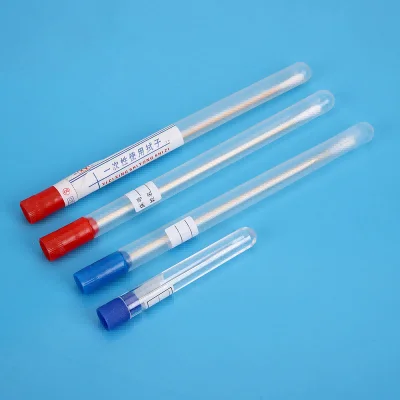
Labs restocking stool containers are rarely restocking only stool containers. The urine specimen container and urine collection tubes cover the other half of the routine collection bench, and the specimen swab handles microbiology sampling. Consolidating the bench into one order is usually what makes the freight cost work.
Buying wholesale
Full volume range 5–60 ml, labelled or unlabelled, three cap colours, single-use, airtight snap cap. Accessible MOQ, samples, private-label (OEM), CE / ISO 13485 documentation and lot traceability. Send your test menu, monthly collection volume (not patient count) and destination country — Alex confirms the volume mix, colour mapping and FOB price on WhatsApp, usually within 24 h.
This page is for laboratory consumables sourcing and procurement information. Test protocols, specimen requirements and regulatory compliance should be confirmed by the receiving laboratory and the buyer's local compliance process.